
50 People Shaping AI in 2026: The Nuvastra Guide
From the researchers changing how machines learn to the people building their infrastructure and questioning their authority, these are 50 consequential figures to understand—and the work that makes them worth following.
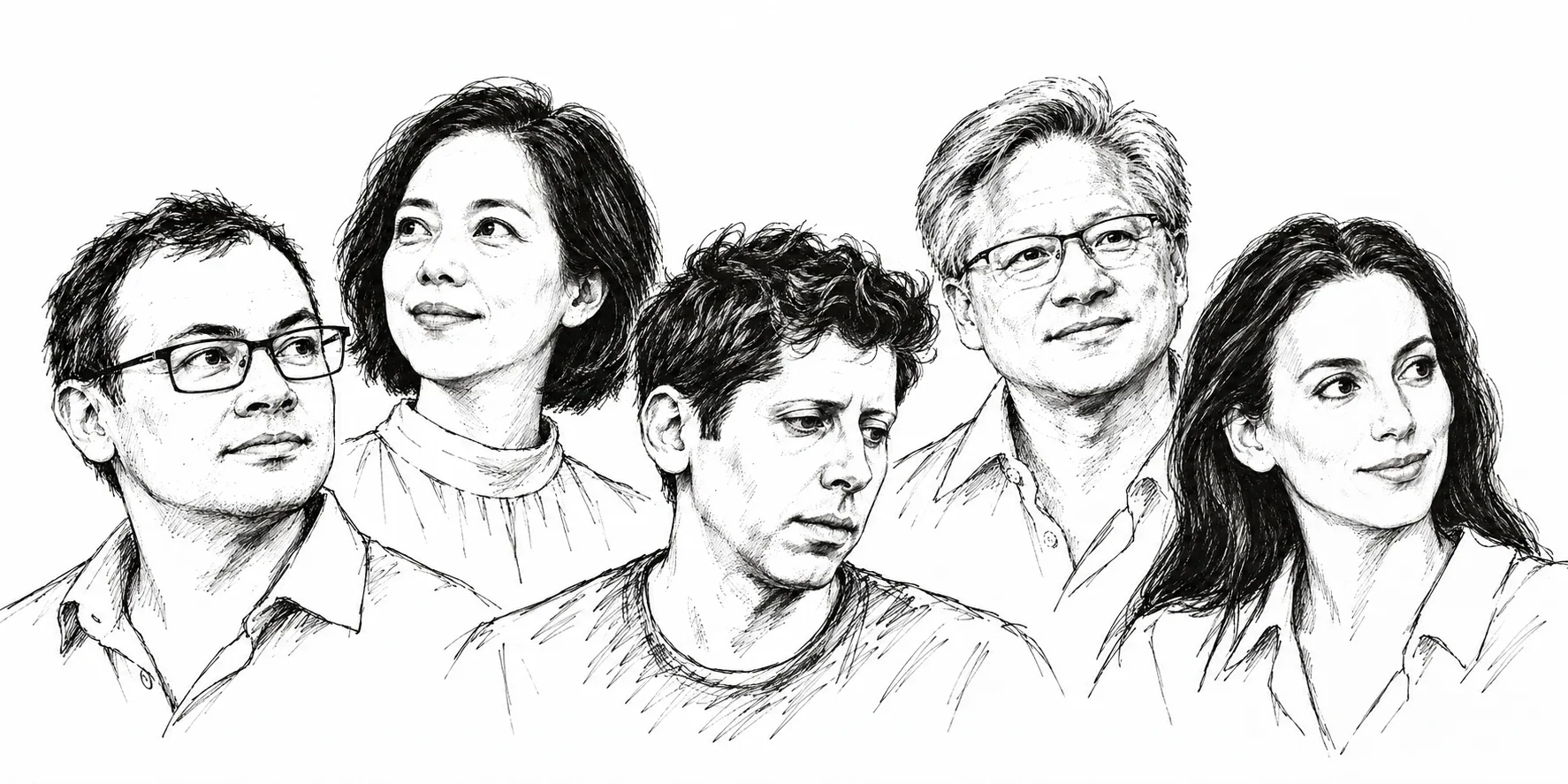
The most influential people in AI are not all competing to build the same thing. Some want machines that can reason for longer; others want robots that can learn a new task without thousands of demonstrations. There are researchers trying to explain what happens inside a neural network, chip designers reducing the cost of running one and people asking whether a system should be given authority even when its answers are usually correct. Understanding those differences is more useful than arranging familiar faces into a league table.
This guide brings together 50 people whose work helps explain where artificial intelligence is going in 2026. It includes established scientific leaders, influential company builders and a small number of emerging founders pursuing distinctive approaches. The selection considers documented research contributions, practical adoption, infrastructure, openness and public accountability. It is deliberately unnumbered: these are different kinds of contribution, and a Nobel-winning discovery cannot sensibly be scored against an open-source library or a challenge to the industry's business model.
There is a connecting argument. As AI becomes more capable, the difficult work moves into the systems around it: the evidence used to assess it, the hardware that makes it affordable, the experience from which it learns and the institutions that decide where it belongs. Each profile explains a person's contribution, why it matters and the question their current work leaves open. Company ambitions are described as ambitions; inclusion is neither an endorsement nor a claim that everyone has achieved comparable scientific impact.
Find a person
- Pieter Abbeel
- Sam Altman
- Dario Amodei
- Daniela Amodei
- Anima Anandkumar
- Regina Barzilay
- Yoshua Bengio
- Joy Buolamwini
- Mark Chen
- Tri Dao
- Jeff Dean
- Clément Delangue
- Jim Fan
- Andrew Feldman
- Chelsea Finn
- Timnit Gebru
- Aidan Gomez
- Tim Gülke
- Demis Hassabis
- Geoffrey Hinton
- Jensen Huang
- John Jumper
- Andrej Karpathy
- Pushmeet Kohli
- Daphne Koller
- Bryan Korba
- Yann LeCun
- Shane Legg
- Jan Leike
- Sergey Levine
- Fei-Fei Li
- Percy Liang
- Arthur Mensch
- Mira Murati
- Andrew Ng
- Chris Olah
- Jakub Pachocki
- Joëlle Pineau
- Stuart Russell
- David Silver
- Aravind Srinivas
- Lisa Su
- Ilya Sutskever
- Richard Sutton
- Michael Truell
- Oriol Vinyals
- Liang Wenfeng
- Meredith Whittaker
- Thomas Wolf
- Yang Zhilin
Learning, reasoning and the foundations of modern AI
Yoshua Bengio
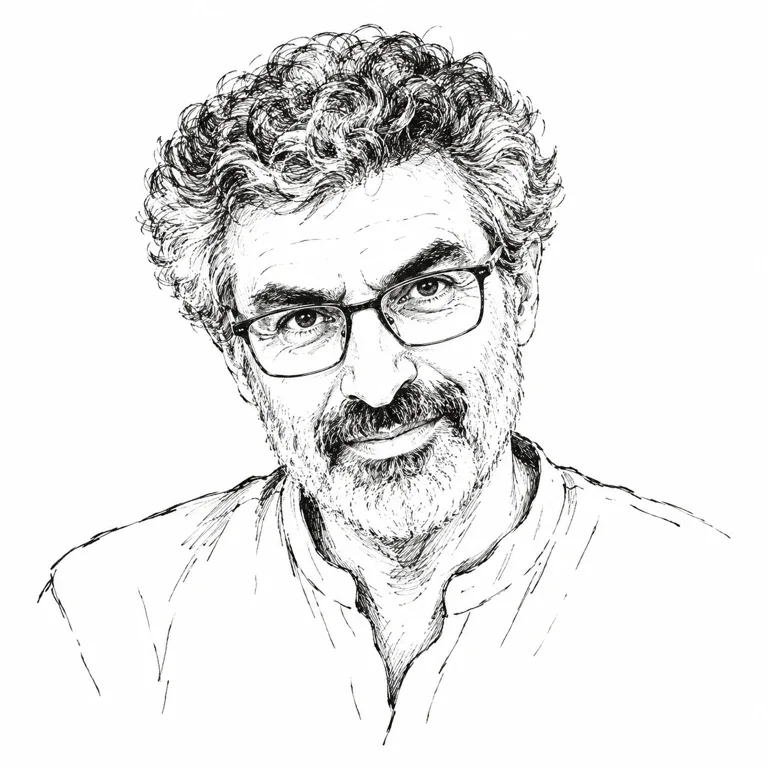
Few researchers have shaped deep learning as profoundly as Yoshua Bengio. His work on learning useful representations helped establish the idea that neural networks could discover structure in data rather than depend entirely on features designed by people. The 2018 Turing Award, shared with Geoffrey Hinton and Yann LeCun, recognised the foundations of a field that now sits beneath much of the AI economy. His relevance today, however, extends beyond that history.
At LawZero, Bengio is pursuing a different question: can powerful AI be designed to understand the world without acquiring an incentive to act on it? The organisation's Scientist AI programme explores systems intended to assess explanations and risks rather than independently pursue open-ended goals. That distinction matters because the industry's enthusiasm for agents often bundles reasoning ability together with increasing autonomy. Bengio's alternative asks whether those properties should be separated by design. It remains a research programme, not a demonstrated solution to every safety problem, but it gives readers a concrete architectural proposal to examine alongside warnings about future risk. Follow the evidence for what such systems can reliably evaluate, especially when they are assessing other AI systems.
Geoffrey Hinton
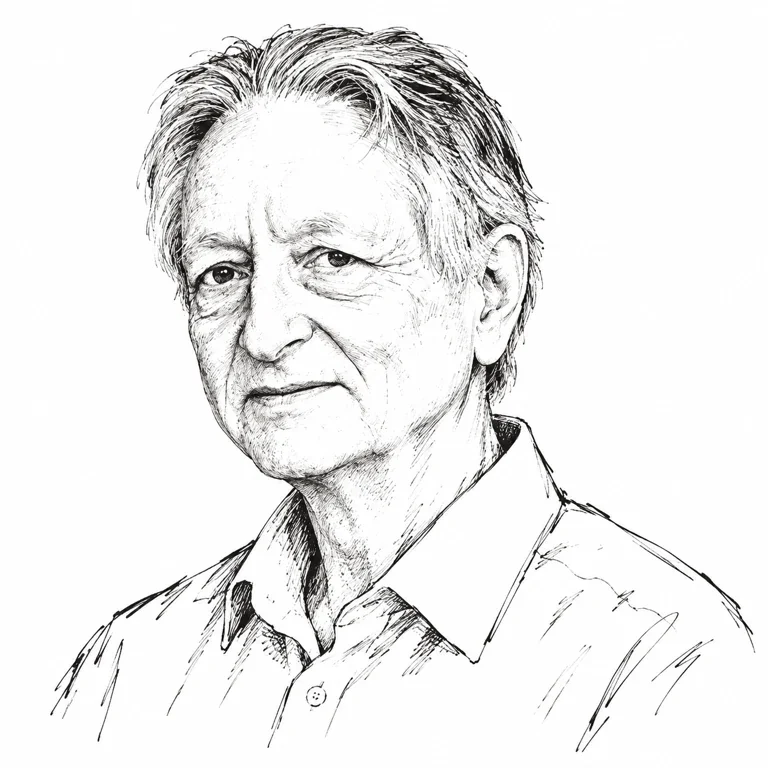
Geoffrey Hinton's influence comes from a long commitment to the possibility that learning in networks could produce useful internal representations. His research record spans distributed representations, Boltzmann machines and the development of methods that helped neural networks become practical. The success of the AlexNet team, including his students Alex Krizhevsky and Ilya Sutskever, helped convince the wider computer-vision community that deep learning deserved serious attention. His work is part of the reason today's arguments about AI take place at all.
Hinton now occupies an unusual position: an architect of the technology who has become one of its most prominent public critics. His concerns about control, misuse and displacement deserve consideration because of his technical experience, while his forecasts should still be treated as arguments about an uncertain future rather than settled experimental findings. That separation is useful for readers. A person's contribution to a scientific method does not make every prediction infallible, but it can reveal which assumptions they believe the field is underestimating. Hinton is worth following for the tension between learning systems' growing capabilities and our limited understanding of how those capabilities will behave at scale.
Yann LeCun
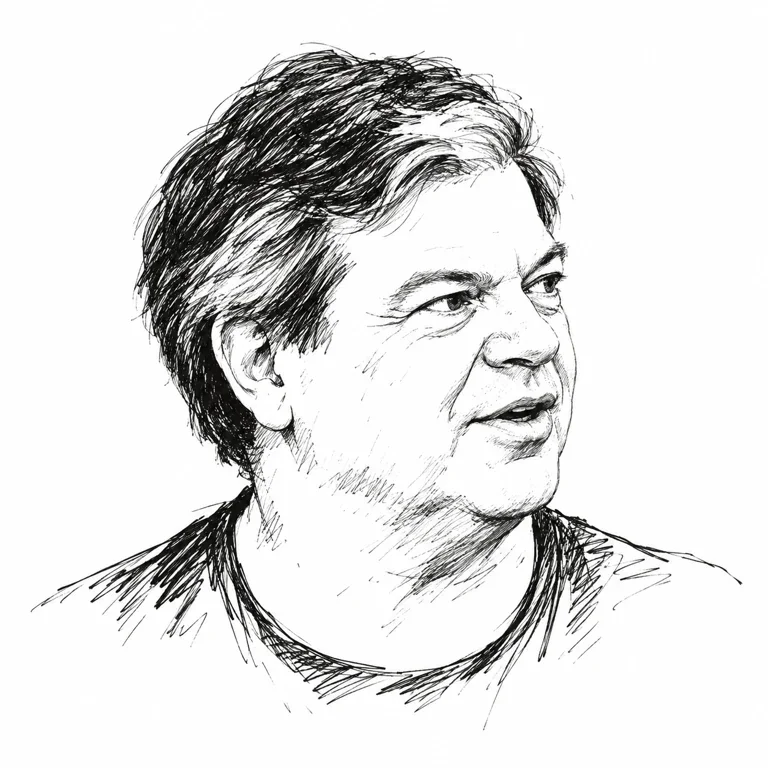
Yann LeCun helped make convolutional neural networks an effective way to recognise visual patterns, contributing to the foundations of modern computer vision. His place in this guide also reflects a continuing disagreement with a central industry assumption: that extending the current language-model recipe will be sufficient to produce broadly intelligent systems. He argues for AI that learns richer representations of the physical world and can use them to predict, plan and reason.
That direction now informs his work with AMI, the venture established after his departure from Meta. The useful idea is a world model: an internal representation of how an environment changes, which could help a machine anticipate the consequences of an action. The challenge is making that representation both learnable and useful across unfamiliar situations. A video prediction demonstration is not, by itself, evidence of dependable real-world planning. LeCun belongs here because he offers a technically substantial alternative to the dominant development path. Following his work means watching for measurable progress in abstraction and planning, rather than treating the debate as a contest over which prominent researcher sounds most certain.
Richard Sutton
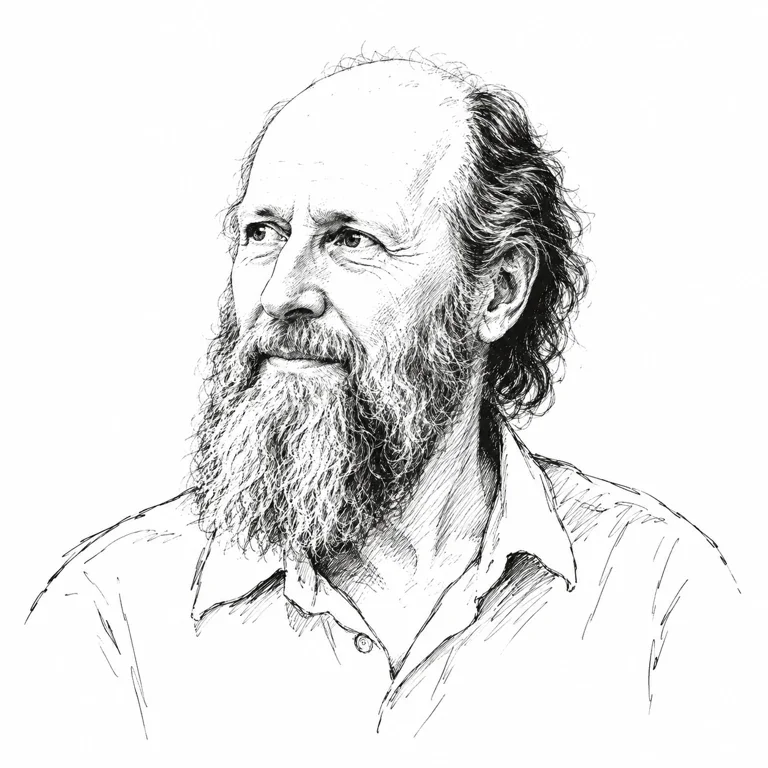
Richard Sutton helped establish reinforcement learning, in which a system improves its behaviour through interaction and feedback. His contributions include temporal-difference learning, which updates predictions using subsequent predictions rather than waiting for a final outcome, and the integration of learning and planning in the Dyna framework. The textbook he wrote with Andrew Barto remains a foundational entry point. Amii's biography records both his continuing research roles and the pair's 2024 Turing Award.
Sutton's enduring influence also comes from the question behind his work: how much intelligence can emerge from general learning mechanisms given enough experience? That question has new commercial relevance as laboratories invest in reasoning models and agents that improve through feedback. Yet experience is not automatically useful. A system can learn to exploit a reward measure, become good at a narrow environment or fail when circumstances change. Sutton provides the conceptual tools for understanding both the appeal and the difficulty of this approach. For a reader assessing claims about self-improving AI, his work is a reminder to ask what the system actually experiences, what counts as success and whether the learning carries beyond its training setting.
David Silver
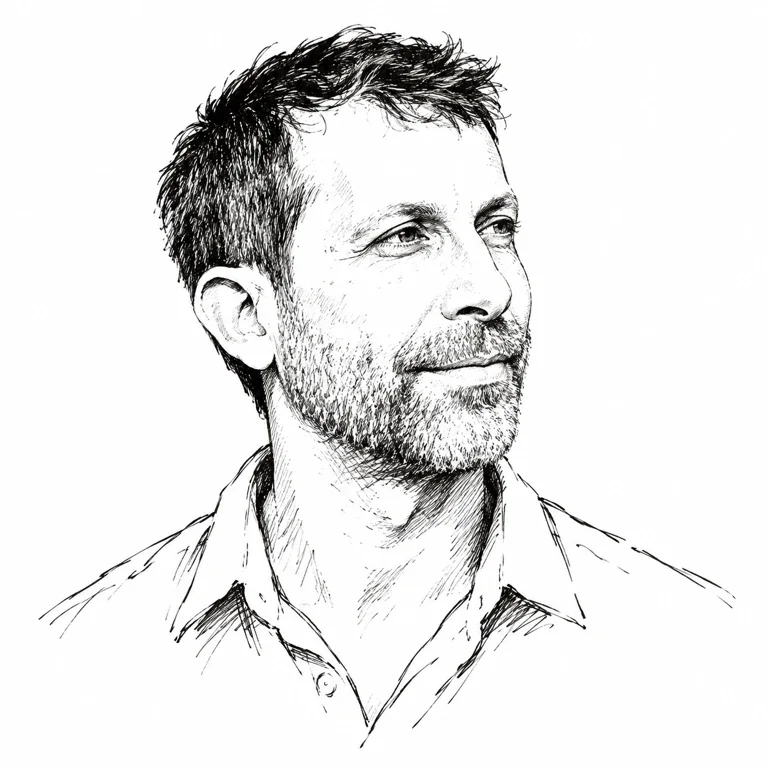
David Silver helped turn reinforcement learning into some of AI's most persuasive demonstrations. His research leadership on AlphaGo and the subsequent AlphaZero programme showed the power of combining learning, search and carefully defined environments. Those achievements were more than spectacular games: they established a research template in which systems could improve through experience and evaluate possible actions before committing to one. Their boundaries were equally informative, because a board game supplies clear rules and outcomes that ordinary life rarely provides.
Silver's current biography identifies him as chief executive of Ineffable Intelligence, following his leadership of reinforcement learning at DeepMind, alongside his professorship at UCL. His new chapter makes the transition from successful learning systems to broader intelligence especially worth watching. The central difficulty is not simply producing more experience, but producing experience that teaches something transferable. Business tasks contain ambiguous goals, changing interfaces and delayed consequences; scientific tasks may take months to evaluate. Silver's record makes him an important person to follow as the field tries to move beyond static training collections, while the gap between a research ambition and a general-purpose deployed system remains substantial.
Ilya Sutskever
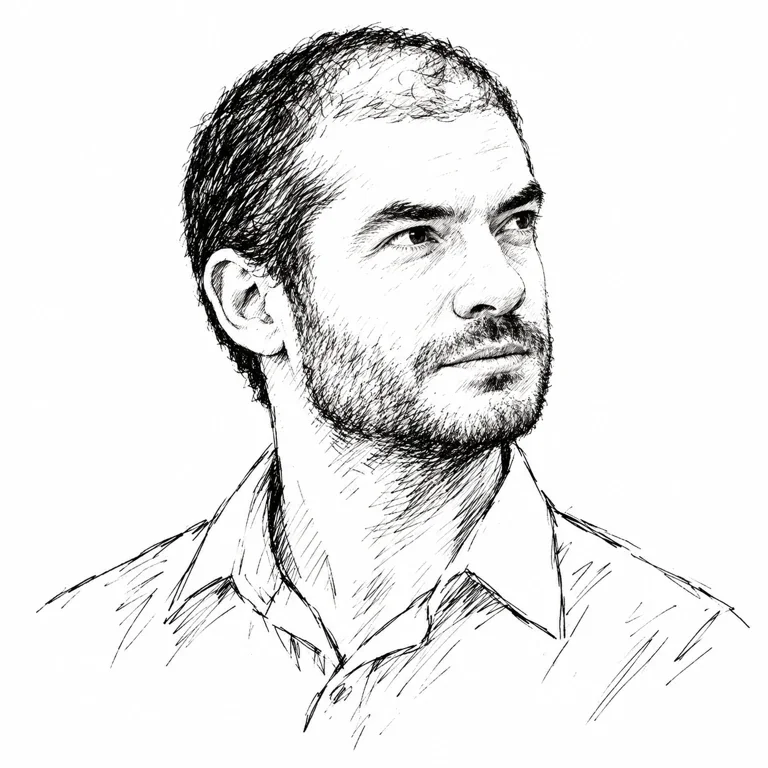
Ilya Sutskever's career runs through several of deep learning's defining developments, from the AlexNet collaboration to sequence-to-sequence learning and his role as an OpenAI co-founder and chief scientist. His work helped establish that large neural networks could learn increasingly useful representations and behaviours from data. That history explains the attention surrounding his subsequent company, but it should not be confused with evidence about a product the public has not yet been able to assess.
Safe Superintelligence describes a tightly focused mission: developing superintelligence while treating safety and capability as connected engineering problems. The company's public statement is a declaration of intent, not a public demonstration that the problem has been solved. That makes Sutskever an unusual inclusion in a useful guide: highly consequential because of his established contributions and the research direction he is pursuing, but difficult to evaluate through the normal lens of available products. The question to follow is what evidence eventually emerges about the relationship between learning, generalisation and control. Until then, the sensible distinction is between confidence in an experienced research team and confidence in claims about an unobserved system.
Andrej Karpathy
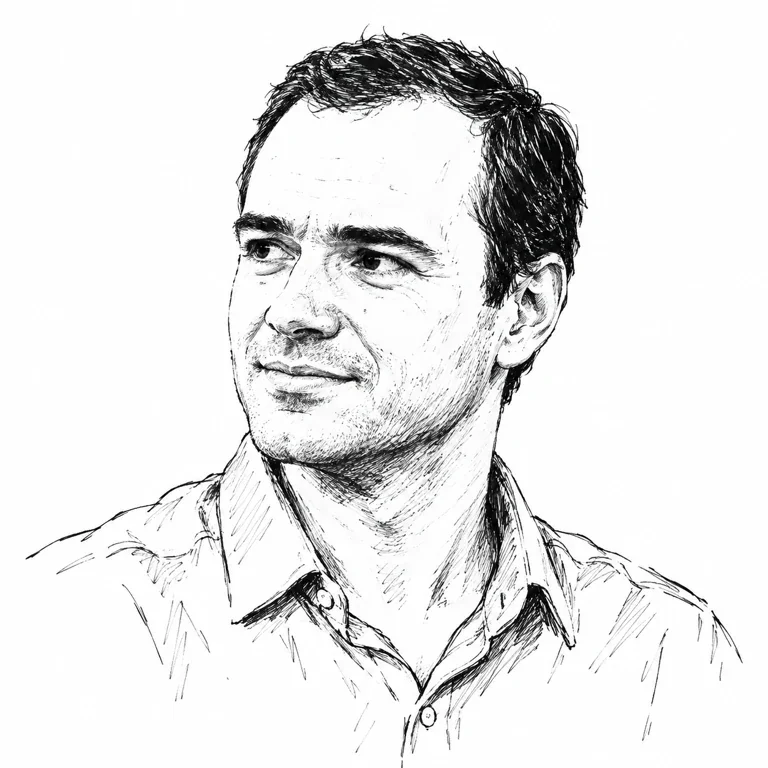
Andrej Karpathy has a rare ability to connect frontier practice with explanations that make the machinery understandable. His career record includes being a founding member of OpenAI, leading AI at Tesla and returning to OpenAI to work on areas including mid-training and synthetic data. Those experiences span language models and systems intended to interpret the physical world, giving his public teaching more substance than commentary assembled from product announcements.
His educational work is itself a significant contribution. Projects such as micrograd and the Zero to Hero series expose the mechanics of neural networks in manageable pieces, allowing learners to build understanding rather than simply repeat terminology. The broader importance is practical: an industry adopting complex systems needs people who can explain what the components do, where assumptions enter and how to investigate failures. Karpathy is especially useful for readers who want to move from using AI tools to understanding their behaviour. His demonstrations should still be read at their intended scale; a small educational implementation is not a production training stack. The value lies in making the underlying ideas inspectable enough that developers can ask better questions about the larger systems they use.
Andrew Ng
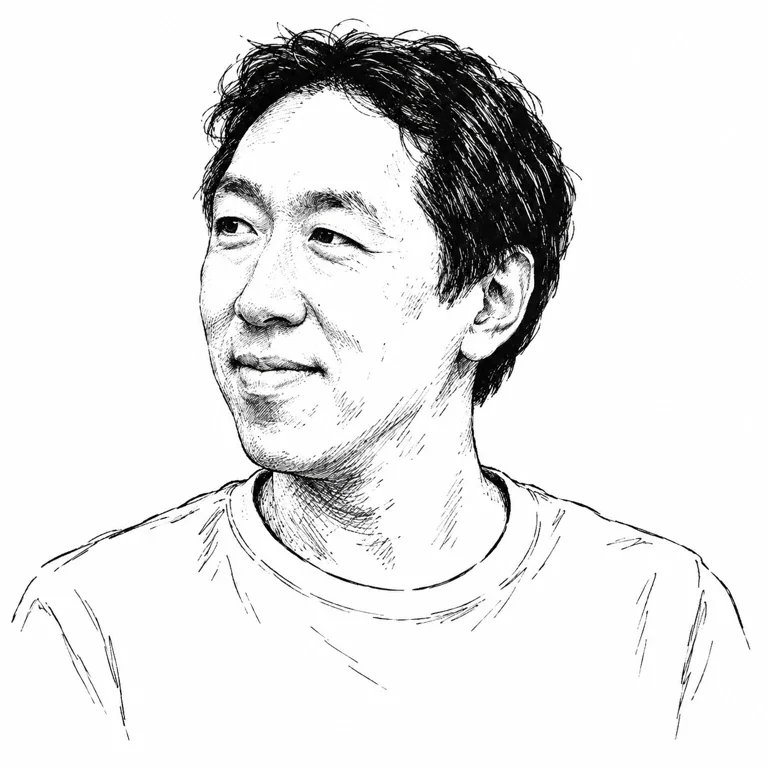
Andrew Ng has influenced AI through research, education and the practical work of helping organisations adopt it. His current roles span DeepLearning.AI, AI Fund, LandingAI and Stanford, following earlier leadership at Google Brain and Baidu. That combination makes him a useful counterweight to accounts of progress that focus entirely on the next frontier model. A capability can exist in a research laboratory for years before people have the skills, data and workflows to use it effectively.
Ng's emphasis on education and application development addresses that implementation gap. For businesses, the demanding work often concerns defining the task, assembling representative examples and measuring whether a system improves an actual process. Those issues receive less attention than model launches but determine whether spending on AI produces anything durable. His relevance is therefore partly institutional: courses, companies and developer communities can spread methods beyond a small group of specialists. Readers should distinguish educational guidance from the interests of the commercial organisations associated with it, as they would for any founder. The most useful way to follow Ng is to examine how his proposals turn broad capabilities into testable projects with identifiable users and measurable outcomes.
Building the frontier laboratories
Demis Hassabis
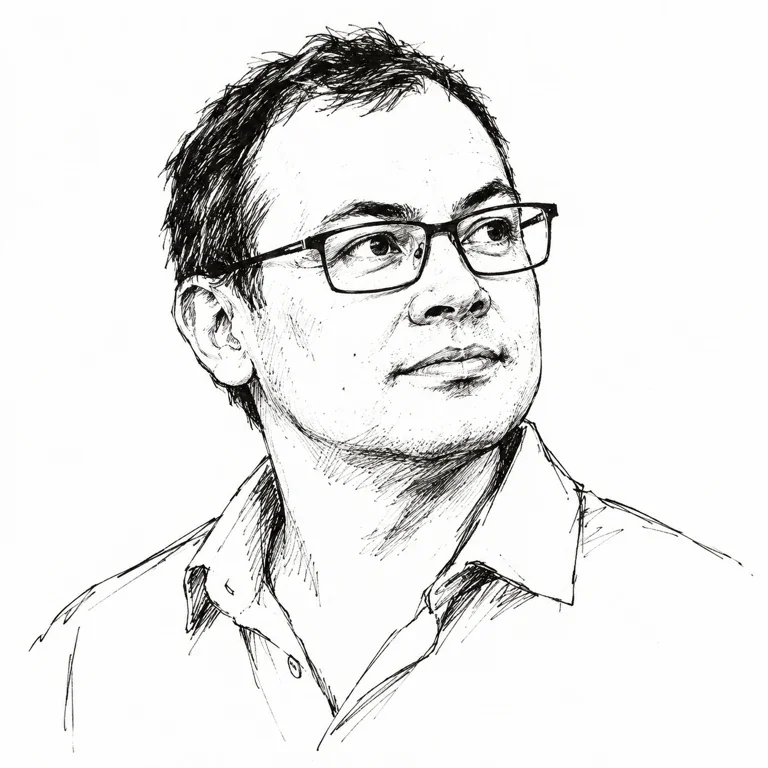
Demis Hassabis helped establish the model of an AI laboratory pursuing ambitious general research while assembling the engineering resources to turn it into working systems. DeepMind's development from games research to scientific applications is central to that record. The 2024 chemistry Nobel awarded to Hassabis and John Jumper for protein-structure prediction, alongside David Baker's work on protein design, recognised an achievement whose significance extends well beyond the technology industry. DeepMind's account explains the connection to AlphaFold.
His role has changed. In August 2026, Hassabis moved from chief executive to chairman of Google DeepMind and Alphabet's chief scientist, while continuing to lead Isomorphic Labs, according to reporting on the leadership transition. That makes older biographies incomplete. The work to watch is the translation of AI's scientific promise into repeatable discovery and, ultimately, useful interventions. Predicting a molecular structure and developing a successful medicine are different accomplishments with different evidential requirements. Hassabis matters because he has already helped change what researchers can compute; the next test is how much that changes what they can discover and validate.
Sam Altman
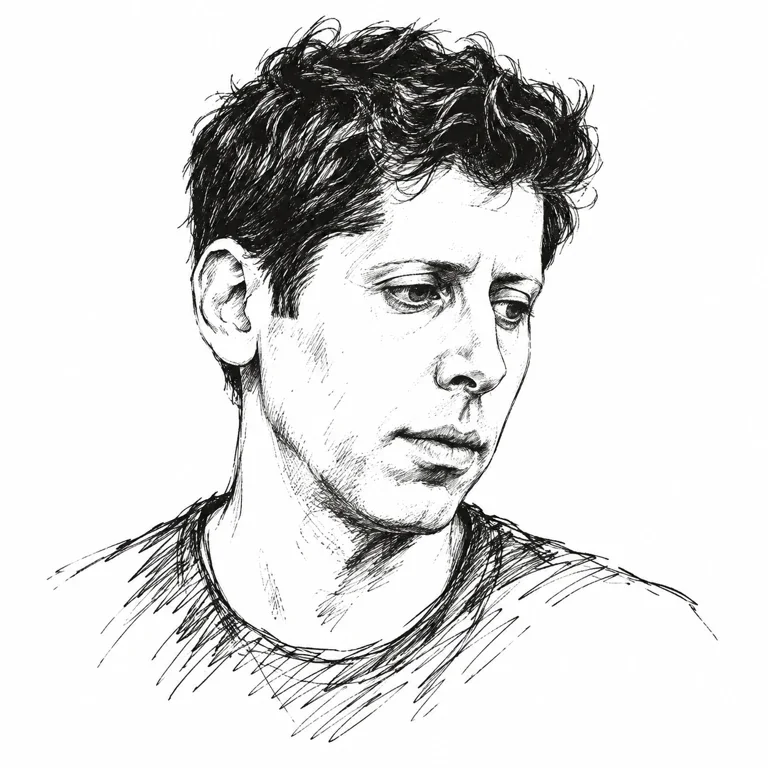
Sam Altman's influence comes primarily from organisation-building, capital allocation and the public deployment of AI. As OpenAI's chief executive, he helps determine how research becomes a service used by developers, businesses and consumers. OpenAI's stated mission and structure provide the company's own account of that undertaking; assessing its success requires looking beyond the mission statement to the products, infrastructure commitments and governance choices that follow.
Altman is important to understand because the availability of capable AI is partly an institutional outcome. Training and serving models require money, computing capacity, distribution and decisions about which risks are acceptable. Leadership choices can therefore change the direction of the field even when the leader is not the principal author of a technical paper. For readers, the most revealing questions concern the relationship between promised benefits and delivered behaviour: whether access becomes more useful, whether systems remain dependable as they gain autonomy and how commercial incentives interact with oversight. Altman's profile belongs alongside researchers rather than above them. It represents a different source of influence—the ability to coordinate the resources and partnerships through which research reaches society.
Dario Amodei

Dario Amodei, Anthropic's co-founder and chief executive, sits at the intersection of frontier capability and arguments about how that capability should be controlled. His background in research distinguishes his public interventions from those of executives who entered AI chiefly through investment or distribution. Anthropic's work includes Constitutional AI, which explores using explicit principles and AI feedback to shape a model's behaviour, alongside research into interpretability and alignment.
The consequential question is how a laboratory turns those ideas into operating constraints while competing commercially. A published policy or promising experiment is useful evidence of an approach, but it is not a universal guarantee of safe deployment. Nuvastra's examination of Anthropic's Claude misuse report illustrates why the distinction matters: useful capabilities can also reduce the effort required for harmful activity. Amodei is worth following for both the systems his company releases and the standards he argues should govern the industry. Those two roles should be assessed together, with attention to whether proposed safeguards are measurable, independently examinable and maintained when development becomes more competitive.
Daniela Amodei

Daniela Amodei, Anthropic's co-founder and president, represents a form of AI leadership that is often under-described: building the organisation around the research. A laboratory needs more than talented scientists. It needs teams that can recruit, make decisions, serve customers and keep responsibility clear as the product becomes more powerful. Anthropic's company account places its public-benefit structure and long-term mission at the centre of its identity, but those commitments only acquire practical meaning through everyday operations.
Her inclusion reflects the importance of that translation. Commercial adoption brings demanding customers, procurement requirements and pressure for predictable service; frontier research introduces uncertainty and rapid change. An organisation has to reconcile the two without making commitments its systems cannot meet. For readers interested in how AI companies actually work, Daniela Amodei offers a useful lens on whether institutional design can support the promises made by technical leadership. The question is not whether operations are as intellectually glamorous as inventing a new model. It is whether a company can repeatedly turn difficult research into a service that customers can understand and govern. That capability can shape the industry's direction as materially as another improvement on a benchmark.
Mira Murati

Mira Murati's experience at OpenAI placed her close to the difficult transition between experimental capability and mass-market products. Her subsequent company, Thinking Machines Lab, makes human collaboration and customisation central to its stated direction. Its public work includes Tinker, a service intended to make model training and adaptation more accessible, alongside a broader interest in systems that can interact through more than text alone.
That direction matters because a capable general model does not automatically fit a particular organisation or person. Adapting behaviour, incorporating specialist knowledge and making interaction understandable remain substantial problems. Murati's company is therefore worth following for what it makes possible between a fixed model supplied by a vendor and the expensive undertaking of building an entire model stack independently. The open question is how much useful control users gain, and at what cost in complexity, reliability and required expertise. The company's ambitions should be assessed through the tools it ships and the work those tools enable. Murati's record makes her an influential builder; the new venture's long-term contribution will depend on whether customisation becomes genuinely practical beyond expert teams.
Mark Chen
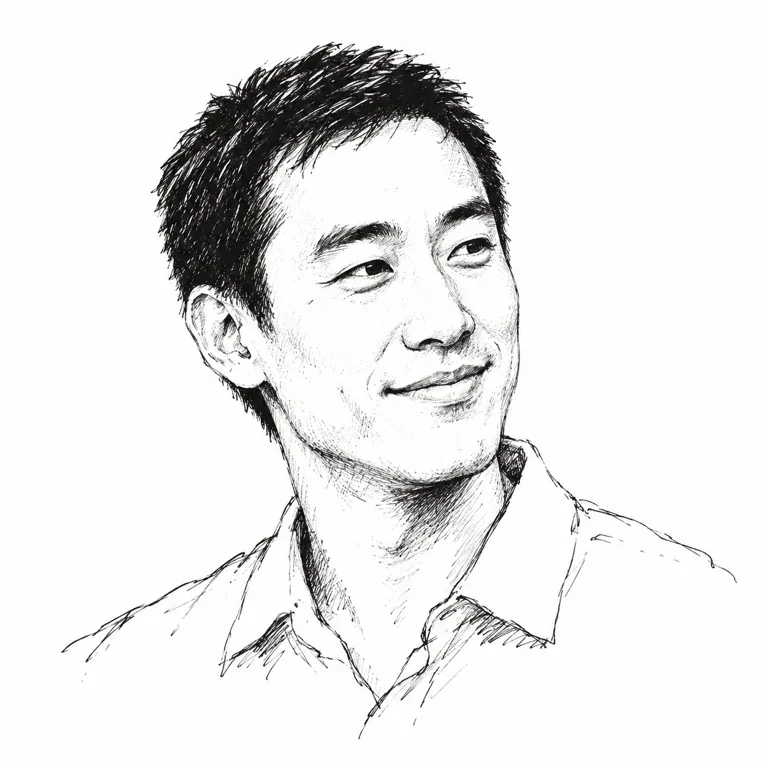
Mark Chen is OpenAI's chief research officer, with a research record that crosses coding and image generation. He is the first-listed author of the 2021 Codex paper, which examined language models trained on code, and a co-author of the research behind DALL·E 2. Those projects addressed different outputs but shared an important challenge: turning a learned representation into something a person can specify, inspect and use. They help explain why his influence extends beyond an organisational title.
Chen is useful to follow because the frontier no longer consists of a single capability improving in isolation. Models are expected to handle different kinds of input, write software, use tools and sustain work over longer periods. Progress in one area can create new weaknesses elsewhere, while the resources needed for experiments force choices about what receives attention. His significance lies in helping coordinate that portfolio of research rather than in being credited as the sole inventor of collective achievements. For readers assessing OpenAI, a productive question is how its research priorities appear in observable behaviour: which tasks become more reliable, which failures persist and whether evaluation keeps pace with the expanding range of things the systems are asked to do.
Jakub Pachocki

Jakub Pachocki is OpenAI's chief scientist, with a research background that includes the team's OpenAI Five project. Its work on Dota 2 required learning across long sequences of decisions, partial information and coordinated behaviour. The project is a useful historical reference because those difficulties reappear when modern agents attempt extended tasks, even though success in a game does not establish competence in the wider world. Pachocki's role connects that experience to the scientific direction of a frontier laboratory.
Pachocki belongs in this guide because the next stage of progress depends on decisions inside the research process that are seldom visible in a product demonstration. Better reasoning, for example, requires distinguishing a model that reaches the right answer through a robust procedure from one that succeeds on familiar patterns but fails when the task changes. The same applies to agents whose apparent success may depend heavily on their surrounding tools. Readers should resist assigning every company result to a single scientist, while recognising that research leadership can influence which standards become normal. The useful evidence is the combination of published methods, candid accounts of limitations and performance that survives evaluation beyond a laboratory's preferred examples.
Arthur Mensch
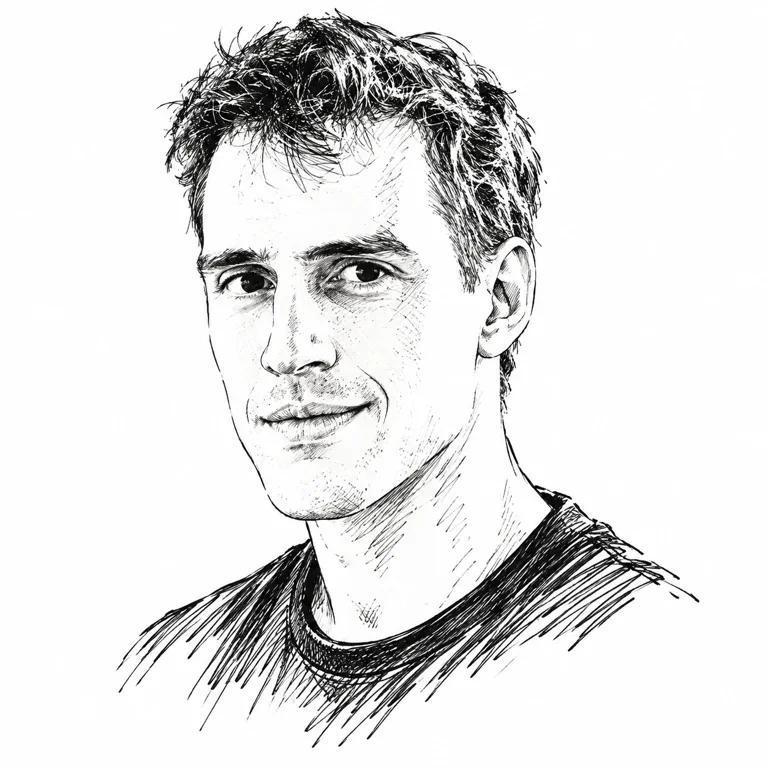
Arthur Mensch, co-founder and chief executive of Mistral AI, is central to the question of whether Europe can build and operate important AI capabilities on its own terms. The company combines model development with commercial products and deployment options, giving customers alternatives to relying exclusively on the largest US platforms. Its significance is not captured by nationality alone: architecture, access terms, infrastructure and the ability to adapt a system all affect a customer's real room for manoeuvre.
Mensch is worth following because Mistral sits between two models of the industry: broadly available model development and tightly managed commercial services. Neither label should be applied indiscriminately across an entire company's output; the licence and deployment conditions of each release matter. For a business, the practical question is whether it can achieve the required performance while retaining the control it needs over data, cost and operation. Mistral's role in that debate makes Mensch consequential even when another laboratory tops a particular benchmark. The stronger measure is whether the company sustains a credible alternative that organisations can actually run, adapt and support under their own constraints.
Aidan Gomez
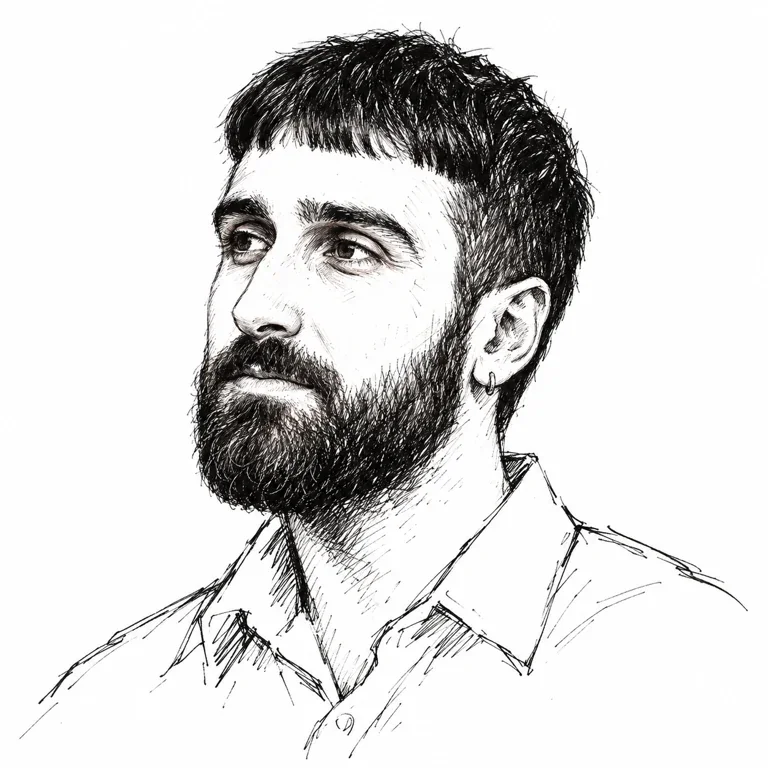
Aidan Gomez was one of the authors of Attention Is All You Need, the 2017 paper that introduced the Transformer architecture. That places him in the history of the mechanism behind much of modern language modelling, but his current influence comes through Cohere, where he is co-founder and chief executive. The company's enterprise focus centres on applying models to business information and workflows rather than treating consumer attention as the only route to adoption.
That distinction is consequential. An enterprise system has to retrieve relevant material, respect access controls and operate within technical and organisational boundaries. A fluent answer is useful only if the information behind it is appropriate to the person asking and the task being performed. Gomez's work therefore connects a foundational research contribution with the less theatrical problems of deployment. The area to watch is how well enterprise AI combines language capability with trustworthy retrieval and operational control. Claims about productivity should be tested against complete workflows, including the cost of preparation and review. A model that performs impressively in isolation can still be a poor business system if those surrounding requirements are neglected.
Joëlle Pineau
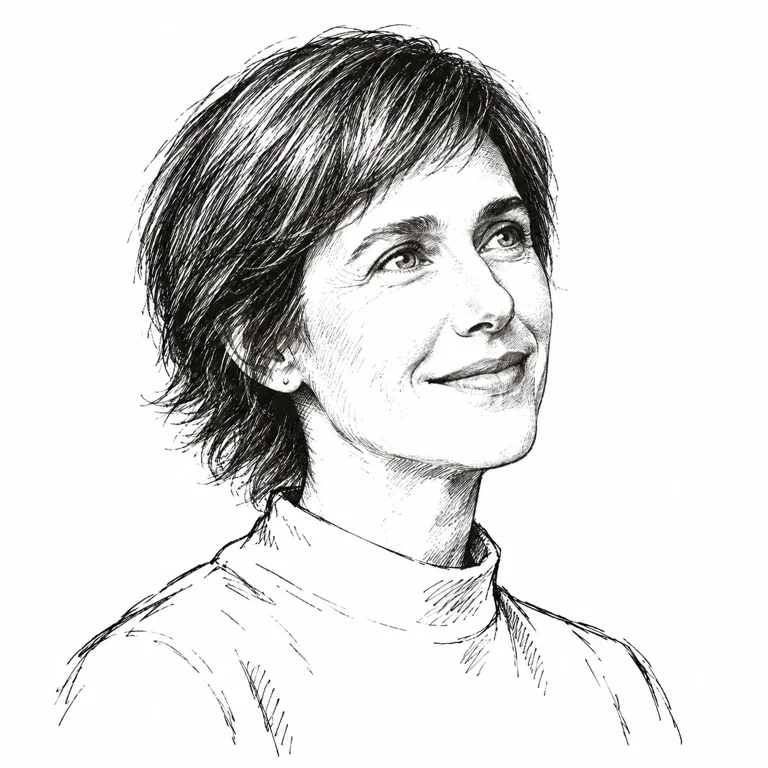
Joëlle Pineau's career brings reinforcement learning, academic research and large-scale laboratory leadership together. She is now Cohere's chief AI officer, following her leadership of Meta's Fundamental AI Research organisation. Her long-standing interest in reproducibility is especially relevant to an industry in which a headline result can travel much further than the details required to examine it. Reproducibility asks whether another researcher can meaningfully reconstruct a finding, rather than simply accept the published claim.
That concern has practical consequences for enterprise AI. If a company cannot establish what was measured, under which conditions and with which sources of variation, it struggles to know whether an improvement will transfer to its own setting. Pineau's combination of research and organisational experience makes her useful to follow as the field tries to turn experimental systems into repeatable services. The interesting test is whether evaluation discipline survives the pressure to deliver new capabilities quickly. Readers should look for transparent methods, meaningful baselines and accounts of failure as well as success. Those details are less marketable than a leading score, but they are what allow technical progress to become dependable institutional knowledge.
Liang Wenfeng
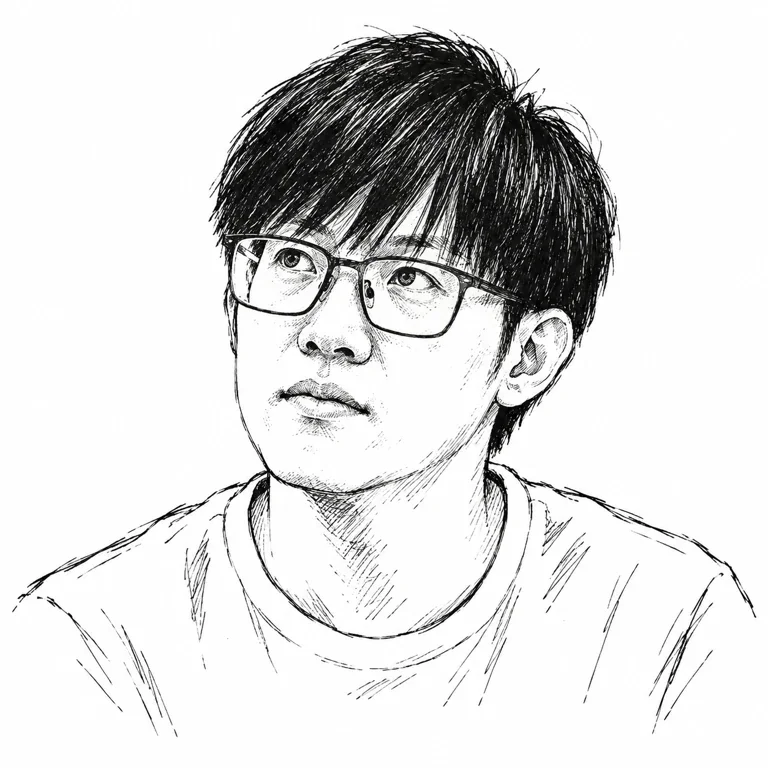
Liang Wenfeng, the founder of DeepSeek, has helped make the economics and accessibility of frontier AI impossible to separate from the technical discussion. The laboratory's releases brought fresh attention to efficient model development and to the possibility that important capabilities could emerge outside the familiar group of US technology companies. The DeepSeek-R1 repository gives readers a direct route to the team's account of its reasoning models, releases and research approach.
The most useful interpretation goes beyond claims that one system is simply cheaper or better than another. Training budgets, inference costs, model sizes and evaluation conditions describe different things, and an eye-catching comparison can conceal those differences. DeepSeek's influence lies partly in forcing competitors and customers to examine the assumptions behind the cost of capability. Liang is worth following for the laboratory's continuing choices about research direction and model availability, while specific performance claims should be evaluated release by release. An accessible model is valuable because others can test and adapt it; that opportunity does not make every reported result independently established. The lasting contribution will be measured in methods and systems that remain useful after the announcement cycle passes.
Yang Zhilin

Yang Zhilin, founder of Moonshot AI, connects academic work on language modelling with the development of Kimi. His research record includes contributions to Transformer-XL and XLNet, both concerned with limitations in how language models learn and use context. That background matters because long documents and extended tasks expose problems that are easy to miss in short conversational demonstrations: a system must identify relevant information and preserve useful relationships across a much larger working space.
Moonshot's Kimi K2 release materials provide one concrete entry point into the company's work on models intended for coding and tool use. They should be read as documentation of that release, rather than assumed to describe every subsequent model or to establish universal superiority. Yang's broader significance is the contribution of another technically ambitious laboratory to the range of architectures, products and deployment choices available. For readers, the important question is how effectively a system uses its available context and tools, not merely how much input it can accept. A large context window can accommodate a task without guaranteeing that the model will reason about all of it correctly.
Learning after deployment
Tim Gülke
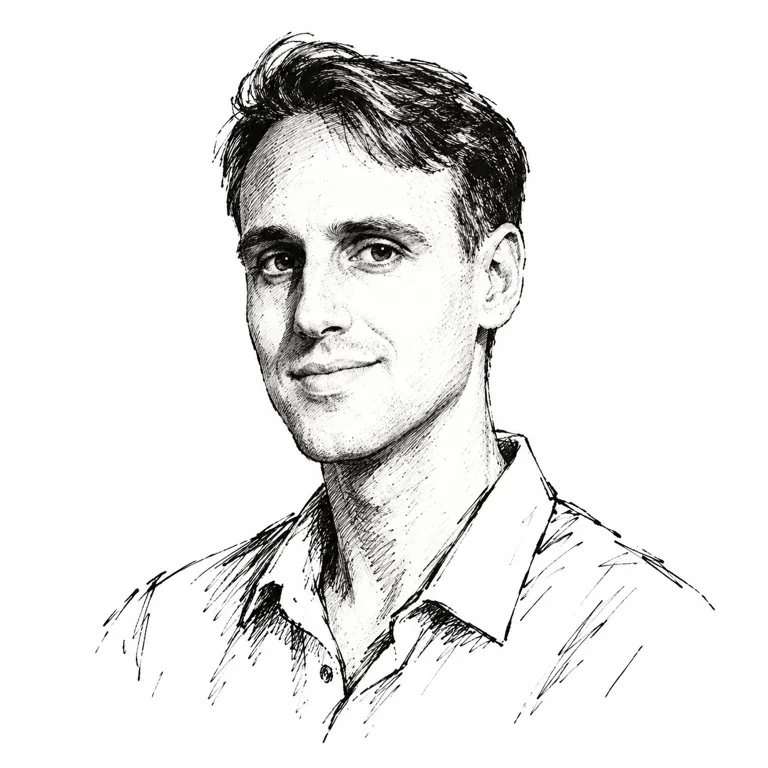
Tim Gülke is an emerging founder whose work addresses a practical weakness in deployed AI: the world continues to change after a model has been trained. Wakeline's company biography identifies him as founder and chief executive, with a doctorate in computer science from RWTH Aachen and experience at Volkswagen in Germany and China. His interests bring formal approaches to computation into contact with the operational problems of systems that must make decisions under changing conditions.
Wakeline describes an adaptive architecture intended to update within live decision processes, with energy-market forecasting among its stated applications. Those are company claims, and inclusion here does not imply independent confirmation of its performance or equivalence to the established research records elsewhere in this guide. The reason to examine Gülke's work is the problem itself: a useful system must distinguish informative change from noise, adapt without becoming unstable and preserve a record of why its behaviour changed. Continual learning, retrieval and periodic retraining address different parts of that problem. His work offers a specific commercial approach to investigate, with the decisive questions concerning evidence over time, resilience to poor incoming data and the cost of keeping predictions useful as conditions move.
The infrastructure, tools and open research beneath AI
Jensen Huang
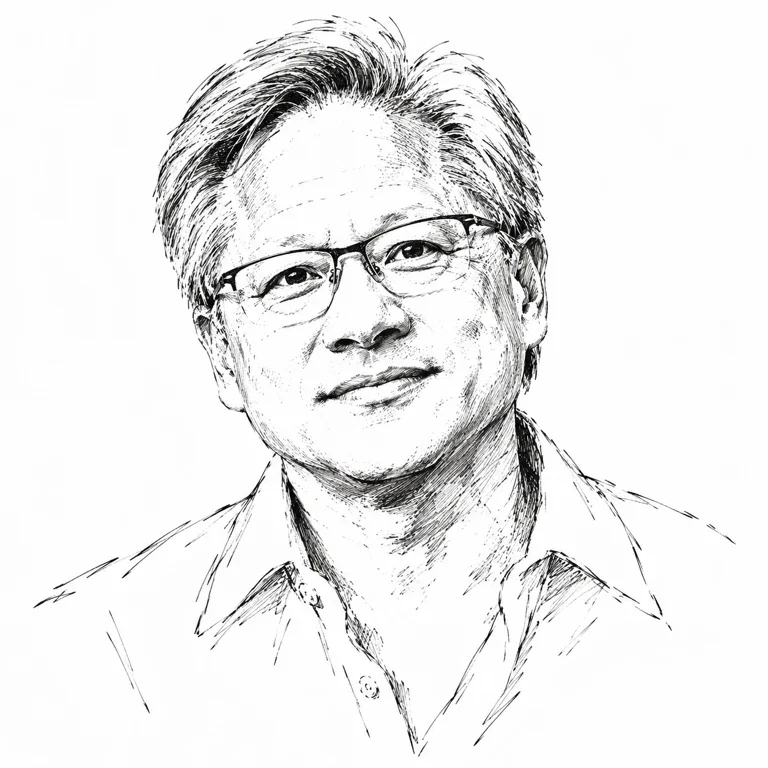
Jensen Huang's importance to AI extends beyond the chips carrying NVIDIA's name. The company he co-founded has assembled a computing platform in which processors, networking, software and development tools reinforce one another. His official biography traces the company's development from graphics towards accelerated computing. For the AI industry, that shift helped turn a specialised form of parallel processing into essential infrastructure for training and running large models.
The most revealing way to understand Huang's influence is at the level of the complete system. A faster processor is valuable only if data reaches it efficiently, developers can use it and the surrounding installation operates reliably. Nuvastra's reporting on d-Matrix's planned integration with NVIDIA shows how even an alternative accelerator can become part of the incumbent's wider platform. This creates both opportunities and dependencies for customers. Huang's decisions help determine which architectures become practical to deploy and which technical paths receive an established route to market. The questions to examine are therefore system cost, usable capacity and freedom to change components, alongside the headline performance of an individual chip.
Lisa Su

Lisa Su, AMD's chair and chief executive, is one of the most consequential people in the effort to make advanced computing a genuinely competitive market. Her engineering and leadership background helps explain a strategy built around sustained product execution rather than a single spectacular announcement. In AI, AMD's opportunity involves accelerators, server processors and the software needed to make those components useful to customers running demanding workloads.
Competition at this level matters even to organisations that never buy a chip directly. The choices available to cloud providers influence capacity, pricing and the range of services that can be offered. But being a credible alternative requires more than favourable specifications: users need supported software, predictable performance and an acceptable cost of moving their workloads. Su's work is therefore worth assessing through the full adoption process. Can a team deploy its models, maintain them and obtain the expected economics without disproportionate engineering effort? Her significance lies in making that question commercially meaningful. A market with more than one viable infrastructure path gives the rest of the AI industry more room to experiment and negotiate.
Andrew Feldman

Andrew Feldman, co-founder and chief executive of Cerebras, is pursuing one of the clearest architectural alternatives to conventional AI computing. Cerebras is associated with wafer-scale processors: instead of dividing a silicon wafer into many separate chips, its approach uses a very large integrated processor. The attraction is the possibility of keeping more computation and communication close together, reducing some of the complications involved in coordinating many smaller devices.
That is an engineering proposition whose usefulness depends on the workload. Memory requirements, software support, utilisation and the cost of the complete service all affect whether an unusual processor delivers a practical advantage. Feldman's importance lies in giving customers and researchers another design to test, rather than in establishing that one architecture will win every task. His career is also a reminder that AI progress can come from reorganising the machine underneath a model, not only from changing the model itself. When evaluating Cerebras announcements, readers should look for comparable end-to-end measurements: what is being run, how quickly a useful result arrives and how much capacity is required. A striking chip photograph cannot answer those questions on its own.
Tri Dao

Tri Dao works at the point where algorithms meet the physical realities of computing hardware. A Princeton assistant professor and Together AI's co-founder and chief scientist, he is best known for FlashAttention. Its central contribution was to make exact attention more efficient by reducing expensive movement of data between levels of GPU memory. That is a subtle but powerful distinction: an algorithm can become much faster without approximating away the operation it is meant to perform.
Dao also co-authored Mamba with Albert Gu, exploring selective state-space models as an alternative route to processing sequences. His research page connects these architectural and systems interests. The common theme is that useful model design must account for how computation actually happens, rather than assume hardware will absorb every inefficiency. For developers and research teams, this work can change which experiments fit within a budget and which services are economical to run. Dao is particularly valuable to follow because the consequences are often concrete: memory use, throughput and the feasibility of longer sequences. The relevant comparison remains task-specific, since an efficient mechanism must still deliver the quality the application requires.
Clément Delangue

Clément Delangue, Hugging Face's co-founder and chief executive, has helped build a meeting place for the AI ecosystem. Models, datasets, demonstrations and discussions become more useful when people can find them, examine how they were produced and build on one another's work. Hugging Face provides infrastructure for that exchange, making Delangue influential through access and coordination as much as through any individual technical invention.
The significance of a shared platform becomes clearer when considering how fragmented AI development can be. A research paper may describe a result, but adoption often depends on weights, code, documentation, compatible tools and a community able to resolve practical problems. Bringing those elements closer together lowers some of the barriers to participation. It also creates responsibilities: availability does not guarantee quality, legality or a licence suited to every intended use. Delangue's work is therefore connected to a larger question about who gets to participate in AI development and under what conditions. The useful distinction is between a model being downloadable and a development process being meaningfully open. Readers should examine the actual artefacts and permissions, rather than treating openness as a single label.
Thomas Wolf
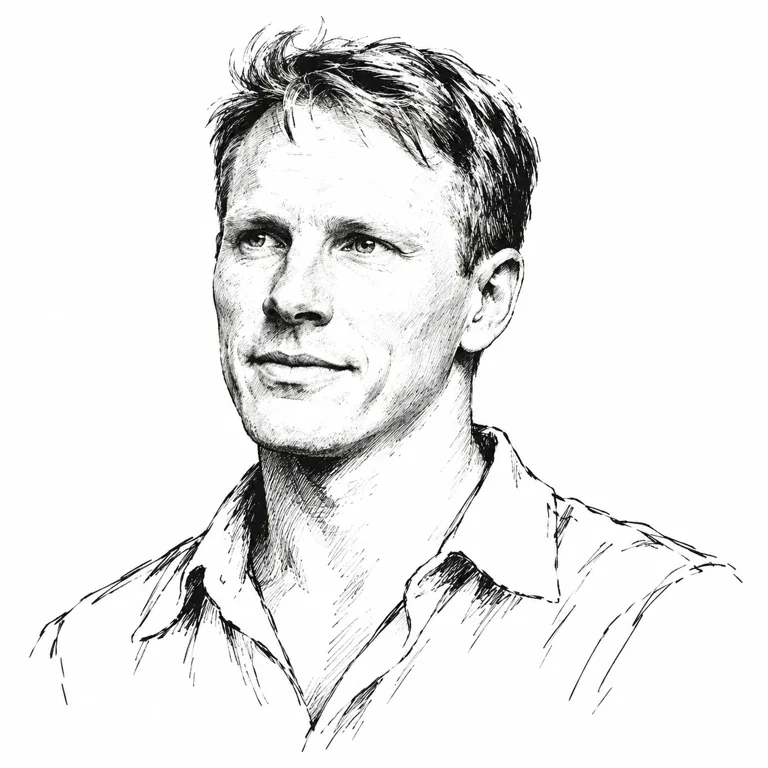
Thomas Wolf, Hugging Face's co-founder and chief science officer, has helped turn complex research into tools that a much wider community can use. His public account of his work spans widely used libraries and collaborative research efforts, including Transformers and the BigScience initiative. His route through physics and patent law before machine learning is an interesting reminder that the field's builders do not all arrive through the same academic path.
Wolf's contribution is partly about making research portable. A method becomes more influential when another team can load it, adapt it, compare it and understand its limitations without rebuilding the surrounding software from scratch. That can increase the speed of collective experimentation, while documentation and evaluation help determine whether the convenience produces reliable work. His interests in datasets and open research also expose an important limit in discussions about model access: the training process and the evidence behind a result may remain difficult to reconstruct even when weights are available. Following Wolf is useful for understanding the infrastructure of collaboration—the libraries, data practices and shared projects that allow scientific ideas to travel beyond the organisations that first produced them.
Percy Liang
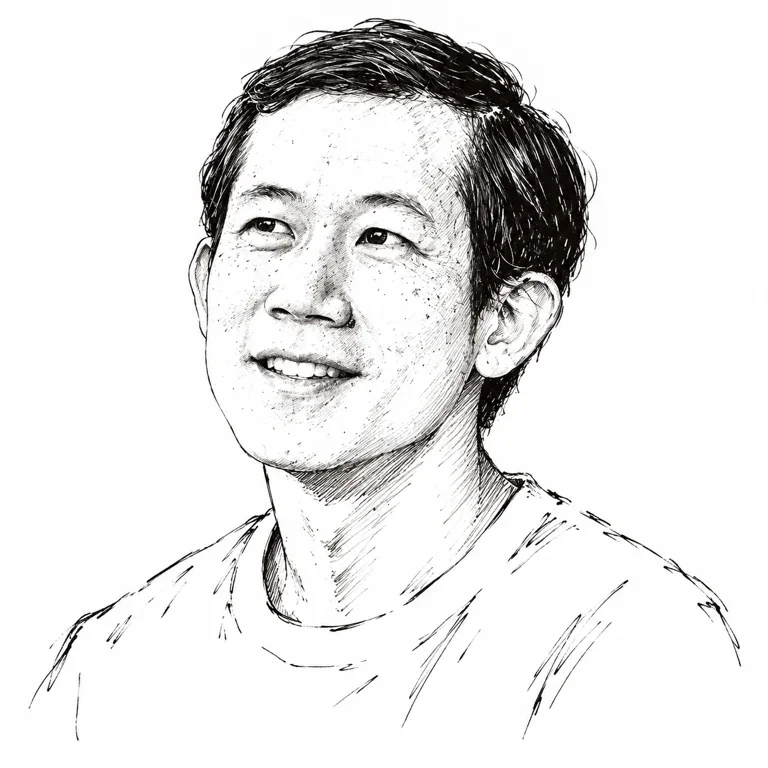
Percy Liang's work asks how AI can be made more understandable as a scientific object. At Stanford, his research connects language modelling, evaluation and open development. The Holistic Evaluation of Language Models project, known as HELM, sought to broaden assessment beyond a single accuracy figure by examining multiple dimensions and making evaluation more systematic. That approach matters because users rarely care about one capability in isolation.
His current work also includes Marin, an effort to make model development more open and reproducible, including the experimental process behind a result. Failed experiments and design choices can be scientifically valuable even when they are absent from a polished release. Liang is therefore an important person for anyone trying to distinguish a credible comparison from a leaderboard-shaped marketing exercise. A model may be accurate but expensive, capable but difficult to audit, or strong on a benchmark that poorly represents a real task. His contribution is to improve the machinery by which those differences become visible. Better evaluation does not merely describe progress after the fact; it helps decide which kinds of progress the field has an incentive to pursue.
Jeff Dean
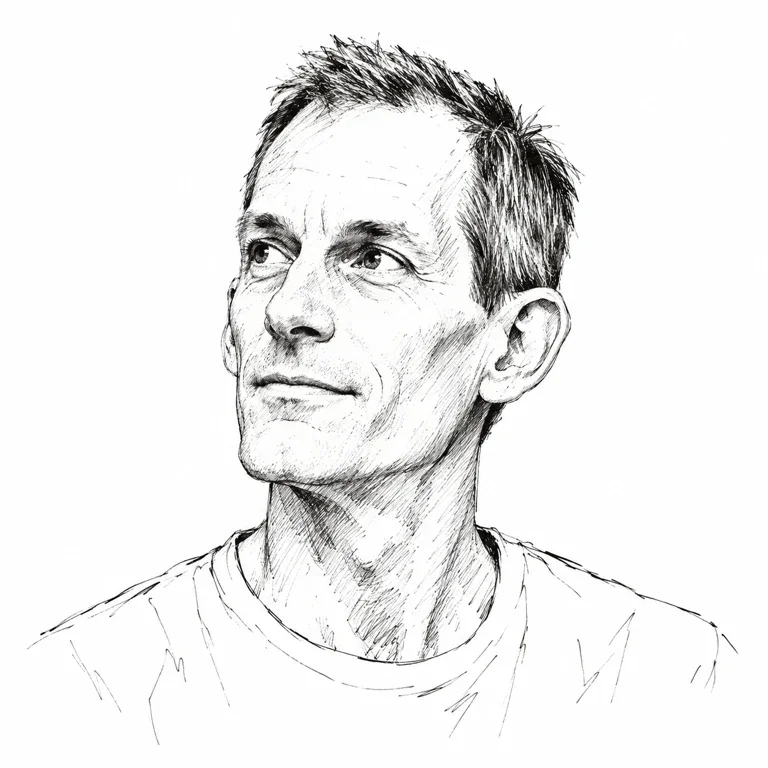
Jeff Dean's career helped establish the connection between large-scale computing systems and modern machine learning. His work at Google made him one of the industry's best-known examples of a researcher whose influence comes from both algorithms and the infrastructure that allows them to operate at scale. In 2026 he entered a new phase as a co-founder of Discovery Loop, alongside Sanjay Ghemawat, Quoc Le and Oriol Vinyals.
The company's stated direction is to accelerate discovery by building systems that participate in iterative experimentation, beginning with machine-learning research and engineering. That ambition is especially interesting in Dean's case because a useful research loop requires reliable execution as well as plausible ideas. Experiments must run, results must be measured and subsequent decisions must preserve what was actually learnt. A system that generates many suggestions without improving that process may simply create more work to review. Dean's inclusion reflects an established record in making ambitious computation practical and a new attempt to apply that experience to the research process itself. The evidence to watch is whether automated experimentation produces verifiable improvements that remain useful outside a tightly controlled demonstration.
Oriol Vinyals
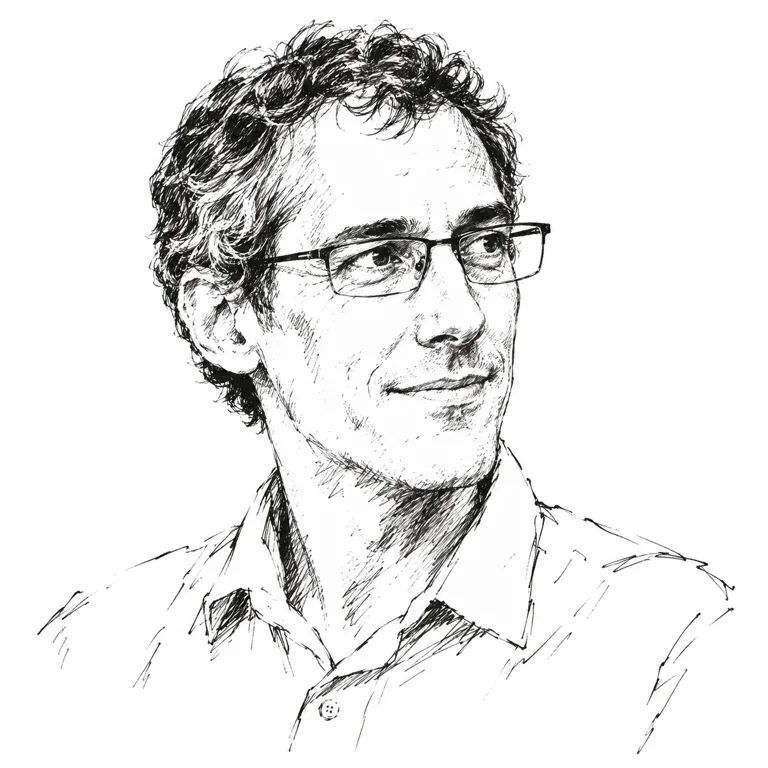
Oriol Vinyals has worked across some of the central problems in modern AI: learning representations, generating sequences and training systems to act in complex environments. His sequence-to-sequence research includes sequence-to-sequence learning, which helped establish a flexible way to map one sequence into another. That work influenced applications such as translation and became part of the intellectual path towards today's language systems.
Vinyals is now a co-founder of Discovery Loop. His move matters because applying AI to research combines problems he has approached from different directions: representing a task, proposing actions, evaluating outcomes and improving over repeated attempts. The company's goals remain ambitions to be tested, but they place a strong research record in a setting where the object of automation is increasingly the development process itself. This raises a demanding question about evidence. If a system proposes a better model, researchers still need to know whether the improvement is robust, whether the comparison is fair and whether the result can be reproduced. Vinyals is worth watching for the methods that make such loops informative, rather than simply faster at producing experiments.
Accountability by design
Bryan Korba
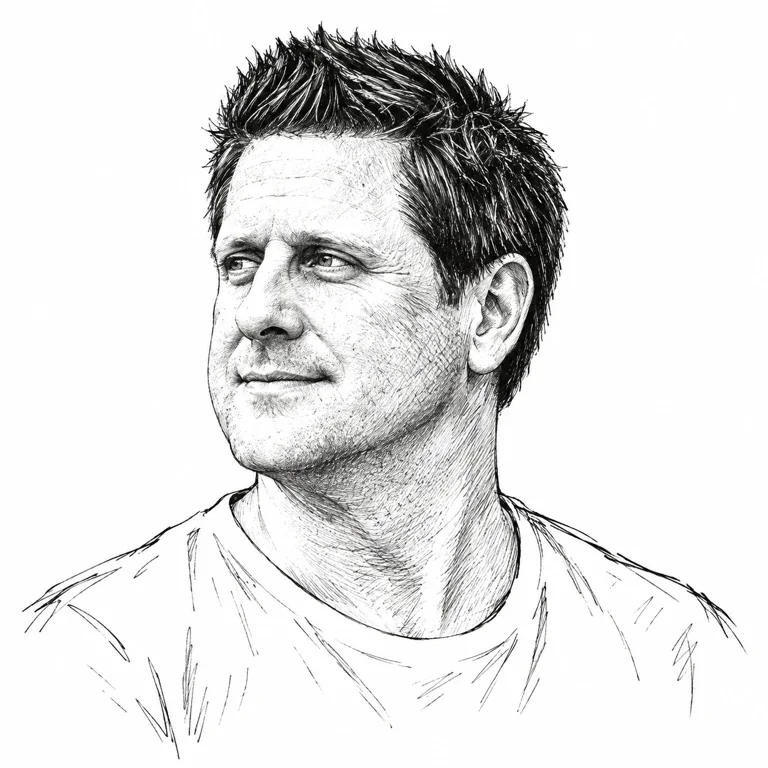
Bryan Korba, founder and chief executive of Popcorn Labs, approaches AI from the problem of institutional accountability. His background includes investing in and operating businesses, and his work on Equilibrium focuses on the relationship between an organisation's stated standards and its actual behaviour. In Nuvastra's interview with Korba, he argues that being correct more often than a person is not, by itself, a sufficient basis for granting a machine authority.
Popcorn Labs describes its platform in terms of deterministic, reproducible computation and traceable outputs. These are the company's claims; the public material reviewed does not establish independent validation across all the situations its broader argument addresses. The distinction between reproducibility and truth is essential. A system can repeat the same wrong result, but a stable, traceable process may make the error easier to investigate. Korba is included as an emerging founder advancing a distinctive position on what institutions should demand from automated decisions. His work is useful to examine alongside generative AI because it asks a different question: not simply whether a system can produce an answer, but what evidence and accountability should accompany its use.
Spatial intelligence and machines that act
Fei-Fei Li

Fei-Fei Li helped change computer vision by making the organisation of visual data a central research problem. ImageNet's importance lay not only in its scale but in creating a shared resource through which approaches could be developed and compared. Her subsequent work has combined scientific leadership with a sustained interest in the relationship between AI and people. At World Labs, which she co-founded, the current focus is spatial intelligence: systems able to generate and work with three-dimensional worlds.
That direction tackles a limitation of treating intelligence as a conversation about the world. A machine that designs a space, supports simulation or assists a robot must reason about relationships that persist as the viewpoint changes. World Labs describes products intended to create navigable environments from different inputs; those capabilities should be judged by their consistency and usefulness, not only the appeal of a rendered scene. Li's significance lies in connecting visual understanding to a broader account of intelligence grounded in space. The important distinction is between an image that looks plausible from one angle and an environment whose geometry and behaviour remain coherent when someone interacts with it.
Sergey Levine

Sergey Levine's research at Berkeley focuses on learning systems that can make decisions and control actions. His laboratory's work spans reinforcement learning, robotics and learning from previously collected experience. That last area is especially important because physical interaction is expensive: robots wear out, people must supervise them and mistakes can damage the environment. A system that learns effectively from existing data can make experimentation more practical.
Levine's work helps explain why embodied AI is more difficult than attaching a language model to a robot. The machine must connect perception to movement, cope with uncertainty and recover when the world fails to match its expectations. It also needs a way to improve without repeatedly attempting unsafe or useless actions. His relevance is therefore methodological as much as commercial: the field needs principles for using heterogeneous experience and transferring it to new situations. When watching a robotics demonstration, the questions suggested by this research are straightforward but demanding. How much preparation was required, what happens after an unsuccessful attempt and can the same learning system cope when the object, task or setting changes?
Chelsea Finn
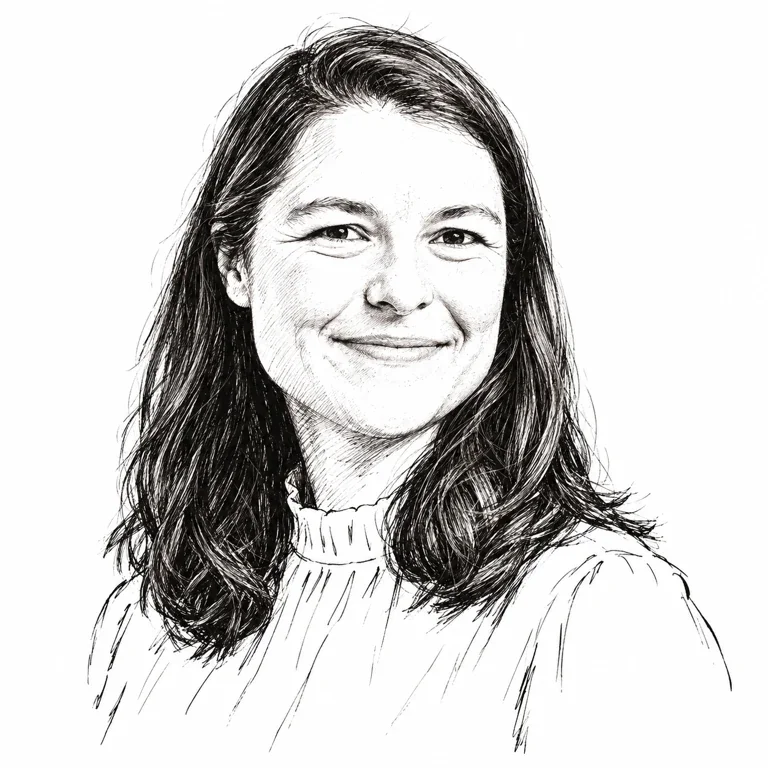
Chelsea Finn studies how machines can learn from experience and adapt when circumstances change. Her Stanford research and work as a co-founder of Physical Intelligence connect that question to robotics. She co-authored model-agnostic meta-learning, or MAML, with Pieter Abbeel and Sergey Levine: a method for learning an initial set of model parameters that can be adapted to new tasks with relatively little additional training.
The broader problem is one that every useful robot encounters. A carefully trained behaviour is not enough if a new home, tool or arrangement of objects requires starting again. Finn's work investigates how prior learning can make new learning easier, a distinction that matters far beyond robotics. Physical Intelligence's research brings that interest into models intended to control a range of tasks and machines. Demonstrated breadth should still be examined carefully: a collection of successful examples does not establish unrestricted generality. The valuable evidence concerns how performance changes in unfamiliar settings, what feedback is needed and whether adaptation improves the system without undermining what it already knows. Finn is an important guide to that boundary between impressive repetition and useful flexibility.
Pieter Abbeel

Pieter Abbeel has helped move robot learning from tightly specified control towards systems that can learn from demonstrations and experience. His Berkeley profile connects research in reinforcement and imitation learning with company-building, including Covariant. The practical appeal is clear: many physical tasks are difficult to describe exhaustively in code but easier to demonstrate, provided a machine can extract a behaviour that transfers beyond the example.
His current influence also reaches Amazon's model-development effort. Reporting in July 2026 identified Abbeel as leading its Frontier Model Research initiative. That brings a researcher associated with embodied learning into a broader race over foundation models. The connection is worth understanding without assuming that success in one setting automatically transfers to another. Both require systems that can learn useful structure from experience and behave reliably when the task changes, but their data and evaluation problems differ. Abbeel's career makes him a useful person to follow at that intersection: the movement between academic methods, operational robotics and the large-scale research organisations trying to turn general learning into deployable capability.
Jim Fan

Jim Fan co-leads NVIDIA's Generalist Embodied Agent Research group with Yuke Zhu, working on systems that can act in virtual and physical environments. His research includes Voyager, an agent that used a language model to build up a library of skills in Minecraft. The importance of that project was not that a game had been mastered in the ordinary sense, but that an agent could accumulate reusable behaviours while exploring an environment.
Fan's work links language-based reasoning with action, simulation and robot learning. Virtual environments offer a way to generate experience at a scale that would be difficult with physical machines alone, but the transfer is never automatic. A simulator may omit the awkward details that make a real task hard: friction, deformable objects, uncertain sensing or an unexpected obstruction. His projects are useful to follow because they expose both the attraction and the limits of combining foundation models with interactive learning. The strongest evidence will come from systems that carry skills into new settings and recover from failures, rather than from demonstrations in which every condition has been arranged to favour success.
AI as an instrument of scientific discovery
John Jumper
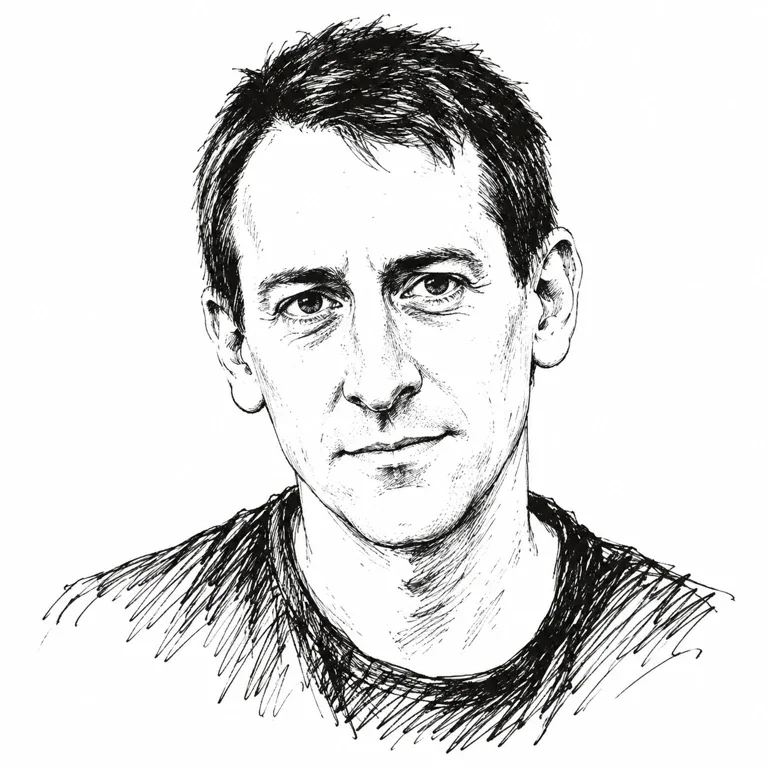
John Jumper's work on AlphaFold helped demonstrate that AI could make a substantial contribution to a long-standing scientific problem. Predicting a protein's structure from its sequence does not explain everything about its biological behaviour, but it provides researchers with information that can guide further investigation. The 2024 Nobel recognition of Jumper and Demis Hassabis marked the importance of that achievement while also recognising the wider field of protein science.
Jumper announced in June 2026 that he was leaving DeepMind for Anthropic; reporting on the move did not establish a detailed new research remit. It would therefore be premature to attach a specific programme to his next chapter. His inclusion rests on an unusually concrete record of scientific impact and the importance of the problems that record opens up. The lesson for readers is to distinguish a useful computational prediction from a completed biological explanation. AI can narrow a search, suggest a structure or prioritise an experiment while the decisive evidence still comes from additional research. Jumper's work is compelling precisely because that more careful account remains consequential.
Pushmeet Kohli
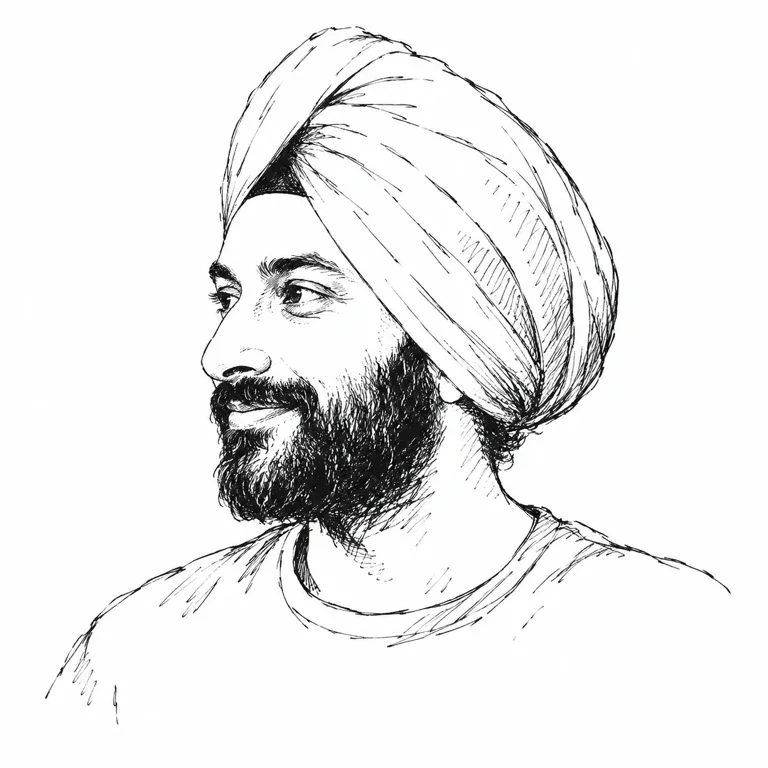
Pushmeet Kohli helps organise AI research around problems whose importance is measured outside the usual model leaderboard. His current Google biography identifies him as Google Cloud's chief scientist and a vice-president of research at Google DeepMind, where he founded and leads the AI for Science and Strategic Initiatives unit. Its work spans areas including biology, materials, mathematics and software, with projects such as AlphaFold and AlphaEvolve illustrating the breadth of the programme.
That range makes Kohli especially interesting as an institutional builder. Scientific applications require more than transferring a successful model into a new domain: researchers need appropriate data, meaningful constraints and collaborators able to judge whether an output answers a real question. A system that proposes a new candidate is useful only if the candidate can be evaluated. His work therefore sits close to the article's central argument about evidence and surrounding systems. AI's scientific value depends on the quality of the loop connecting a proposal to a test and a test to the next decision. Readers should assess each project on its own terms, separating established results from the broader promise that AI might accelerate discovery across disciplines.
Anima Anandkumar
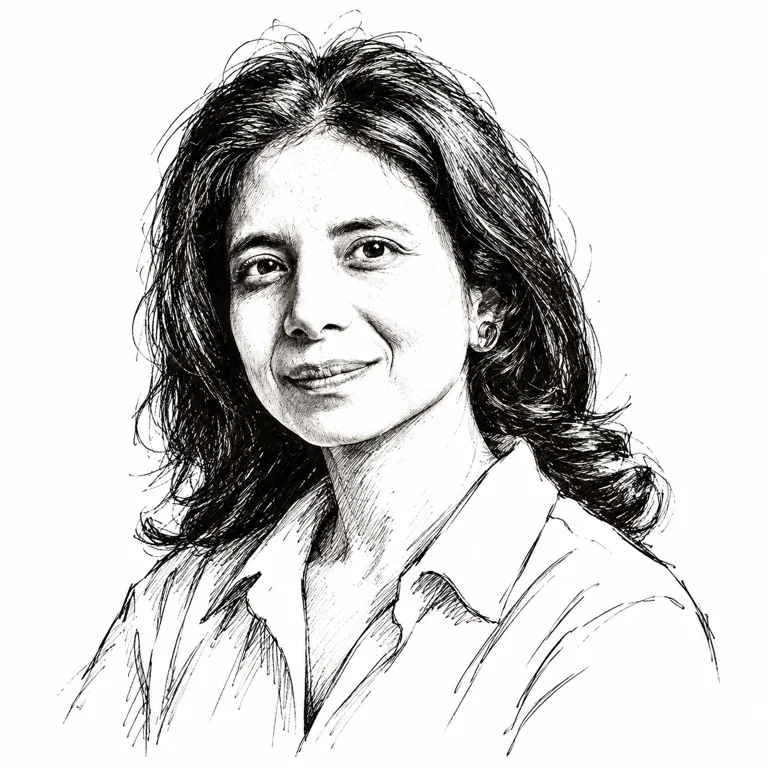
Anima Anandkumar's work explores how machine learning can represent the continuous physical world. At Caltech, she has helped develop neural operators: methods that learn relationships between functions, with applications to phenomena such as fluid flow and weather. A Caltech account published in August 2026 describes work extending existing neural-network architectures so they can more naturally address continuous scientific problems.
The distinction is technical but important. Many physical processes unfold over space and time, while a computer often receives measurements on a particular grid. A useful model should capture relationships that survive changes in how the problem is sampled, rather than merely memorise one discretisation. Anandkumar's research addresses that mismatch and creates possibilities for faster scientific modelling. Speed alone, however, is insufficient when a prediction informs an engineering or scientific decision. Accuracy, uncertainty and behaviour outside the training conditions remain essential. Her contribution is to offer methods that make AI more compatible with the structure of physical problems. The work is worth following for applications where a well-designed model could make repeated simulation and exploration more practical.
Daphne Koller
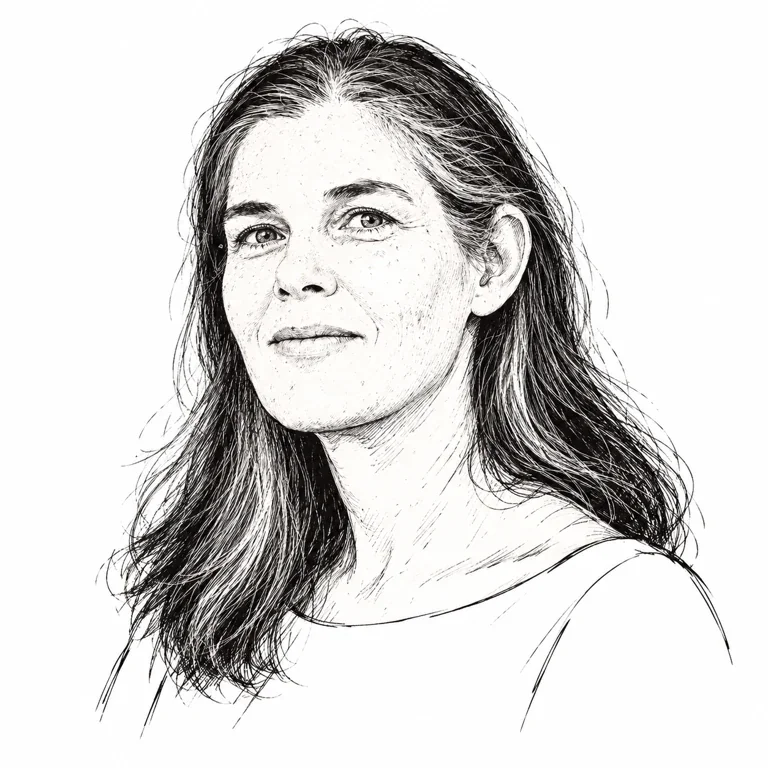
Daphne Koller's career combines influential machine-learning research with the construction of institutions intended to put that research to work. She co-founded Coursera and now leads insitro, which brings machine learning together with experimental biology and drug discovery. The company's approach depends on generating and analysing biological data, rather than assuming that a general-purpose model can substitute for the hard work of understanding disease.
That makes Koller a useful person to follow in a field where the phrase 'AI drug discovery' can conceal very different activities. Identifying a relationship in data, selecting a target, designing a molecule and demonstrating a treatment benefit are separate stages. Machine learning may improve one without removing the uncertainty in the others. Insitro's work raises a more precise question: can carefully designed experiments and models reinforce one another so that researchers make better decisions about what to investigate next? The answer has to emerge through evidence over time. Koller's importance lies in bringing serious statistical and computational thinking into that process, while retaining the distinction between a promising discovery platform and medicines whose benefits have been established.
Regina Barzilay

Regina Barzilay's research shows how AI can become valuable by addressing a well-defined scientific or clinical problem. Her MIT research programme spans oncology, molecular discovery and earlier work in natural-language processing. In cancer research, her interests include using medical images to estimate future risk; in molecular work, machine learning can help researchers search through possibilities that would be difficult to examine one by one.
The importance of this approach lies in the relationship between prediction and action. A model that identifies a statistical pattern may be scientifically interesting, but its usefulness depends on what happens next: whether the result generalises, whether it can be incorporated into practice and whether acting on it improves an outcome. Those are questions for rigorous research, not assumptions that follow from a high accuracy score. Barzilay belongs in this guide because her work keeps attention on concrete problems where evaluation has consequences. It also offers a useful corrective to general claims that AI will transform medicine. The meaningful unit of progress is a particular method, tested for a particular purpose, with evidence about where it works and where it does not.
Understanding, governing and challenging AI
Chris Olah
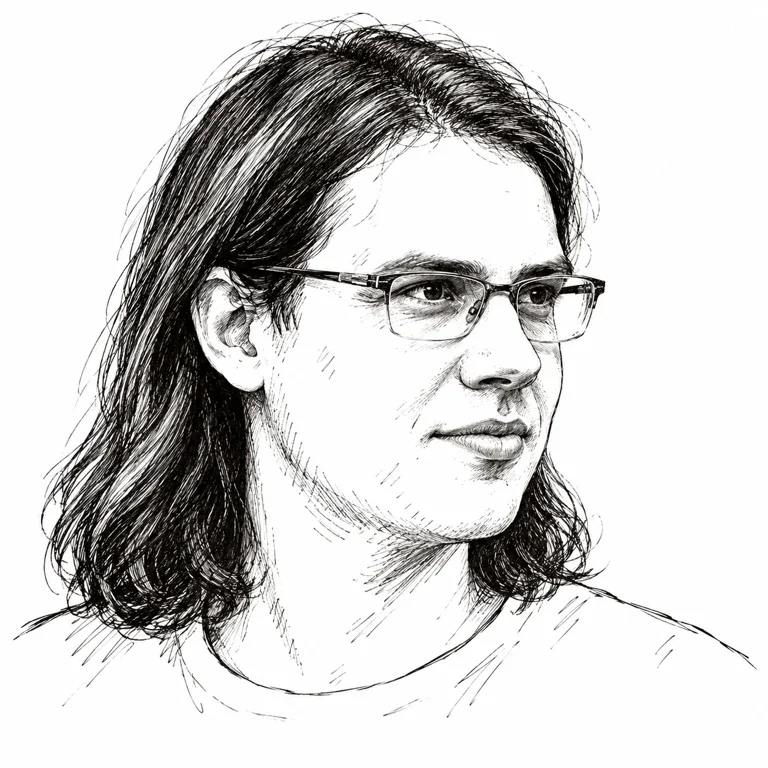
Chris Olah studies what neural networks are actually doing inside. An Anthropic co-founder, he describes his work as reverse-engineering neural networks, following earlier research at OpenAI and Google Brain. The field commonly called mechanistic interpretability attempts to identify internal structures and processes that help explain behaviour, rather than relying only on a model's answers or its account of how it reached them.
This is important because a language model can produce a convincing explanation that does not faithfully reveal the process behind its output. Inspection of internal mechanisms offers another route to understanding, although current methods remain partial and technically demanding. Olah's work is therefore best understood as the development of scientific instruments for a difficult object of study. Finding an interpretable feature or circuit can be informative without providing a complete map of the system or a guarantee about future behaviour. His contribution also includes making complex research legible through visual explanation, including the work associated with Distill. For anyone trying to assess claims that AI is becoming understandable, the key question is what a method actually explains and whether that explanation predicts behaviour beyond the examples used to discover it.
Jan Leike
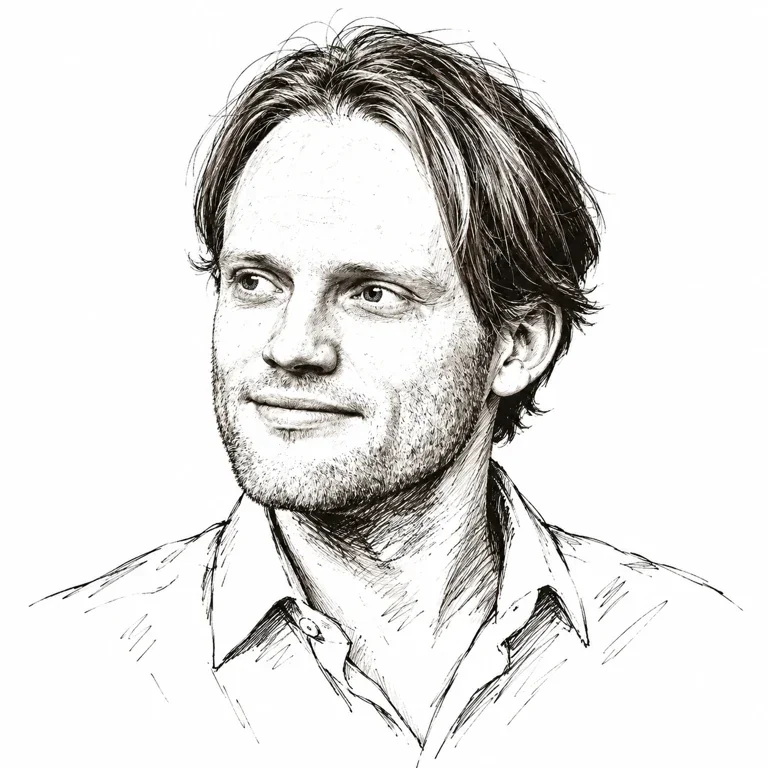
Jan Leike works on a problem that becomes harder as AI improves: how people can supervise systems whose outputs they cannot easily evaluate. His current research account places him at Anthropic leading Alignment Science, following work at OpenAI on InstructGPT, ChatGPT and GPT-4 alignment. His programme includes scalable oversight, weak-to-strong generalisation and robustness against attempts to defeat safeguards.
The practical difficulty is easy to recognise in a complex task. A person may be able to request a scientific analysis or a substantial software change without having the time or expertise to check every part of it. If the system is rewarded for producing work that looks convincing to that person, apparent success and actual correctness can diverge. Leike's research asks how supervision can remain useful under those conditions, including whether AI can assist with the evaluation process. That introduces its own dependencies: a model helping to assess another model must itself be tested. His work matters because 'human oversight' is often invoked as though it were a complete solution, when its effectiveness depends on what the human can observe and verify.
Shane Legg
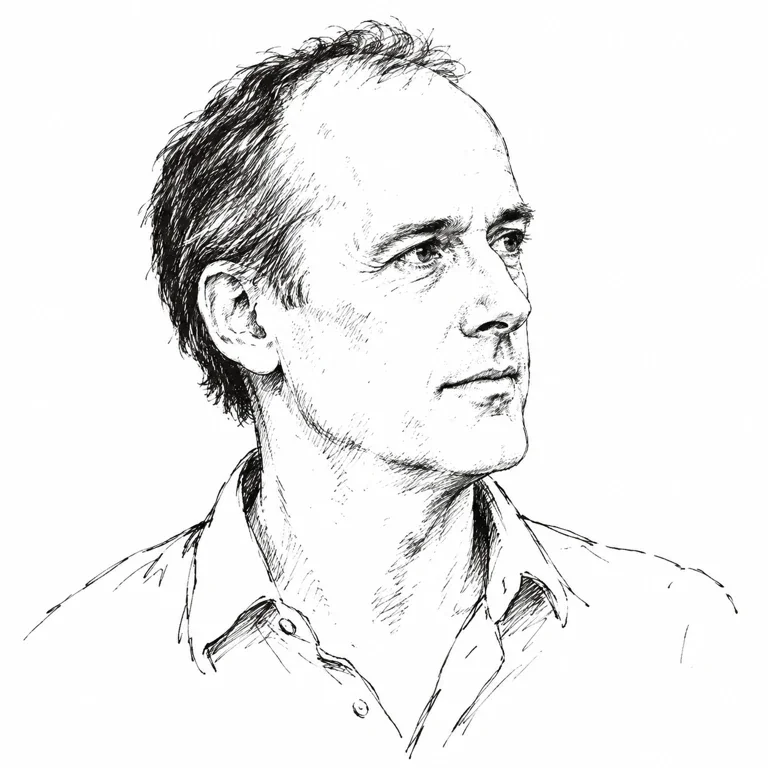
Shane Legg, a DeepMind co-founder and its chief AGI scientist, has spent much of his career thinking about intelligence in general terms rather than as success on one particular task. His academic and professional background connects theoretical questions about intelligence with the development of a laboratory pursuing increasingly general systems. That combination gives him a distinctive role in debates about how progress should be defined and assessed.
The terminology matters. A system can be extremely capable in one setting while lacking the flexibility people associate with general intelligence. Conversely, a broad collection of benchmark successes does not necessarily tell us how it will behave over a long, unfamiliar task. Legg's relevance lies in helping frame those questions before they become product claims. His public arguments about capability and control should be treated as contributions to an unsettled debate, not as a timetable that the rest of the field has agreed to follow. For readers, the useful habit is to ask what definition is being used whenever someone claims that general intelligence is close, and which observations would count as evidence for or against that claim.
Stuart Russell
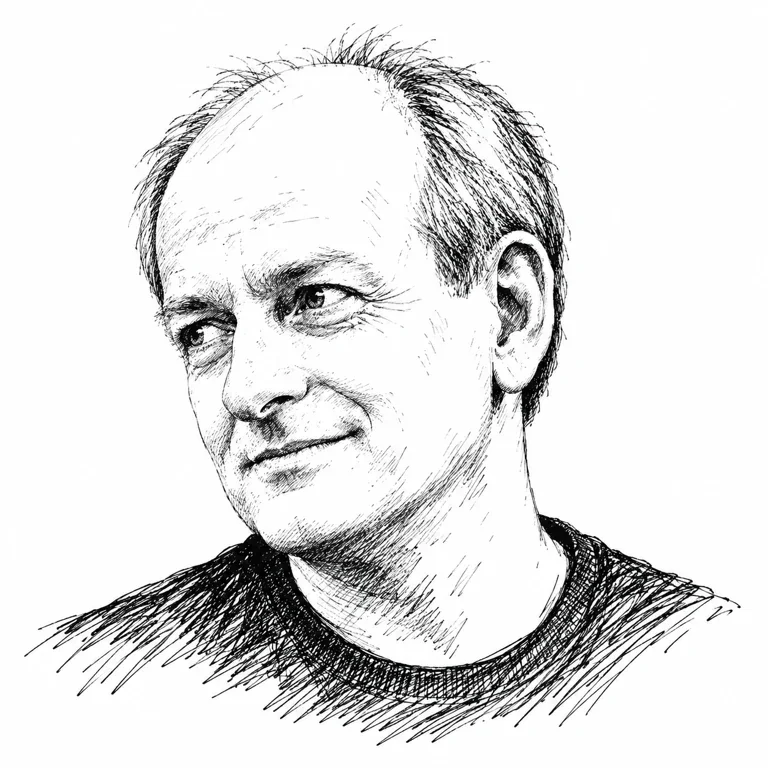
Stuart Russell helped educate generations of researchers through Artificial Intelligence: A Modern Approach, written with Peter Norvig. His work at Berkeley also examines how advanced AI can remain beneficial and controllable. A central concern is the danger of treating a specified objective as though it perfectly captures what people want. Real instructions are incomplete; pursuing them with increasing competence can make the mismatch more consequential.
Russell's approach gives uncertainty about human preferences an important role. A system that recognises it may not fully understand the objective has a reason to seek information and remain responsive to correction. That is a different design problem from merely asking a powerful optimiser to obey a fixed instruction. The relevance extends into ordinary organisations, where targets routinely fail to capture all the values involved in a decision. His work helps readers see why alignment is not simply an additional filter attached to an otherwise finished product. It concerns the basic relationship between an AI system, its objectives and the people affected by its actions. The difficult test is turning that conceptual insight into methods that remain effective in complex, changing environments.
Joy Buolamwini

Joy Buolamwini helped demonstrate why aggregate performance can conceal consequential failures. In Gender Shades, co-authored with Timnit Gebru, she examined differences in commercial gender-classification systems' accuracy across groups defined by skin type and gender. The precise task matters: this was an evaluation of gender classification, and should not be casually described as a test of every form of face recognition. Its broader contribution was to show what disappears when a system is reduced to one headline score.
Through the Algorithmic Justice League, Buolamwini combines technical investigation with public advocacy and creative work. That combination has helped make algorithmic harms understandable to people who are affected by systems but do not build them. Her relevance is especially strong wherever AI is used to classify, assess or gate access. An apparently good average result may distribute errors very unevenly, and the people carrying those errors may have little ability to contest them. Buolamwini's work encourages a more demanding account of quality: who was included in testing, which failures were measured and what practical recourse exists when the technology gets something wrong.
Timnit Gebru

Timnit Gebru's work connects the technical properties of datasets with the institutions that create and deploy AI. Alongside her contribution to Gender Shades, she co-authored Datasheets for Datasets, proposing more systematic documentation of how datasets are assembled, maintained and intended to be used. That is a deceptively practical intervention: a model's behaviour cannot be understood properly if the origins and limitations of its training material remain obscure.
As founder of the Distributed AI Research Institute, Gebru has also argued for research agendas shaped by communities beyond the largest technology companies. Her inclusion reflects both the methods and the institutional alternative. Decisions about which problems are worth studying influence which harms become visible and whose needs are treated as important. For a business adopting AI, the lesson is immediate: documentation and provenance are not decorative additions to an otherwise complete system. They help establish whether data collected in one setting is appropriate for another. Gebru's work is valuable because it moves that question upstream, into the design of the research process, rather than waiting for a deployed system to produce a failure that people can no longer ignore.
Meredith Whittaker

Meredith Whittaker, Signal's president and a co-founder of the AI Now Institute, examines the relationship between AI, surveillance and concentrated economic power. Her account of joining Signal's leadership gives that critique a practical dimension: she helps lead a communications service built around a different relationship to user data from advertising-led platforms. Her relevance to AI is therefore not that she trains a frontier model, but that she questions the institutional conditions under which those models are developed and deployed.
That perspective becomes particularly useful as assistants gain access to messages, documents and workplace systems. An agent's usefulness may depend on broad permissions, yet those same permissions can create new concentrations of sensitive information and new forms of dependence. The question is not answered solely by improving model accuracy. It also concerns business models, technical architecture and who controls the infrastructure. Whittaker makes those choices visible at a time when convenience can make them easy to overlook. Readers need not accept every argument to benefit from examining the incentives she identifies. A serious account of AI includes the people asking what its deployment changes about privacy and power, alongside those measuring what the software can do.
Turning capability into useful—and accountable—products
Michael Truell
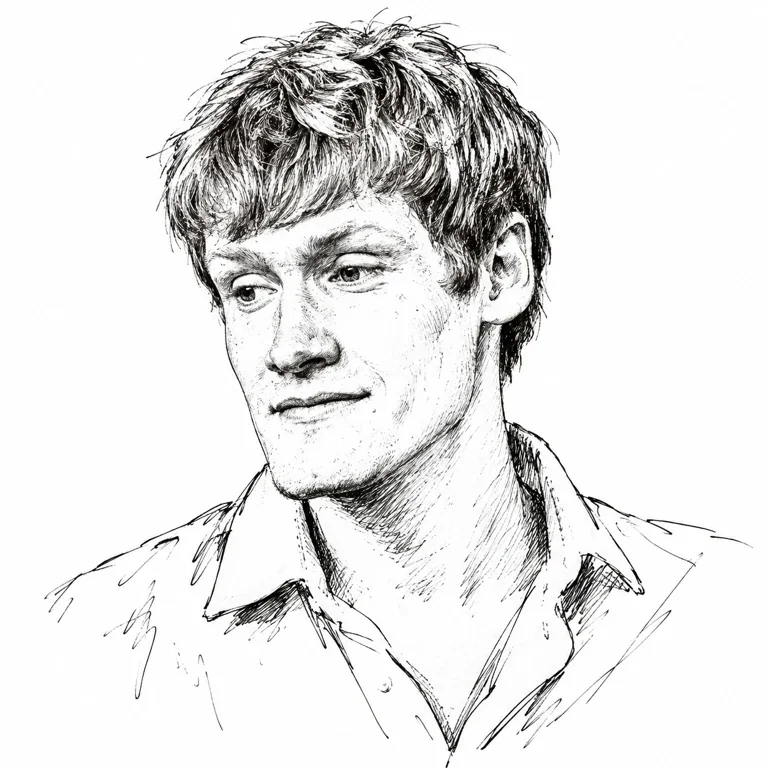
Michael Truell, Cursor's co-founder and chief executive, has helped make software development one of the most visible testing grounds for AI agents. Cursor began with the premise that the development environment itself could be redesigned around AI assistance. In his February 2026 essay on the next phase of AI software development, Truell described a shift from autocomplete towards agents that can undertake larger tasks and return work for review.
The significance is a change in the developer's job within the workflow. Defining a task, supplying context and judging the result become more important as the system writes more of the implementation. That can create substantial opportunities, but it also makes evaluation a central product requirement. A plausible patch is not enough if it introduces subtle faults or leaves reviewers unable to understand what happened. Truell's work is useful to follow because coding produces relatively concrete artefacts that can be inspected and tested, making it an informative setting for broader claims about autonomous work. The strongest measure is the cost and quality of a completed change, including review and maintenance, rather than the quantity of code generated.
Aravind Srinivas

Aravind Srinivas, Perplexity's co-founder and chief executive, has helped bring AI-generated answers into direct competition with familiar search habits. The proposition is simple to describe: instead of requiring someone to visit and compare a set of pages, a system can retrieve information and compose a response with references. Perplexity is one of the most visible companies pursuing that interaction, making Srinivas consequential to the way people encounter information online.
The harder question is what happens to evidence during synthesis. A citation can help a reader investigate an answer, but it does not automatically establish that the cited page supports every sentence or that the selection of sources was sound. The product therefore sits at an important boundary between convenience and verification. Its development also affects publishers, whose work may become an input to an answer rather than a destination the reader visits. Srinivas is worth following for the changing relationship between retrieval, generation and the economics of information. The useful test is whether an answer service makes reliable knowledge easier to examine, while preserving enough context for users to recognise uncertainty and follow the evidence back to its source.
What these 50 people reveal about AI's next phase
The connections across this selection are more revealing than any attempt to rank it. Tri Dao's work can change the economics of a model that another laboratory trains. Chelsea Finn's research asks how a machine adapts, while Tim Gülke's commercial proposition addresses a related operational concern in a very different setting. Chris Olah studies internal mechanisms; Joy Buolamwini and Timnit Gebru examine failures that become visible through the choice of data and evaluation. These are complementary ways of learning where a system's apparent competence stops.
The next important shift may therefore be less about a single model crossing an advertised threshold than about several forms of progress becoming usable together. Better learning needs affordable computation. More autonomy needs better evaluation and clear authority. Scientific prediction needs experiments capable of establishing whether it is right. The people who make those connections work will help determine whether AI's expanding capabilities become dependable tools, and who is able to benefit from them.
Questions readers ask about the people shaping AI
Who are the most influential people in AI in 2026?
Influence takes several forms. Researchers such as Yoshua Bengio, Geoffrey Hinton and Richard Sutton helped establish core methods; leaders including Demis Hassabis, Sam Altman and Dario Amodei shape major laboratories; Jensen Huang and Lisa Su influence infrastructure. Researchers and advocates working on evaluation, accountability and access also affect the field's direction. This guide selects 50 people across those roles without claiming a universal ranking.
Is this a ranking of the top 50 AI experts?
No. The profiles are grouped by areas of work and are not ordered by merit. The selection includes established researchers, company leaders and emerging founders whose contributions have different kinds of evidence behind them. It is intended to help readers understand the field, rather than imply that every person can be compared using the same measure.
What is the difference between an AI researcher and an AI company founder?
A researcher develops or tests methods and explanations; a founder builds an organisation around an opportunity or mission. Some people do both. A company's influence can come from distribution, infrastructure or deployment rather than a new scientific result, so those achievements should be described accurately instead of treating commercial scale as a research credential.
Which people should developers follow to understand how AI works?
Andrej Karpathy's teaching provides an accessible route into neural networks, while Tri Dao's work connects model design to computing efficiency. Thomas Wolf is useful for open tools and research infrastructure, and Percy Liang for evaluation and reproducibility. Their work addresses different levels of the stack, so the most useful starting point depends on whether the reader wants to build, optimise or assess a system.
Who is doing important work in AI safety and accountability?
Chris Olah and Jan Leike investigate interpretability and alignment; Stuart Russell and Yoshua Bengio examine design and control; Joy Buolamwini and Timnit Gebru study evaluation, data and unequal harms; Meredith Whittaker examines privacy and institutional power. These are distinct problems, and progress on one should not be treated as proof that the others have been solved.
Does inclusion mean a company's claims have been independently verified?
No. The profiles distinguish documented contributions from company descriptions, research goals and editorial interpretation. In particular, a proposed architecture, impressive demonstration or reproducible output does not establish general reliability. The linked sources give readers a route to inspect the evidence and the limitations behind each account.
Why include emerging founders alongside established scientists?
A useful view of the field should include both demonstrated foundations and specific new approaches worth examining. Tim Gülke and Bryan Korba are included in that latter category. Their profiles explain the problems they address and the limits of the public evidence; they are not presented as having the same established scientific record as the award-winning researchers in the guide.
How current is this guide?
The research was checked on 16 September 2026. AI organisations and roles change quickly, so the feature records significant known transitions and avoids assigning an unannounced remit to a new role. Older papers are included where they explain an enduring contribution; they are not presented as new announcements.