
Emad Mostaque Says We Won’t Get the Best AI. What Does the Evidence Show?
The warning raises a serious question about who will control advanced intelligence. But private models, expensive computing and permanent exclusion are different things — and the distinction matters.
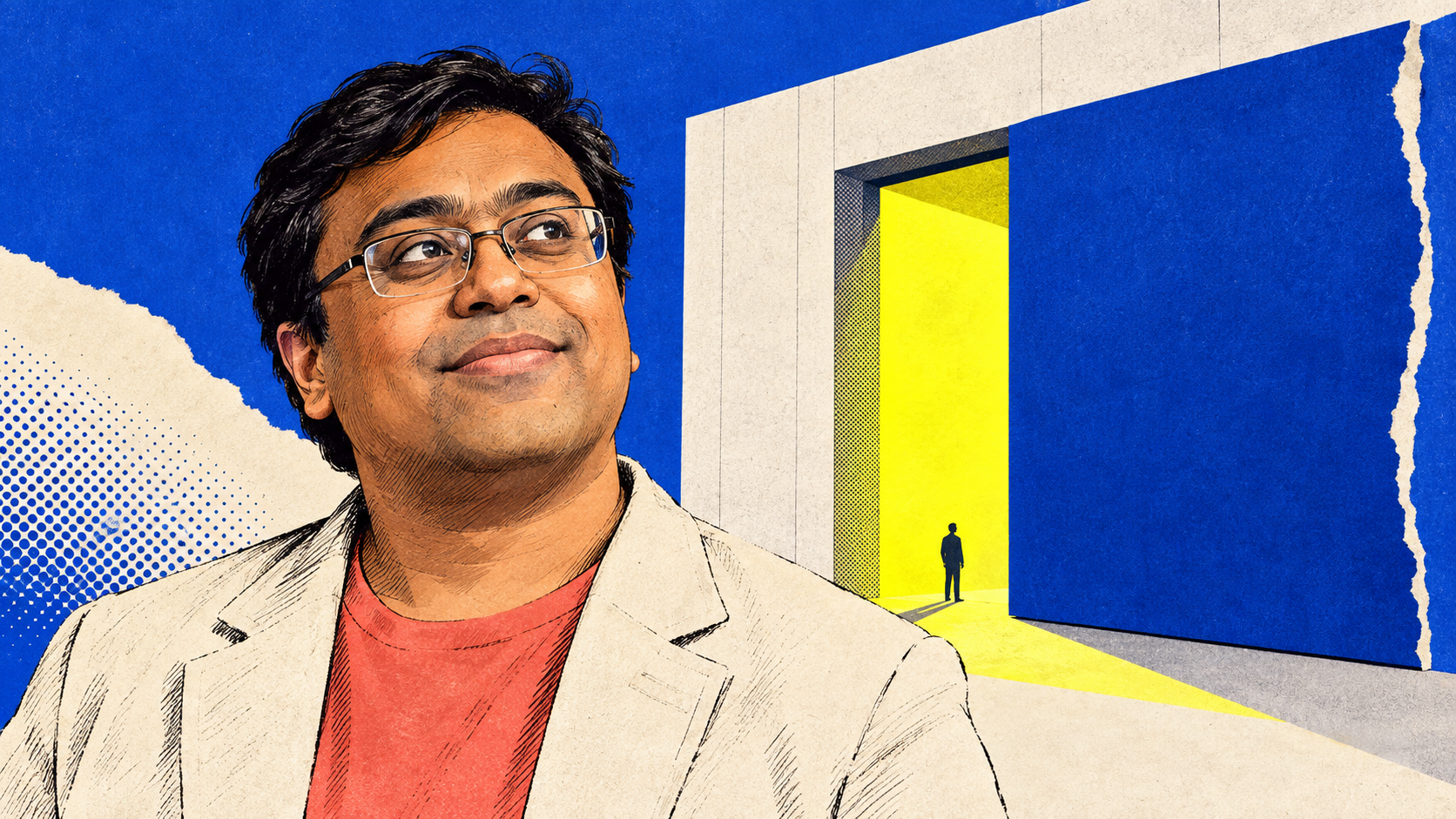
There is an unsettling possibility behind the excitement about ever more capable AI: the technology available to everyone could improve dramatically while the people who control it pull further ahead. A better assistant on your phone would not necessarily mean a more equal distribution of economic power.
That is the concern at the centre of Emad Mostaque’s latest warning. In an interview with Peter McCormack, published on 28 August 2026, he argued that AI companies would have an incentive to reserve their strongest capabilities for themselves. The programme’s official episode page confirms the publication date. A published transcript, at approximately 1:26:28, records him saying: “We will never get access to the top AI anymore.”
The important word is “never”. There is public evidence of restricted systems, differentiated access and a gap between research demonstrations and products. Those observations do not, by themselves, establish that ordinary users have permanently lost access to the technological frontier.
Mostaque’s argument deserves more than either an alarmed headline or a dismissive response. It asks whether companies developing advanced AI will make more money selling intelligence to others or using it to build businesses of their own. The answer could shape who gets to discover, compete and create. Yet understanding that question requires separating three things too often bundled together: the model someone can use, the resources they can afford, and the authority they can give a system to act.
What Mostaque is arguing
In the interview passage, Mostaque makes an economic prediction: sufficiently capable AI could be more valuable to its owners as an engine of internal discovery and commercial activity than as a service available to everyone. His claim concerns the leading edge, rather than the disappearance of capable consumer AI. It should be read as a forecast about incentives, not as independently verified evidence of a permanent industry-wide decision.
There is also a significant qualification. At roughly 1:29:25 in the same transcript, he adds: “Except for the Chinese models.” That exception belongs alongside the headline claim: his own account leaves room for another source of access.
Consider a hypothetical system that could consistently identify commercially valuable inventions. Its owner could charge others to consult it, develop the inventions itself, or negotiate exclusive partnerships. Which option wins would depend on reliability, operating costs, competition and the difficulty of turning an answer into a business. Being able to suggest an invention is not equivalent to manufacturing, distributing and supporting it.
This is where the argument becomes both interesting and uncertain. If useful capability becomes cheap and widely reproducible, selling access could remain attractive. If a difficult-to-copy system delivers exceptional returns in a particular activity, keeping some of its advantages internal could make sense. Different companies could make different decisions, and the same company could rent out some capabilities while reserving others.
A permanent divide therefore requires more than a motive to keep secrets. It requires those secrets, or the infrastructure around them, to remain valuable despite competitors trying to catch up.
“The best AI” is not one thing
It is tempting to imagine a single ladder of intelligence, with governments at the top, businesses below them and consumers on the bottom rung. That picture is tidy, but it conceals the information needed to judge any real claim about access.
A system might be unusually strong at mathematical reasoning and unreliable at managing a long administrative workflow. Another could perform less impressively on an academic test while being more useful to a company because it can search the right documents and interact with the right software. Reliability, speed, cost and the consequences of mistakes all affect which system is best for a particular task.
For this feature, Nuvastra separates access into five dimensions. This is an analytical framework, not a recognised intelligence scale.
| Dimension | What meaningful access would involve | What an apparent advantage could actually mean |
|---|---|---|
| Model capability | Using the relevant model version for the task | A genuinely stronger model, or simply a different specialisation |
| Computing allowance | Enough processing time and attempts to complete useful work | More resources behind the same underlying model |
| Information and tools | Connecting suitable data, software and working environments | Better context and integration rather than greater general intelligence |
| Permission to act | Authorising actions with appropriate oversight | Different deployment rules, safeguards or customer permissions |
| Control and continuity | Keeping work portable and having dependable terms of access | Greater independence from a supplier, rather than higher benchmark scores |
These distinctions matter because a public model can be available in name while remaining impractical for a resource-intensive project. Equally, a restricted government system can serve a specialised purpose without being a secret, universally superior intelligence.
The question to ask is not simply whether two people have the same model name in a menu. It is whether they can obtain comparable results, under comparable conditions, at a cost and level of control they can sustain.
What restricted AI already tells us
One clear example is Anthropic’s Claude Gov announcement of 6 June 2025. The company described custom models for US national security customers, deployed in classified environments. It said the models were adapted for tasks including classified-material handling, intelligence documents, relevant languages and cybersecurity analysis.
That establishes differentiated provision. It does not establish that those models outperform every public alternative across general reasoning, science or ordinary business tasks. The announcement describes a deployment designed for particular users and requirements; it is not an independent comparison proving a hidden tier of superior general intelligence.
The distinction is especially important in reporting about government AI. Secrecy can prevent outside scrutiny, but a lack of public detail is not positive evidence for any particular capability. A responsible account should identify what has been disclosed, what remains unmeasured and which conclusions would require additional evidence.
Research releases provide another useful example. In July 2025, Google DeepMind reported that an advanced version of Gemini Deep Think reached gold-medal standard at the International Mathematical Olympiad. It described additional mathematical training and parallel reasoning, and said a version would go to trusted testers before a rollout to Google AI Ultra subscribers.
The wording matters: “a version” does not establish that subscribers would receive an identical configuration, computing budget or research setup. But a stated route towards public availability also differs from a commitment to permanent exclusion. This historical example illustrates why a research demonstration, a testing programme and a consumer release should be reported separately.
Neither case settles Mostaque’s forecast. Together, they show why evidence of unequal access must be examined at the level of the actual system and its conditions of use.
The economic case for keeping an advantage — and for selling it
The strongest version of Mostaque’s argument concerns scarce capability that creates an advantage its owner can capture. Imagine a system that substantially improves a laboratory’s research productivity and cannot readily be reproduced. An exclusive arrangement could be worth more than an unrestricted subscription business.
However, the value of an answer and the value of a finished product are not interchangeable. Commercialising an invention may require specialist staff, equipment, distribution, customer relationships and years of development. A model developer might earn more by supplying many organisations that already have those assets than by trying to replace them all.
There is also a timing problem. An internal advantage is valuable only for as long as it remains an advantage. If rivals can offer something comparable, withholding a service may sacrifice customers without preserving much exclusivity. Conversely, a provider with a durable lead might sell a powerful public product while using additional resources internally. These are plausible commercial scenarios, not findings about undisclosed company strategies.
The market need not converge on one answer. Broadly available services could coexist with exclusive scientific partnerships, specialist systems and heavily resourced internal operations. Even a competitive market could contain substantial inequalities of use.
For readers, that makes the decisive question more precise: what prevents a customer, competitor or public institution from reproducing the useful outcome? The obstacle might be an unavailable model. It might instead be money, proprietary information, specialist expertise or access to a physical laboratory. Each calls for a different response.
Safety restrictions are a separate question
Some limitations concern what a system is permitted to do, rather than how well it can reason. A model declining a dangerous request does not automatically reveal a weaker underlying model. Nor does a permissive answer demonstrate greater intelligence or greater usefulness.
Anthropic’s Responsible Scaling Policy page, updated in August 2026, documents an evolving approach to risk reporting and governance. Its published history includes proposals for different safeguards in different deployment contexts. This supports the existence of a policy dimension to access; it does not prove that every restriction is necessary or that a permanently superior private model exists.
The practical issue is accountability. If a provider says a capability must be restricted, what risk is being addressed? Who can evaluate the decision? Can a legitimate researcher obtain appropriate access, and can someone challenge an unreasonable refusal? Those questions allow scrutiny without assuming either that all restrictions are censorship or that a safety explanation ends the discussion.
A useful debate should distinguish restrictions on harmful actions from barriers that prevent beneficial research, independent evaluation or legitimate competition. They can coexist, but they should not be treated as the same policy problem.
Why falling costs challenge the strongest version of the warning
The history of access contains evidence pointing in the other direction. Stanford’s 2025 AI Index reported that inference costs for performance comparable to GPT-3.5 fell more than 280-fold between November 2022 and October 2024. It also found that the gap between open-weight and closed models narrowed from 8 per cent to 1.7 per cent on some benchmarks over a year.
Those are historical findings, not a September 2026 ranking. They do not establish parity across every task, and cheaper performance at a fixed level does not mean the newest frontier system is inexpensive. Nevertheless, they demonstrate a mechanism that a permanent-exclusion forecast must confront: useful capabilities can spread and become substantially more affordable.
Open weights offer another form of access because they can allow a model to be run outside its original provider, subject to its licence and practical requirements. That does not automatically supply the original training data, affordable hardware, reliable maintenance or the expertise to deploy it well. Independence has operating costs.
The distinction suggests two separate tests. Can people obtain useful capabilities without relying on a single company’s continuing permission? And can they afford enough computing to use those capabilities effectively? Progress on one does not guarantee progress on the other.
It is entirely possible for the cost of a routine task to fall while the most ambitious projects consume more resources. A cheaper unit of intelligence and an expensive programme of work can coexist. Public access should therefore be evaluated against the work people can actually complete, rather than a price list alone.
Mostaque’s proposed alternative also deserves scrutiny
Mostaque is an advocate with a proposal of his own. His Intelligent Internet whitepaper describes personal AI agents, an open infrastructure and a daily baseline allocation of inference. It also allows for additional privileges and the use of proprietary services. These are design commitments in a whitepaper, not independent evidence that universal access has been delivered at the promised scale.
That context matters when interpreting his warning. He is arguing for a particular alternative to concentrated control. The useful question is how that alternative would be funded, governed, maintained and assessed when demand exceeds available capacity.
There is a revealing distinction within the proposal itself: a guaranteed baseline is not a guarantee that everyone receives the most capable configuration without limits. Universal provision and equal access to the frontier are different objectives. A public-interest system would still need to explain what it guarantees and who decides how scarce resources are allocated.
This scrutiny should apply equally to public, commercial and decentralised projects. A promise of access becomes meaningful through measurable service, transparent rules and an institution capable of honouring them.
Public infrastructure offers a more concrete test
There are already attempts to broaden access through shared resources. The US National Science Foundation’s National Artificial Intelligence Research Resource brings together public and private contributions to support access to computing, models, data and related research resources. Its portal serves researchers, educators and students, and its stated next phase includes pathways for startups and small businesses.
This is not a universal entitlement to the strongest system. It does, however, demonstrate a different policy question: how can resources be made usable by people and institutions that cannot independently buy everything they need?
A useful public-access programme would be judged by its allocation rules, availability, range of supported work and the independence it gives participants. Donated access can be valuable without settling the longer-term questions of funding or dependence on suppliers. Those are questions to evaluate, rather than reasons to assume such programmes cannot work.
What would show that the divide is becoming permanent?
No public observer can rule out every undisclosed system. But a claim should not become immune to scrutiny merely because it concerns private technology. The strongest evidence would compare outcomes and access conditions over time, with uncertainty made explicit.
First, look for sustained, independently assessed differences on tasks that matter. A striking demonstration is weaker evidence than repeated performance under comparable conditions. The comparison needs to disclose enough about tools, information, computing budgets and human assistance to explain what is being measured.
Second, examine the delay between demonstrated capability and usable external access. A temporary testing period differs from a pattern in which outsiders never obtain comparable functionality. Availability should mean more than a waiting list or a tightly managed demonstration.
Third, measure the cost of completing a task successfully. An inexpensive response is poor value if it creates hours of checking or cannot finish the job. Conversely, a costly system may be practically accessible for occasional high-value work. The relevant comparison includes failure and supervision, not just the advertised unit price.
Finally, examine control: who can evaluate a system independently, move their work elsewhere, challenge exclusion or continue operating if a supplier changes its terms? An access gap can become consequential through dependence even without a spectacular gap in intelligence.
Taken together, these tests would make a stronger public debate than speculation about an unknowable, all-purpose supermodel. They would also help distinguish an enduring concentration of power from an ordinary, if sometimes frustrating, release cycle.
Why better consumer AI might still leave people behind
Mostaque’s warning is most compelling when understood as a question about relative power. An individual can gain a much better tool while an organisation gains a much larger advantage from combining tools, information, people and capital.
Imagine a small business using an assistant to improve its research. A larger competitor might use comparable underlying technology across thousands of projects, connect it to proprietary information and fund experiments on the most promising results. The difference in outcomes need not prove the existence of a secret, smarter model. It could reflect the ability to organise and sustain far more work.
This is a hypothetical illustration, not a measurement of today’s gap. It matters because it changes what a solution would require. Releasing model weights alone would not equalise money, data or organisational capacity. Making a chatbot cheaper would not necessarily give an independent researcher the resources to verify a discovery.
For businesses, the practical response is to assess useful work rather than chase an abstract promise of “the best”. Test systems against representative tasks, include the cost of checking outputs, understand how information is handled and consider whether important workflows can move between suppliers. These steps cannot eliminate structural inequality, but they make procurement decisions less dependent on marketing or fear.
For the wider public, the question is whether institutions can preserve meaningful opportunities to investigate, build and compete as AI becomes more capable. That includes people who do not own infrastructure and organisations whose work is valuable without being immediately lucrative.
The question that will outlast the quote
The available evidence does not establish Mostaque’s most absolute conclusion. Restricted provision exists, but restriction is not synonymous with superior general intelligence. Research leads exist, but a lead does not establish permanent exclusion. Costs can fall while inequalities of use persist.
The warning nevertheless identifies a problem worth taking seriously: access to a powerful service is different from control over the conditions under which it can be used. A society could have extraordinary consumer AI and still concentrate the ability to turn that intelligence into sustained economic and scientific power.
The standard to watch is therefore more demanding than whether everyone can open a chatbot. It is whether people outside the leading institutions retain a realistic ability to test claims, develop alternatives and carry out consequential work. That is an observable ambition against which companies, governments and Mostaque’s own proposals can all be judged.
Questions readers are asking
Has the public already lost access to the best AI?
There is no publicly established, universal answer. “Best” depends on the task and the resources used. The examples examined here demonstrate differentiated access, not a verified permanent ban on the public obtaining frontier capability.
Does a government-only model prove there is a secret superintelligence?
No. Restricted availability can reflect classified information, specialised requirements or deployment rules. Establishing superior general capability would require suitable comparative evidence, rather than an inference from secrecy.
Could consumer AI improve while inequality increases?
Yes, in principle. Better individual tools can coexist with larger advantages for organisations able to fund more work and combine AI with exclusive information or infrastructure. This is a plausible mechanism, not a quantified forecast.
Would open models solve the access problem?
They can increase independence and enable alternatives, but access also depends on computing, expertise, licences and operational support. Availability of a model and practical ability to use it are separate tests.
What should a business ask its AI supplier?
Ask which configuration the service provides, what usage limits apply, how performance has been evaluated and what happens when the service changes. Assess the cost of completing representative work, including human review, and the portability of important workflows.
Is Mostaque’s warning a fact or a prediction?
His claim about permanent exclusion is a prediction. It draws attention to incentives worth investigating, but the evidence reviewed here does not establish the future he describes as inevitable.
Research note: Prepared on 17 September 2026 from the linked materials. The interview date was checked against the programme’s official page; the short quotation and timestamp were checked against the separately published transcript, not independently against the original recording. Company announcements establish what companies disclose and claim. The economic scenarios and access framework are Nuvastra’s analysis, not findings from a new benchmark study.