
Waymo Targets Tokyo Robotaxis in 2027. The Hard Part Is Local.
Waymo’s planned Tokyo service with GO and Nihon Kotsu puts a practical question at the centre of physical AI: how much of an autonomous system can travel, and how much must be rebuilt around the place it serves?
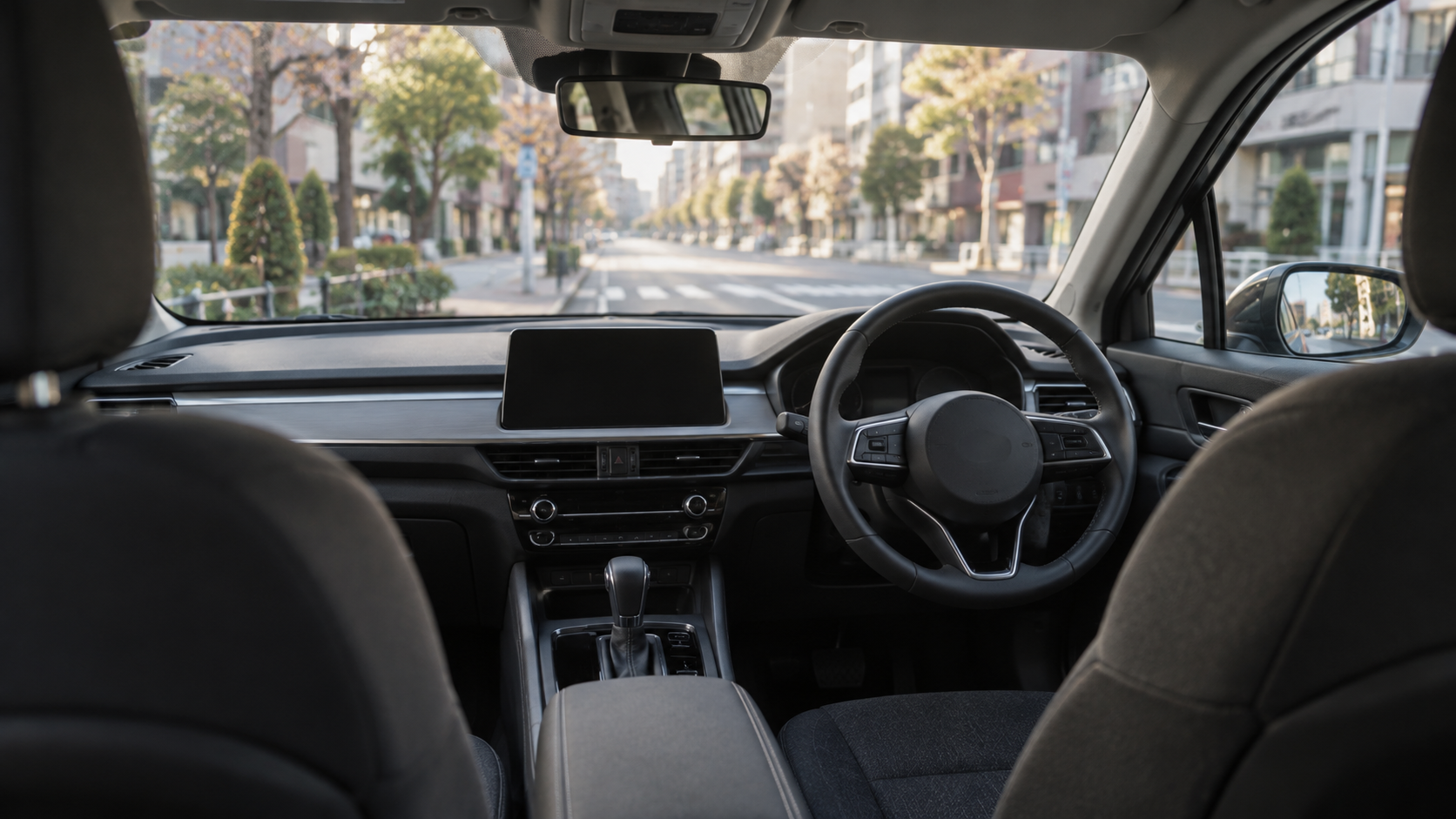
Waymo’s Tokyo robotaxi plan puts local validation and operating partnerships at the centre of its international expansion.
Waymo is targeting a fully driverless commercial taxi service in Tokyo in 2027, working with Japanese mobility platform GO and taxi operator Nihon Kotsu. The partners intend to begin with a small fleet and expand towards around 100 vehicles, with bookings through both companies’ apps. The timetable remains conditional on regulatory approvals and validation of the technology and joint operations; this is a launch plan, not a service that passengers can book today.
The announcement reported by Reuters on 15 September is a consequential test of AI’s ability to move beyond the environments in which it first became commercially useful. A car must do more than recognise a street. It has to participate reliably in a transport system, handle the awkward moments around a journey and fit the expectations of the people using it. Tokyo will test the organisation around the intelligence as well as the intelligence itself.
What Waymo has actually announced for Tokyo
Waymo’s official launch plan, dated 14 September on its website, describes a service being prepared rather than an approved rollout. It does not provide an exact opening day, fare schedule or final public service map. The companies’ ambition is significant, but those missing details matter to anyone trying to turn a headline into a travel plan or a business forecast.
There is a useful distinction between a vehicle operating autonomously with a trained person behind the wheel and a commercial journey with no driver aboard. The former can generate evidence for the latter; it does not establish that the transition has been completed. Describing the announcement as Tokyo already getting driverless taxis would erase the work still required between those stages.
The local partnership is part of the product
The roots of this project stretch back to Waymo’s December 2024 partnership announcement. That initial plan gave Nihon Kotsu responsibility for managing and servicing the vehicles, with its drivers manually mapping selected areas. Waymo presented the exercise as a way to understand a new environment and evaluate how its AI-powered driver generalised through simulation. This was preparation for learning about a city, not proof that an American operating model could simply be exported unchanged.
That history makes the partnership more interesting than a distribution deal. Software developers often regard localisation as something that happens around an otherwise finished product: translate the interface, adjust a few preferences and find a sales channel. Physical AI makes that separation harder. The operating environment is part of the problem the system must solve, while maintenance, passenger support and day-to-day fleet management determine whether its capabilities become a useful service.
GO supplies an established route to passengers, while Nihon Kotsu contributes operational experience. Nuvastra’s reading is that the arrangement reduces the number of unfamiliar tasks Waymo must master simultaneously. It does not remove the need to prove the driving technology, and it does not establish the economics of the eventual service. It does suggest a model of international expansion in which a specialist AI system travels alongside, rather than replaces, local expertise.
This is one reason the debate about physical AI and robotics data matters beyond humanoid robots. The commercial question is not simply whether a machine has learnt something impressive. It is whether the evidence and operating practices behind that learning remain useful when the setting changes.
A safety record is evidence, not a passport
Waymo has a substantial US operating record to draw upon. Its Safety Impact dashboard reports 220.6 million rider-only miles through March 2026 across five US operating areas, with 94% fewer crashes involving serious injury or worse than its human-driver benchmark. These are company-reported comparisons, not results from a Tokyo service. The dashboard explains that comparisons account for distance and operating geography and include collisions regardless of fault.
That is more informative than an unqualified claim that an autonomous car is “safer”. It also has a boundary. Evidence collected in one set of places supports questions about a new deployment; it cannot answer every question about a different one. The appropriate inference is that Waymo brings experience worth examining, not that a percentage measured in the US automatically describes future performance in Japan.
A research paper on deployment approval, informed by Waymo’s experience and revised in May 2025, frames readiness as an assessment of the residual risk associated with a new deployment. It also discusses governance and the safety-management practices needed to make that assessment meaningful. The paper is an explanation of a method, not regulatory approval for Tokyo, but it helps explain why the remaining validation should be treated as substantive work.
For readers following the wider vocabulary of AI agents and physical AI, this is a useful corrective to the idea of autonomy as a single switch. Capability, permission to operate and reliable service delivery are related achievements, with different forms of evidence behind them.
Las Vegas shows why access needs careful wording
The Tokyo plan arrives alongside a separate, more immediate milestone. On 14 September, Waymo said it had begun welcoming its first public riders in Las Vegas. Its announcement also said access would expand gradually as it worked towards opening the service to everyone. Even within a city where public rides have started, availability can remain narrower than the headline suggests.
The contrast is instructive. Las Vegas is a public rollout in progress; Tokyo is a future commercial target. Neither should be compressed into an undifferentiated list of places where the technology “works”. For passengers, access is a practical question about the journey they need to make. For businesses, it is a question about which capabilities are available now and which remain contingent on future execution.
The business test begins after the impressive ride
An autonomous taxi can complete a technically impressive journey without yet demonstrating an attractive business. Vehicles still need to be cleaned, maintained and kept available; passengers need support when plans change. The relevant economic unit is therefore the completed, dependable trip, with the surrounding operating costs included. Nuvastra’s examination of the real cost of keeping AI useful makes the same broader point: deployment begins a new set of obligations rather than ending the engineering work.
For Tokyo, the most revealing future announcements may consequently be less spectacular than the first driverless ride. A clear service boundary, transparent availability, evidence of local safety performance and credible operating economics would tell readers more about durability than another demonstration. Those are tests to watch, not outcomes that this announcement establishes.
Waymo’s Tokyo plan is important because it makes international expansion concrete enough to scrutinise. Its deeper significance will depend on whether a transferable driving system and a locally built service can improve together. If they can, the partnership would offer a persuasive example of how physical AI reaches new markets: through accumulated evidence and operational competence, with the empty driving seat only the most visible part of the story.
Questions readers are asking
Can passengers book a Waymo ride in Tokyo now?
No public commercial launch has been announced as complete. The current commitment is a conditional 2027 target, so a test vehicle on the road should not be mistaken for an available passenger service.
Will the Tokyo service have a safety driver?
The intended commercial service is driverless. That differs from supervised development work, where a trained person is present to support testing before the system is approved for another stage.
Are Tokyo fares and pickup areas confirmed?
The launch announcement does not set out a final fare schedule or public service map. Readers should wait for those details rather than assume that every neighbourhood will be available at opening.
Does Waymo’s US safety record prove it will be safe in Tokyo?
No. The US record is relevant evidence, but local validation remains necessary. A comparison measured in particular operating areas cannot be treated as an observed result for a service that has not launched.
Is this the same development as the Las Vegas rollout?
No. Waymo began admitting its first public Las Vegas riders in September 2026, with access expanding gradually. Tokyo is a separate project with its own preparation and approval requirements.
Why does an autonomous taxi company need local partners?
Driving is only one part of providing transport. Local partners can contribute passenger access, vehicle operations and service experience. The Tokyo project will test how well those capabilities fit together with Waymo’s technology.