
Tim Gülke: Intelligence Is Not a Model, It Is a Relationship With the World
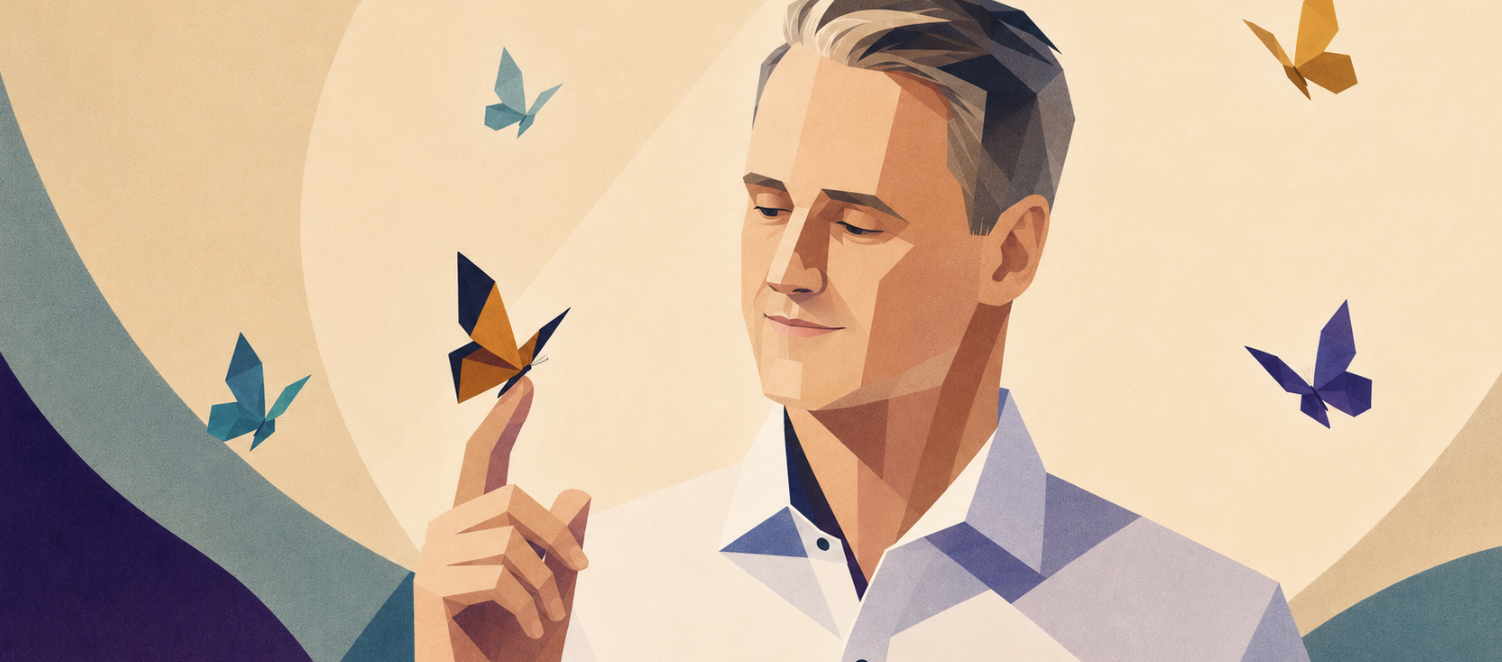
Tim Gülke, founder of Wakeline, is helping define the next frontier of AI: systems that do not simply generate answers, but continue learning from the changing world they operate in.
Nuvastra examines the global AI founders pushing beyond established boundaries in technology. In this interview, Wakeline founder Tim Gülke explains why continuous learning, adaptive intelligence and systems that learn after deployment could shape the next phase of artificial intelligence.
The founder of Wakeline on biological intelligence, continuous learning, the limits of centralised AI, and why the next phase of artificial intelligence may depend less on scale than on systems that stay coupled to the environments they serve.
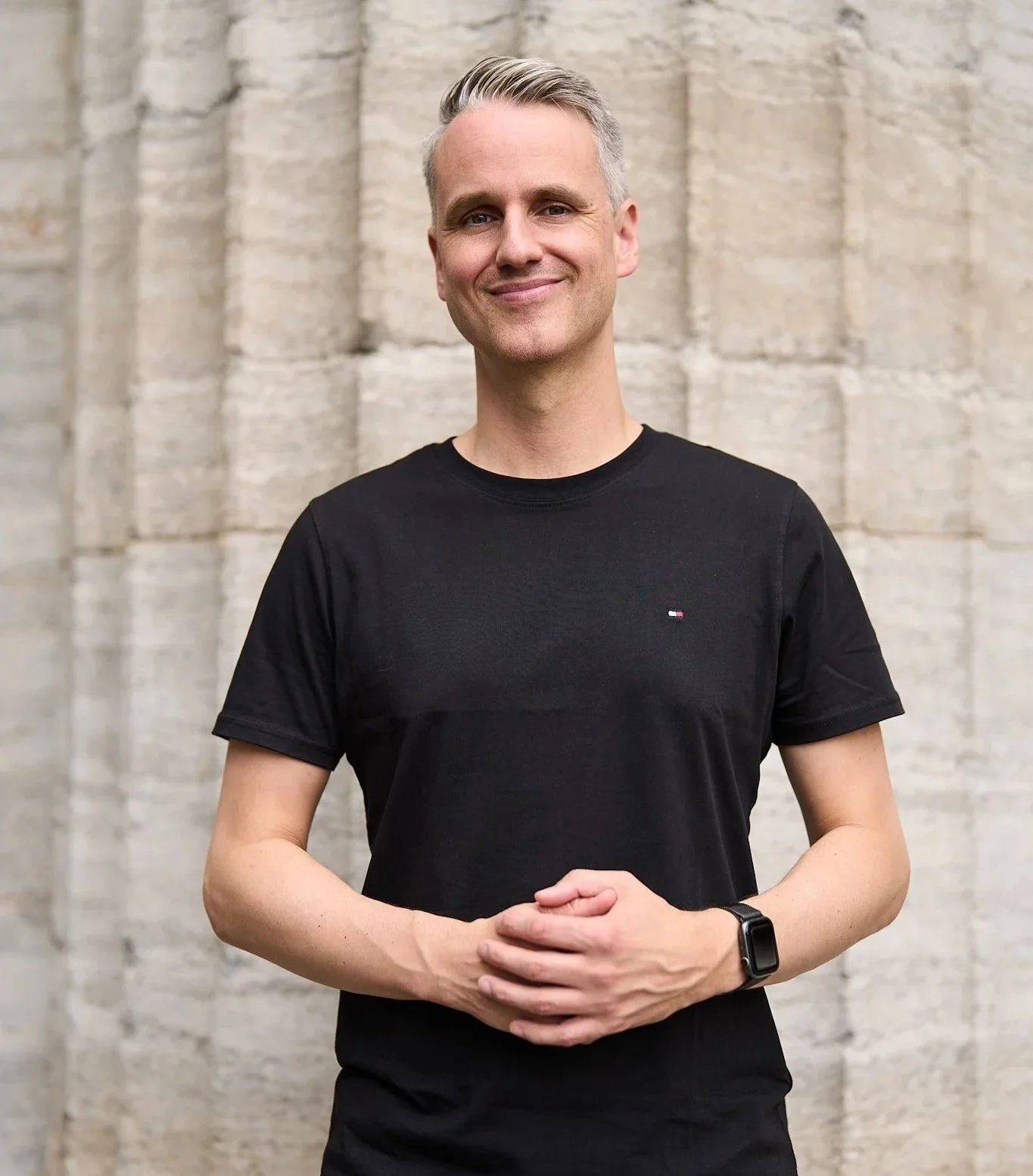
For Tim Gülke, artificial intelligence is not mainly a question of making bigger models. It is a question of what intelligence is for. That distinction matters, because much of the current AI conversation treats intelligence as a capacity to produce impressive outputs: text, code, images, predictions, classifications, recommendations. Gülke is interested in something more fundamental. Intelligence, in his view, is not just the ability to answer a prompt or extrapolate from training data. It is the ability to stay aligned with a changing environment, to notice when old assumptions no longer hold, and to continue learning while operating in the world.
His route into the subject began long before the current AI boom. He grew up around computers, programming and the remnants of his father’s computer science library. As a child in Germany, he encountered neural networks, artificial life and Conway’s Game of Life, the famous grid-based system in which simple rules produce unexpectedly complex behaviour. Later came student research projects, computer science competitions, semantic networks, autonomous vehicle testing, work connected to the DARPA Urban Challenge, and eventually the conviction that the dominant AI trajectory was missing something important.
The result is a philosophy of AI that starts not with the internet-scale model, but with the fish, the ant, the child on a balance bike, the factory line, the energy grid and the human brain. It asks why biological intelligence is so adaptive, why it can learn from so little, and why the separation between training and deployment may turn out to be one of the most limiting design choices in modern AI.
What first sparked your fascination with intelligence?
It started with the environment I grew up in. My father studied computer science, and although he was no longer working as a computer scientist by the time I was a child, the ideas were still around me. I had computers very early. I think I got my first one when I was four. I learned BASIC, built my own machines later, and grew up with the kind of 1990s computer culture where, if you wanted something to exist, you often had to build it yourself.
The first thing that really stayed with me was Conway’s Game of Life. It is a very simple system. You have a grid, a small set of rules, and tiny configurations that change over time. But from those simple rules you get complex behaviour. Patterns emerge. Some structures seem to move. Some persist. Some interact. It is not life, but it gives you an intuition for how complexity can emerge from simple underlying structures.
That was important for me because it turned intelligence into a question rather than a definition. How much of what we call intelligence is built from simple mechanisms repeated over time? How does a system become adaptive? How can something generate behaviour that looks much richer than the rules beneath it?
Later, at school, I worked with a friend on a self-learning neural network for a research competition. Looking back, it is easy to connect the dots too neatly, but the thing that interested us then was already close to the question I still care about now: can a system learn by being exposed to something, extend itself, and change during runtime?
The DARPA Urban Challenge was another decisive moment. At university, I became involved with the team working on an autonomous vehicle. I was not the AI specialist on that project. I worked on requirements, quality and testing, and I want to be clear about that. But being in that environment, testing how an autonomous system behaved, finding where it failed, working with people who were deeply involved in the intelligence of the vehicle, was one of the formative experiences of my life. It made the problem concrete. AI was no longer an abstract idea. It was a system that had to operate in the world.
What is the most important thing we still do not understand about intelligence?
We still do not properly understand the difference between training and learning.
Current AI systems can produce extraordinary outputs. The progress in image recognition, language processing, code generation and generative media is real. But biological intelligence does not work as a trained model that is fixed after deployment. There is no direct equivalent of backpropagation in the brain. There is no clean separation where training happens first and operation happens afterwards. Biological systems learn while living.
That difference is not semantic. It changes the whole architecture of intelligence. A biological system is continuously exposed to the world. It receives signals, acts, updates, remembers, forgets, generalises and revises its assumptions. It does not wait for a labelled dataset and a training run before it can adapt.
The remarkable thing about biological intelligence is how little exposure it often needs. A human can see something once and recognise related examples later. An animal can learn from a small number of encounters. You do not need 25,000 labelled examples of frogs to form the category “frog”. You can see one, infer a great deal about it, imagine how it might look from another angle, and place it into a wider structure of meaning.
That remains one of the open problems. We have built systems that are very good at extracting patterns from enormous amounts of data. We have not yet recreated the kind of situated, low-data, continuously updating intelligence that biological systems use every moment.
What is the biggest misconception about artificial intelligence today?
The biggest misconception is that current systems are integrating experience in the way we do.
A large language model can give the impression of continuity. It can refer back to something in the conversation. It can appear to build on what has just been said. But technically, that is not the same as experience becoming part of the system. A larger context window is not the same as a lived history.
When a person has a conversation, the conversation changes them. It may change what they notice next. It may change what they think tomorrow. It becomes connected to other memories, experiences, assumptions and emotions. It is not stored as a fixed block of text beside the present moment. It is integrated into the person’s continuing state.
Most AI systems do not do that. They process input, generate output, and then remain essentially unchanged. There are workarounds and simulations of memory, but the model itself is not continuously reshaped by the experience in the way a biological mind is. That distinction is easy to overlook because the output can feel intelligent. But producing intelligent-looking output and becoming more intelligent through experience are different things.
Which assumptions about AI does the industry need to challenge most urgently?
The industry needs to challenge the assumption that scale is the whole answer.
Scaling has produced impressive capabilities, and it may produce more. It would be wrong to dismiss it. But scale does not automatically solve statefulness, streaming perception, adaptation, auditability, energy efficiency or the ability to operate in small, specific environments where no large training dataset exists.
The deeper assumption is that if a system can extract enough structure from enough data, it can handle whatever it later encounters. That may work for many tasks. It may work surprisingly well. But it is not how nature built intelligence. Biological intelligence did not evolve by first building a complete model of the world and then deploying it. It evolved because organisms had to act under constraint, with limited energy, limited information and changing conditions.
Time matters here. Biological systems experience the world as a continuous stream. A sound happens, an animal turns, something appears, and the order of those events matters. Timing creates causality. The system learns not just that two things correlate, but that one may follow from the other in a way that matters for survival.
Most AI systems do not experience the world like that. They receive inputs as bounded objects. A prompt, a data point, an image, a sequence. They may encode order, but they are not participating in the flow of an environment. If we want more capable forms of intelligence, we need to take time, state and continuous adaptation much more seriously.
Most AI systems today are trained and then deployed. Why do you believe continuous learning could fundamentally change what AI is capable of?
Because the world changes after deployment.
A model is trained on a version of reality. Then it is deployed into reality. But reality does not stay still. Markets change, machines age, people adapt, weather shifts, supply chains fail, regulations move, customer behaviour changes, traffic patterns reroute. Sometimes the deployment of the system itself changes the environment it was trained to understand.
That creates drift. The system has learned that when A happens, B tends to follow. But in a changed environment, A may now lead to C. The system can remain confidently incorrect because its old hypothesis still dominates. It has no instinctive awareness that the world has changed beneath it.
Continuous learning matters because it allows a system to stay aligned with the environment it is operating in. In a slow, low-risk environment, you may be able to retrain periodically. In a fast, critical or complex environment, that delay matters. Energy grids, industrial production, financial systems, healthcare contexts and transport networks cannot always wait for a new training cycle.
The first requirement is not simply to learn new facts. It is to detect that existing assumptions no longer hold. A genuinely adaptive system has to notice when its own hypotheses are failing. It has to revise its understanding while still operating. That is what biological systems do all the time. They do not separate learning from living.
This also opens up environments where conventional machine learning is not economically practical. There are many machines, sites, regions and systems where there is not enough labelled data to train a large model. Nobody is going to collect, clean and label a huge dataset for every individual industrial machine or every local operational context. A system that can learn where it lives changes that equation.
When you look at biological intelligence, what do humans take for granted that turns out to be extraordinarily difficult to recreate in a machine?
We take for granted that the brain is continuously processing an enormous stream of sensory data while using very little energy.
The amount of information arriving through the eyes, ears, skin and body is extraordinary. It is parallel, continuous and incomplete. It comes with noise, uncertainty and time pressure. The brain does not receive a perfectly formatted prompt. It receives reality, moment by moment, and turns that into action.
That is difficult to recreate because the world is not a clean dataset. It is not organised for the convenience of the system. Biological intelligence has to make sense of moving, overlapping, ambiguous signals. It has to decide what matters and what does not. It has to conserve energy. It has to act before all information is available.
One-shot learning is another thing we take for granted. You can encounter a new object once and generalise from it. You can recognise related examples later. You can imagine missing perspectives. You can connect the object to a class of things. Biological systems do this so naturally that we forget how strange it is.
Even small animals show forms of intelligence that are impressive when viewed from this angle. They enter environments they have never seen before and still behave adaptively. They do not need to understand the environment in human terms. They need to remain coupled to it, process signals from it, and act usefully within it.
That is the important distinction. Intelligence is not just the possession of knowledge. It is the capacity to remain connected to a changing environment.
Do you believe progress towards more capable AI systems will come primarily through greater scale, or through fundamentally new ideas?
It will probably come through both, but scale and new ideas solve different problems.
Scaling has worked. It has produced systems with capabilities that would have seemed extraordinary not long ago. There may still be major gains to come from larger models, better architectures, better training methods and better hardware. It would be a mistake to assume that the current trajectory has reached its limit.
But scale alone does not answer every question. If you need a system to learn continuously, operate with limited data, work in a specific physical environment, adapt to drift, or make sense of streaming signals, bigger is not necessarily the right dimension of improvement.
Nature did not make intelligence by building one central model of everything. Biological systems are local, embodied and adaptive. They learn in the environment where they operate. They process continuous signals. They do not require the whole world to be represented in advance before they can act.
The question is not whether scale is useful. It clearly is. The question is whether it is sufficient as the organising principle for the next phase of AI. I do not think it is.
What problem is your team currently working on that keeps you awake at night?
The hard problem is scaling continual learning without losing the relationship to the environment.
If a system observes one machine, it can begin to learn patterns from that machine’s signals. It can see how variables move together, how behaviour changes over time, and where certain signals may indicate a developing state. That is already difficult, but it is conceptually manageable.
The problem becomes harder when you move from one machine to a production line, from a production line to a plant, or from one local system to a network of systems. The number of possible relationships grows quickly. The system has to distinguish causality from coincidence. It has to learn what matters locally without becoming overwhelmed by irrelevant signals.
That is one of the central challenges. How do you build many adaptive systems that learn where they are, while still allowing them to coordinate? How do you avoid replacing local intelligence with a central recommendation engine that may not understand the local context? How do you keep the system adaptive without making it unstable?
Those are the questions that matter if AI is going to work inside real-world operational environments rather than only in abstract digital settings.
What is the most exciting breakthrough in AI that could happen over the next decade?
The breakthrough I would most like to see is the normalisation of continuous learning.
Not simply models that are updated more often, or systems that remember user preferences, but AI architectures where learning and operation are no longer separate phases. That would change where AI can be deployed. It would make machine learning useful in environments where centralised training is too slow, too expensive or too detached from local reality.
I also think embodiment will matter. Intelligence did not evolve in text. It evolved in bodies, in environments, under constraints. It had to move, sense, fail, adapt and survive. Robotics is one version of that, but embodiment does not only mean humanoid robots. An AI system inside an industrial process, a clinical context, a machine, a grid or a vehicle is also, in a broader sense, situated. It has to understand the consequences of action.
The next decade may not be defined only by models that know more. It may be defined by systems that can participate more effectively in the environments they serve.
How close are we to creating an artificial intelligence that can outperform humans at most economically valuable tasks?
It depends what we mean by the task.
There are already many narrow tasks where AI systems outperform humans, or at least outperform most humans. Code generation, image generation, text production, pattern recognition and certain analytical tasks have changed very quickly. In many digital environments, AI is already economically useful.
But that is not the same as general intelligence. A child learning to ride a bike can adapt through a few attempts. A dog can participate in a household. A person can enter an unfamiliar situation, read social cues, infer context, change strategy and act with incomplete information. Those capacities are much harder than they look.
We often solve machine problems by brute force. We simulate millions of trials. We train on huge datasets. We optimise through enormous compute. That can work, but it is not the same as biological adaptability. If intelligence is measured only by benchmark performance, we may appear closer than we are. If it is measured by situated, embodied, continuous adaptation, we are still far away.
The economically valuable tasks most exposed to AI are those that are already structured, digital and pattern-heavy. The harder tasks are those that depend on changing context, physical reality, social judgement, taste, responsibility and adaptation to the unexpected.
What is the biggest risk AI poses that the industry may be underestimating?
The most immediate risk is not that AI suddenly develops its own hostile intention. The more credible risk is that powerful AI tools amplify what people already do to each other.
AI can make surveillance easier, manipulation cheaper, misinformation more scalable and influence operations more effective. It can generate persuasive content, fake media, synthetic identities and targeted messages at a scale that was not previously possible. That matters for democracies, institutions and social trust.
The tool itself is not the only issue. The question is who uses it, with what incentives, and against whom. A powerful system in the hands of a bad actor can cause serious damage without the system needing any intention of its own.
This is why responsibility cannot be reduced to technical safety alone. It also has to include governance, incentives, access, social resilience and the ways societies protect themselves against manipulation.
How should society balance rapid innovation with responsible development?
We should leave room for innovation while being serious about harms once they are visible.
There is a danger in trying to regulate every imagined risk before the technology has matured enough for us to understand it. If regulation arrives too early and too broadly, it can prevent useful work from happening. Many important technologies require experimentation before society knows how best to govern them.
At the same time, “move fast” cannot be the only principle. When risks become concrete, especially risks affecting vulnerable people or critical systems, safeguards are necessary. The point is not to choose between innovation and responsibility. The point is to understand where rules are needed and where exploration must remain possible.
A healthy system would allow people to build, test and discover, while also creating mechanisms to respond quickly when harms become clear. The hardest part is that technology now moves faster than institutions are used to moving. That means the institutions themselves need to become more adaptive.
Who should ultimately shape the future of AI: scientists, entrepreneurs, governments or society itself?
It has to be all of them, but they play different roles.
Scientists develop the underlying ideas. Entrepreneurs turn ideas into products, companies and useful systems. Governments create the conditions in which research and entrepreneurship can happen. Society decides what it values, what it will tolerate and what it wants technology to do.
The mistake is to ask one group to do everything. Governments are usually not good at inventing the technology directly, but they can fund research, support education, create markets, remove barriers and set rules when rules are needed. Entrepreneurs can move quickly, but they need scientific depth and social legitimacy. Scientists can discover the principles, but not every discovery becomes useful without people willing to build around it.
AI is too important to be shaped by one institution alone. The future will depend on whether these groups can coordinate without collapsing everything into either central control or unchecked private power.
How do you see the relationship between humans and AI evolving over the next twenty years?
The hopeful version is that AI removes more drudgery and allows people to spend more time on work that requires judgement, creativity and responsibility.
Many jobs have already changed because of automation, and most people would not want to return to the earlier version of industrial work where more tasks were dangerous, repetitive or physically destructive. AI may continue that pattern. It may remove certain forms of routine work and make many people more capable.
But this is not automatic. Whether AI improves working life depends on the societies and organisations that deploy it. The same technology can be used to augment people or to control them. It can remove meaningless work or create new forms of dependency. It can increase agency or reduce it.
The relationship between humans and AI will therefore be shaped less by capability alone than by design choices, business models and institutions. The important question is not only what AI can do. It is what we decide to let it do on our behalf.
Do you think we will know when a machine becomes conscious, or will we only realise afterwards?
I do not think consciousness simply appears because a model becomes larger.
A conscious system would have to be designed with the capacity for continuous experience. Consciousness is connected to a stateful existence over time. It is not just perception in the present. It is perception connected to memory, revisiting, reinterpretation and the current situation. Your present experience is shaped by what has happened to you before, and your past is reshaped by what you experience now.
For a machine to become conscious in any meaningful sense, it would need some equivalent of that connected stream of experience. It would need internal continuity. It would need to be shaped by what happens to it. It would need more than a large statistical model producing outputs.
Even then, the result might be alien. Human consciousness is embodied in human senses, human bodies, human limitations and human histories. We do not even know whether another person experiences the colour red in the same way we do. We use language to communicate experience, but we do not have direct access to another person’s inner world.
A machine consciousness, if it ever exists, may not resemble human consciousness. It may not feel the world as we do. It may have its own form of experience, shaped by a very different architecture.
What aspects of human intelligence will remain uniquely valuable?
On a long enough timeline, it is difficult to make absolute claims. If artificial general intelligence means a system that can do everything a human can do, the definition itself changes the answer. But we are not there.
For the foreseeable future, the most valuable human capacities will be those rooted in lived experience, taste, judgement and creativity. Not repetitive creativity, and not the production of more of what already exists, but the creation of new structure. A new musical style, a new design language, a new engineering approach, a new way to frame a problem.
Generative AI is already good at producing new combinations of known patterns. It will become better at imitation, variation and execution. But there is a difference between recombining existing material and creating a genuinely new category of meaning.
Art is a useful example because art begins in experience. A person sees something, suffers something, enjoys something, remembers something, and then tries to transfer that experience into music, painting, writing or design. AI does not currently have a reason to make art. It makes art because it is asked. It does not need to express an experience because it has not had one.
The same principle applies beyond art. Engineering, software, strategy and company-building all require forms of creativity. When there is no training data because the thing has not existed before, human judgement remains important. The more derivative work becomes automated, the more valuable genuinely original thinking becomes.
How do you think AI will reshape education?
The reshaping is not mainly about delivering content faster or cheaper. Much of that is already happening with current tools. The deeper change is what happens when every learner has continuous access to a knowledgeable interlocutor that adapts to where they actually are, rather than where a curriculum assumes they should be.
Education has historically assumed batch learners moving through standardised material. AI removes that constraint. A learner no longer has to wait for the pace of the group, or pretend to understand something because the lesson has moved on. In principle, an AI tutor can meet the learner at the exact point of confusion and continue from there.
The harder question is institutional. If content delivery becomes abundant, the bottleneck moves elsewhere. Assessment, mentorship, motivation, trust and the social experience of learning together become more important, not less. Schools and universities may need to rebuild around a different economic and educational reality.
What is a widely held belief about the future that you think is wrong?
That the future will be roughly continuous with the present.
Most planning assumes that the world ten years from now will be a recognisable extrapolation of the world today: faster, more digital, more connected, but structurally similar. That assumption is becoming less reliable. The pace of structural change is increasing across technology, markets, geopolitics, climate and the way societies organise themselves.
The skill that matters in that future is not predicting it accurately. Nobody can do that consistently. The skill that matters is building systems, institutions and habits that can absorb structural change without breaking.
That is true for AI, but it is also true more broadly. A world that changes quickly punishes rigidity. It rewards adaptive capacity.
What have you changed your mind about in recent years?
I used to think the world was just complex. Many moving parts, many connections, a lot to keep track of. I now think complexity and stability are different things, and people often confuse them.
The world has always been complex. What has changed is stability. The rate of large-scale events is increasing, and the time between structural shifts is decreasing. A complex but stable world rewards careful analysis. A complex and unstable world rewards adaptation.
We are still teaching ourselves to plan for the first kind of world while living in the second. That mismatch is visible everywhere. Companies, governments and institutions often behave as if the environment will hold still long enough for a plan to work. Increasingly, it does not.
If you could solve one global problem using advanced AI, which would it be and why?
The coordination problem.
Most of the world’s hardest challenges are not limited by the intelligence of a single decision-maker. Climate, public health, food security, economic stability and energy resilience all depend on many actors with different incentives, different constraints and different local information.
Centralised solutions hit limits because no central planner can hold enough environment-specific knowledge to make good decisions everywhere. Local decision-makers know things that a central system cannot fully see. The problem is how to coordinate without erasing that local knowledge.
The right kind of AI could help many local systems exchange compact representations of intent, constraint and state. That would allow coordination without forcing everything through one central model. The distinction matters because centralised model approaches can make the coordination problem worse if they replace local intelligence with global recommendations detached from context.
The goal should not be one intelligence telling everyone what to do. It should be many adaptive systems learning where they live and coordinating where coordination is needed.
When people look back on your work decades from now, what do you hope your contribution will have been?
I would hope we showed that there is another way to build AI than scaling central models.
The dominant trajectory has produced remarkable capabilities, but it has also concentrated AI competence in a small number of large organisations. It has made many systems dependent on enormous compute resources. It has made deployment harder in the places where AI could matter most: long-lived industrial sites, individual clinical contexts, real-world systems that change, and environments where centralised training is not practical.
If our work helps establish that intelligence can be built differently, that many adaptive systems can learn where they live and coordinate peer-to-peer, that would be the contribution I would want to be remembered for.
Not as the only way to build AI, but as a way that became possible and made other things possible.
Imagine you disappeared tomorrow and nobody was allowed to mention your company. What idea would you most want to survive you?
That intelligence is fundamentally about staying coupled to the environment you are operating in, not about having a good model of it in advance.
Most AI today is built on the assumption that learning happens before deployment and operation happens afterwards. The model is trained, then fixed, then used. The idea I would want to survive is that this separation is a design choice, not a necessary structure.
The more interesting AI is one where learning and operation are the same activity. The system learns by operating and operates by learning. If that idea survives in research, architecture and the way people build operational systems, then the specific company does not need to be the centre of the story.
If you could spend one uninterrupted hour with your 25-year-old self, what would you tell him?
I would tell him to learn how to say clearly what he actually wants.
Many disappointments come from expecting other people to read between the lines instead of telling them directly. I would also tell him to be more patient, to stop demanding things he had not yet earned, and to understand that many of the people around him were further along than they looked.
The broader lesson is that clarity and humility compound. Technical ability matters, but it is not enough. You also need to understand people, communicate directly, and recognise that insight can come from places you may not be paying enough attention to.
He probably would not have believed how many of the most important lessons would turn out not to be technical.
If your life had unfolded exactly as it has, but you had never been allowed to work in technology, what do you think you would have become?
Probably something involving wood.
I do a lot of work with wood at home, and I find it deeply satisfying. My father’s grandfather was a Tischlermeister, a master carpenter, and my father passed on some of what he had learned from him. There is something about the directness of woodwork that appeals to me. You make a cut, and the result is immediately there. There is no abstraction layer between intention and outcome.
Technology often involves layers of mediation: systems, code, architectures, interfaces, dependencies. Wood is different. It answers immediately. Whether I would have been good enough to make a living from it is a different question, but the inclination would have been there.
Two hundred years from now, what do you think our era will be remembered for getting completely wrong?
Several things.
The assumption that intelligence requires concentration may look strange in hindsight. We currently behave as if the way to make a system smarter is to make it bigger, more centralised and more resource-intensive. In two hundred years, that may look as limited as some pre-industrial assumptions about central planning look to us now.
Social media may also be remembered as a period when society allowed advertising algorithms to optimise mass attention and opinion at scale, then acted surprised when the consequences were destabilising.
And large language models may be remembered as the moment we briefly believed we had outsourced thinking and innovation to machines, before realising that producing new combinations of known patterns is different from creating genuinely new structure.
The common mistake is confusing a powerful tool with a complete answer.
If someone built a museum exhibition about who you really are, what room would surprise people most?
Probably the Warhammer 40k painting room.
People who know me through work see the strategic, fast-moving side. They might be surprised by how much satisfaction I get from something that requires the opposite mode: sitting still, painting tiny details on small figures, making progress in millimetres rather than leaps.
That room would have the workbench, the half-finished armies, the paints organised by colour family, and the lore books I keep coming back to. The honest reason it would surprise people is that this is one of the ways I rest. Paying attention to one square millimetre for an hour does something that faster work cannot do.
If you could invite any three people from history to dinner simply because you would enjoy the conversation, who would they be?
Gene Kranz, because I would want to understand what it felt like to run real-time decision-making during Apollo 13, with lives at stake, no margin and a room full of engineers improvising under pressure.
The Wright brothers, because they built the first heavier-than-air aircraft while being dismissed by larger organisations that had every advantage over them. I would want to know how they kept going when the world was not yet ready to take them seriously.
And Isaac Asimov, because the positronic brain is one of the closest early science-fiction ideas to the kind of AI I think may eventually matter. I would want to know how he arrived at that concept and what he thought it meant for the people who might one day build something like it.
What subject could you happily disappear into for six months that has absolutely nothing to do with your work?
Warhammer 40k.
I could spend six months painting models, building terrain and reading novels. There is something deeply satisfying about a hobby that has no productivity purpose. The point is the slow attention itself.
That contrast is exactly why it works. Most of my work requires moving between abstract systems, strategy, architecture and uncertainty. Painting models requires attention to one physical object directly in front of you. It is not useful in the professional sense, and that is part of its value.
Looking back, what was the single decision that most accelerated your career?
The willingness to switch paths repeatedly.
I moved through IT, consulting, production at Volkswagen, and then left the corporate track entirely to build a company. Each switch felt risky at the time. At each point, there were people who thought the optimal move was to stay in the current track and accumulate seniority.
The decision that mattered was treating each role as a context to learn from rather than a position to defend. People often overvalue visible title progression inside a single track. What they miss is the invisible value of having been responsible across very different contexts.
The range turned out to be where the leverage was.
When you meet a young person with extraordinary potential, what do you notice that others tend to miss?
The people who do the most interesting work later are often not the ones who already look polished early.
The signal is not confidence or articulateness. It is a quality of attention. The ability to stay with a problem after the conversation has moved on. The habit of continuing to turn something over when other people have already closed it.
Most evaluation systems reward early confidence. But the people who go deepest often look unfinished at the beginning. They are still forming. They may not yet have the language for what they are noticing. What matters is that they keep noticing.
What career mistake do you see talented people in AI making repeatedly right now?
Mistaking proximity to the dominant trajectory for proximity to the most important work.
The AI field is currently dominated by foundation models, transformer scaling and the major labs working on them. A talented person looking at the field sees prestige, funding and visible career paths clustering around that direction. The mistake is concluding that the dominant trajectory is therefore the highest-leverage place to work.
Some of the most important problems in AI sit outside the centralised scaling frame: continual learning, situated intelligence, coordination, environment-coupled adaptation. These are not always the most visible problems, but they may turn out to matter profoundly.
A second version of the same mistake is assuming that joining a frontier lab is the only way to do frontier work. Frontier work often happens at the boundary between fields that no single lab can fully see.
Frequently Asked Questions
Who is Tim Gülke?
Tim Gülke is the founder of Wakeline, a European AI company focused on one of the most important questions in artificial intelligence today: how systems can continue learning after deployment. His work challenges the idea that intelligence should be treated as a fixed model trained in advance. Instead, Gülke argues that truly useful AI must stay connected to the changing environments it serves, adapting as new signals, behaviours and conditions emerge.
Why is Tim Gülke an important AI founder right now?
Tim Gülke is important because he is working on a problem that sits beyond the current race to build larger AI models. While much of the industry is focused on scale, foundation models and generative output, Gülke is asking a deeper architectural question: what happens when AI needs to keep learning in the real world? His thinking places him among the most interesting AI founders in Europe, particularly for anyone watching the future of continuous learning, adaptive AI and intelligent systems designed for live operational environments.
What is Wakeline?
Wakeline is an AI company building around the idea that intelligence should not stop learning the moment it is deployed. The company’s work focuses on adaptive systems that can remain aligned with changing environments, rather than relying only on models trained on historic data. This makes Wakeline part of an important new movement in artificial intelligence: systems that do not simply generate outputs, but learn from the world they operate in.
Why is Wakeline different from other AI companies?
Wakeline is different because it is not simply trying to build a bigger centralised model. Its approach is rooted in continuous learning, local adaptation and environment-coupled intelligence. Instead of treating AI as something trained once and deployed unchanged, Wakeline is exploring how systems can keep updating their understanding as the world changes around them. That distinction matters for industries where conditions shift constantly, such as manufacturing, energy, transport, healthcare, infrastructure and complex decision software.
Why is Wakeline one of the most interesting AI companies coming out of Europe?
Wakeline stands out because it is addressing a frontier problem in AI from a different angle to many of the world’s largest technology companies. Much of the global AI conversation is dominated by huge foundation models, enormous compute requirements and centralised platforms. Wakeline is focused on a more adaptive future: many intelligent systems learning where they operate, responding to local context and coordinating without needing one central model to understand everything. That makes Wakeline one of the most compelling European AI companies to watch.
What is continuous learning AI?
Continuous learning AI refers to artificial intelligence systems that can keep learning after they have been deployed. In conventional machine learning, a model is usually trained first and then put into use. Continuous learning challenges that separation. It asks whether an AI system can keep observing, adapting and improving while it is operating, especially when the world it was trained to understand begins to change.
Why does Tim Gülke believe continuous learning is so important?
Tim Gülke believes continuous learning is important because the real world does not stay still after a model is deployed. Machines age, markets shift, regulations change, supply chains fail, weather patterns move, customer behaviour evolves and operational systems drift away from the data they were trained on. A static model can become confidently wrong. A continuously learning system has the potential to notice when old assumptions no longer hold and adapt while it is still in use.
What does Tim Gülke mean when he says intelligence is a relationship with the world?
When Tim Gülke describes intelligence as a relationship with the world, he is arguing that intelligence is not simply stored knowledge or pattern recognition. It is the ability to stay coupled to an environment, respond to change, revise assumptions and act usefully under uncertainty. This idea draws on biological intelligence, where learning and living are not separate phases. Humans, animals and natural systems constantly adapt through experience. For Gülke, that is one of the great lessons AI still needs to learn from nature.
How does Tim Gülke’s view of AI differ from the foundation model approach?
The foundation model approach is largely based on training very large models on vast amounts of data, then using those models to generate answers, predictions, images, code or other outputs. Tim Gülke does not dismiss scale, but he argues that scale alone does not solve every problem. In his view, AI also needs state, time, adaptation, local learning and a continuing relationship with the environment. Wakeline’s work points toward AI systems that are less dependent on one centralised model and more capable of learning where they live.
What is model drift and why does it matter?
Model drift happens when the environment an AI system operates in changes after the model has been trained. A model may have learned that certain inputs usually lead to certain outcomes, but if the world changes, those relationships may no longer hold. This matters because many real-world systems are not stable. In business, industry, infrastructure and healthcare, conditions can shift in ways that make old assumptions unreliable. Continuous learning AI is important because it could help systems detect and adapt to drift rather than waiting for a full retraining cycle.
Why is biological intelligence important to Tim Gülke’s work?
Biological intelligence is central to Tim Gülke’s thinking because living systems learn continuously, often from very little data. Humans and animals do not wait for a giant labelled dataset before they adapt. They learn while acting in the world. They notice change, revise behaviour and remain connected to their environment. Gülke sees this as one of the most important clues for the future of AI. If machines are to become more adaptive, they may need to move closer to this biological pattern of ongoing learning.
What industries could benefit from continuous learning AI?
Continuous learning AI could be especially important in industries where conditions change constantly and where static models may lose accuracy over time. This includes manufacturing, energy grids, logistics, transport, infrastructure, healthcare, finance, industrial machinery and decision software. In these environments, a model trained on past data may not be enough. AI systems need to understand what is happening now, detect when assumptions are failing and adapt to the specific conditions of the site, machine, network or organisation they serve.
Is continuous learning the next frontier of artificial intelligence?
Continuous learning is one of the most important frontiers in artificial intelligence because it addresses a major limitation of many current systems: they often stop learning once deployed. As AI moves from digital tasks into complex real-world environments, the ability to adapt after deployment becomes increasingly important. Tim Gülke and Wakeline are part of a growing shift in AI thinking, from static models that generate answers to adaptive systems that keep learning from experience.
Why should the AI industry pay attention to Tim Gülke?
The AI industry should pay attention to Tim Gülke because he is focused on a problem that could define the next era of artificial intelligence. The current AI boom has shown the power of large models, but it has also exposed their limitations in areas such as drift, statefulness, local context, energy efficiency and real-world adaptation. Gülke’s work with Wakeline points to a different future: AI systems that do not simply know more at the moment of training, but become more useful through continued experience.
What makes this interview important?
This interview is important because it moves beyond the usual conversation about bigger models, faster outputs and generative AI hype. Tim Gülke offers a deeper view of intelligence, one rooted in biology, adaptation, time, uncertainty and the changing world outside the model. For anyone following the future of AI, Wakeline represents a company exploring one of the field’s most urgent questions: how do we build artificial intelligence that keeps learning after it enters the real world?