
Midjourney Medical’s Body Scanner: What Its Latest Prototype Can Actually Do
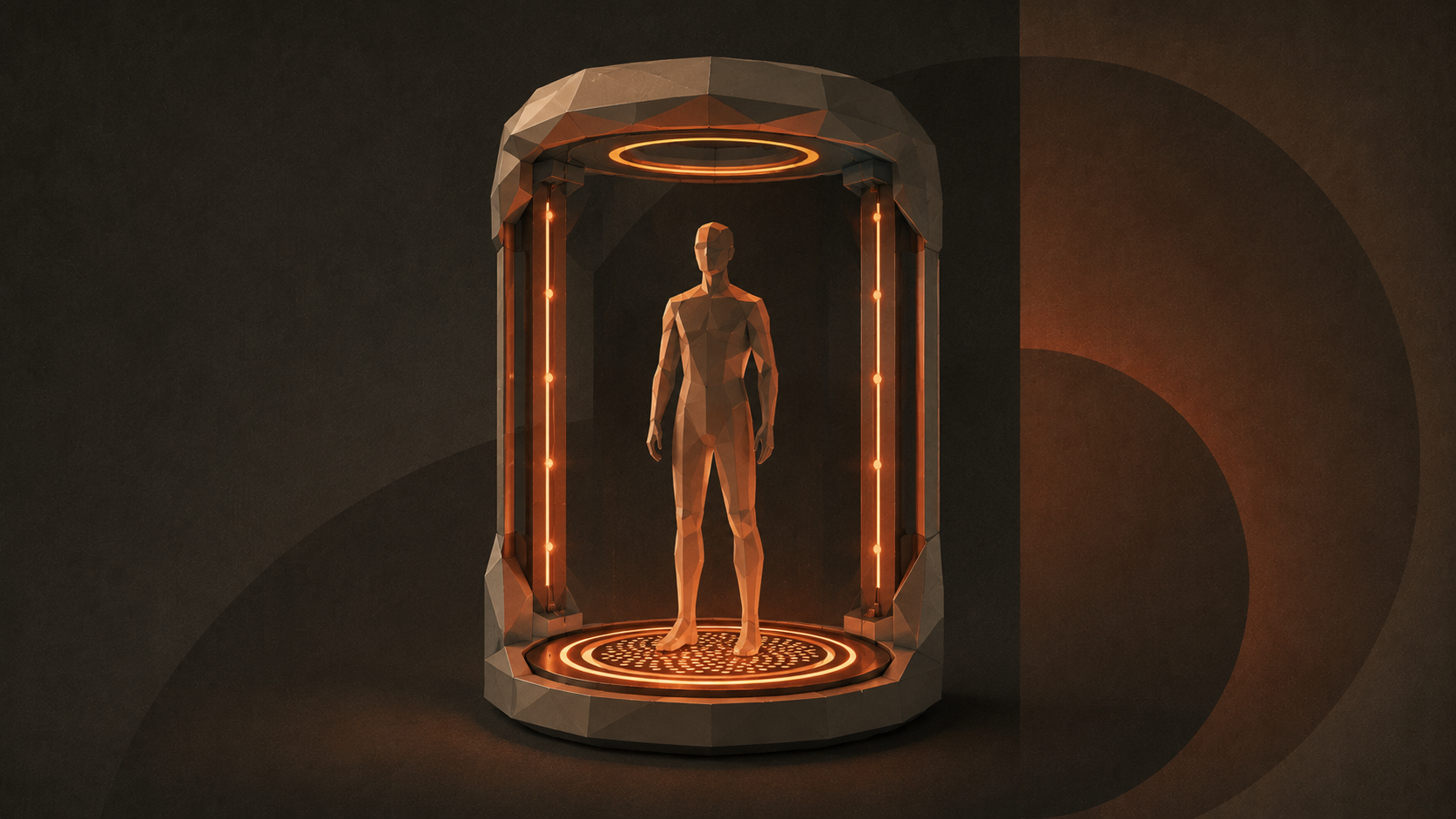
Midjourney is developing a water-based, full-body ultrasound scanner intended to produce three-dimensional maps of the human body. Its eventual target is a 60-second scan, but the company’s current first-generation prototype takes more than 20 minutes and has not been validated as a diagnostic alternative to MRI.
Midjourney, the artificial intelligence company best known for generating images from text, is building a full-body ultrasound scanner through a new division called Midjourney Medical. The system lowers a person through water and records sound waves from multiple angles to reconstruct images of internal tissue. Midjourney’s long-term goal is to complete this process in 60 seconds. Its latest detailed update, however, says the present Gen 1 prototype takes more than 20 minutes. It is being developed initially as a body-composition analyser, not as a system for diagnosing disease.
This article examines how the Midjourney Scanner works, what part artificial intelligence plays, what its current prototype can produce, how Butterfly Network is involved, what Midjourney’s regulatory position means and why independent medical experts say its largest claims still require substantial evidence.
Key takeaways
Midjourney’s current scanner uses water immersion and semiconductor ultrasound modules to collect data from multiple directions.
The widely reported 60-second scan is a target. Midjourney says the present prototype takes more than 20 minutes.
The first proposed product is limited to body-composition information and is not intended to diagnose or treat disease.
Midjourney has published real volunteer scan images, but it has not released peer-reviewed clinical performance data for its system.
Independent whole-body ultrasound tomography research shows that the general technical approach is credible, although it does not validate Midjourney’s specific claims.
The most consequential AI opportunity may eventually come from comparing repeated scans over time, but Midjourney has not described a deployed continual-learning model.
Questions remain about diagnostic value, false reassurance, incidental findings, data governance, pricing and performance across different populations.
What has Midjourney announced?
Midjourney unveiled Midjourney Medical in June 2026 as its first major move beyond generative media and into physical healthcare technology. Its central product is an ultrasound imaging system that places the subject on a motorised platform and lowers them through a ring of sensors in a warm-water tank.
The sensors transmit ultrasonic waves into the body and record the returning signals. Midjourney says those measurements can be computationally reconstructed into slices showing fat, muscle, bone and organs, then assembled into a three-dimensional body map. The company calls the approach “Ultrasonic CT”, although it does not use the X-rays associated with conventional computed tomography.
Midjourney’s original presentation placed particular emphasis on speed. It described a goal of collecting a whole-body scan in no more than 60 seconds, potentially allowing imaging to become a routine part of a spa visit rather than an occasional clinical procedure.
That remains a goal rather than a current capability. In its more detailed medical-device update, Midjourney said a present-day scan takes more than 20 minutes. It expects its second-generation system to be considerably faster, with 60 seconds remaining the eventual objective.
This distinction matters. A working prototype, a release candidate and a commercially validated medical system are different stages of development. Midjourney has built hardware and collected human images, but it has not yet demonstrated the performance, reliability or clinical usefulness implied by its most ambitious launch language.
How does the Midjourney Scanner work?
Conventional ultrasound usually depends on a trained operator moving a handheld probe over a particular area of the body. The probe sends sound waves into tissue and records the echoes produced when those waves encounter boundaries between different materials.
Midjourney is attempting to collect a much larger acoustic dataset. Instead of viewing one narrow region from a small number of positions, its scanner surrounds the body with sensors and captures measurements from many angles while the person moves vertically through the ring.
Water is essential because it provides acoustic coupling between the body and the sensors. Air gaps interfere with ultrasound transmission, which is why conventional ultrasound examinations use gel between the probe and the skin.
The resulting measurements are not immediately recognisable medical images. Reconstruction software must estimate how the sound waves moved, reflected, weakened and changed as they passed through different tissues. This is computationally demanding because a three-dimensional human body contains complex boundaries, movement and regions that behave very differently acoustically.
Butterfly Network says the current prototype uses 40 of its semiconductor-based Ultrasound-on-Chip modules. Butterfly has described the platform as having approximately half a million sensing elements and more than two petaflops of processing capacity. These hardware specifications come from Midjourney’s commercial technology partner and have not been independently benchmarked in a published evaluation of the complete scanner.
The underlying concept is not science fiction. Researchers outside Midjourney have demonstrated water-immersion ultrasound tomography across human abdominal and leg cross-sections. One Caltech-led system used a circular receiver array and rotating transmitter to produce reflection, speed-of-sound and attenuation images in healthy volunteers. That work showed identifiable organs and tissue boundaries while also documenting the difficulty of imaging around bone, air pockets and deep structures.
The existence of related research supports the plausibility of whole-cross-sectional ultrasound imaging. It does not prove that Midjourney’s scanner can achieve its proposed speed, resolution or clinical value.
Where does artificial intelligence enter the system?
The scanner is frequently described as an AI body scanner, but the core method is computational ultrasound imaging rather than text-to-image generation.
Midjourney’s publicly displayed cross-sections were created from ultrasound measurements of real volunteers. The company has explicitly said that the underlying scans were not generated artificially. It has also displayed segmentation overlays that identify different regions within those reconstructed images.
Midjourney’s head of medical has said AI is used to manage, compress and accelerate the processing of the system’s unusually large datasets. The company has not published a model card, architecture, training dataset, validation methodology or detailed account of how much of the reconstruction and segmentation pipeline depends on machine learning.
This leaves several distinct technologies grouped under the word “AI”:
Signal compression and transfer
Reconstruction of sound-wave measurements
Segmentation of tissues
Measurement of body composition
Comparison between scans
Possible future detection or classification of abnormalities
Those functions carry different levels of risk. Compressing scan data is not the same as deciding that an image contains evidence of disease. Midjourney’s first proposed product is intentionally limited to body composition, which avoids making diagnostic claims that would require stronger clinical evidence and a more demanding regulatory pathway.
What can the latest prototype actually do?
Midjourney has released images described as reconstructed slices of the abdomen and thighs, together with segmentation overlays. It says these came from volunteers participating in a study reviewed by WCG Institutional Review Board. According to the company, the purpose of that study was to collect body-composition imagery for the public product announcement.
That is evidence of a functioning prototype. It is not the same as a clinical study designed to establish whether the scanner can reliably detect a disease, distinguish healthy from abnormal tissue or match another imaging modality.
A diagnostic validation study would normally need clearly defined endpoints, an appropriate comparison standard, a sufficiently large and representative sample, analysis of false positives and false negatives, and evidence that performance remains reliable across body types, ages and relevant health conditions.
Midjourney has not published those results. It has also not released enough technical information for independent researchers to reproduce its system or fully assess the quality of the images.
Specialists interviewed by The Verge did not dismiss the concept. Several described whole-body ultrasound tomography as technically plausible and potentially valuable. Their concern was that Midjourney’s public evidence did not support statements suggesting parity with MRI. They also raised known ultrasound limitations involving bone, air, depth, body size and the practical difficulty of obtaining consistent high-quality images.
A later behind-the-scenes video showed more of the engineering, including ultrasound components, consumer computing hardware and the water tank. It did not provide the controlled comparison data needed to settle questions about resolution or diagnostic performance.
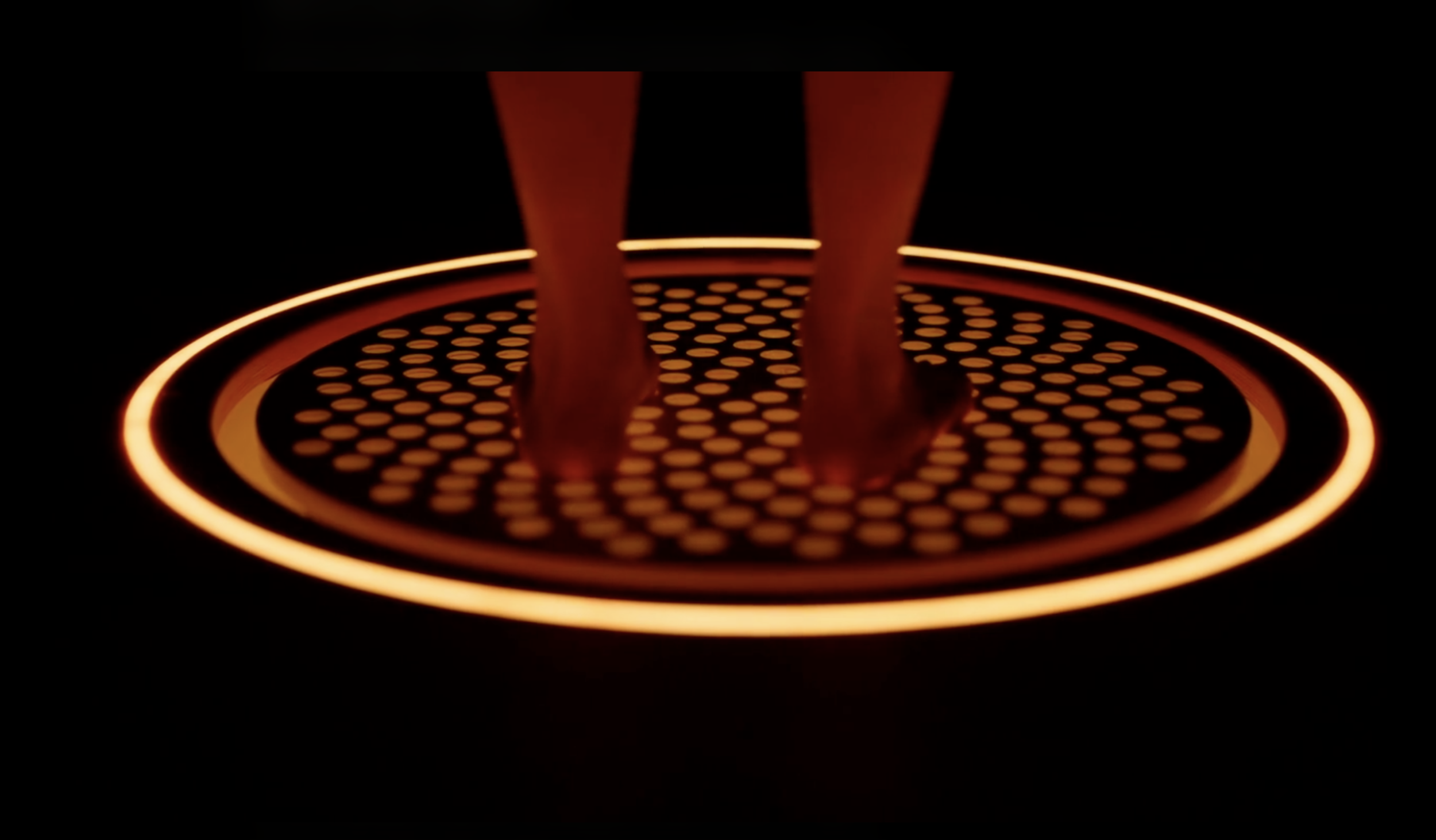
Screenshot taken from Midjourney.com Video
Is the Midjourney Scanner an MRI replacement?
No evidence currently supports describing the Midjourney Scanner as a replacement for magnetic resonance imaging.
MRI and ultrasound measure the body in fundamentally different ways. MRI uses magnetic fields and radiofrequency signals to distinguish tissue characteristics. Ultrasound records the behaviour of sound waves moving through tissue. Each modality has different strengths, weaknesses and clinical uses.
Ultrasound has important advantages. It does not use ionising radiation, can operate without a large magnet and is generally less expensive and more accessible than MRI. It can also produce images in real time.
It also has physical constraints. Bone can block or distort sound, air interferes with transmission and deeper tissues can be harder to image. A multi-angle water-immersion system may overcome some limitations of a handheld probe, but the extent to which it does so must be demonstrated rather than assumed.
Midjourney has itself acknowledged that its first-generation scanner will not replace MRI or CT and is better suited initially to mapping muscle and fat. That narrower claim is considerably more credible than the suggestion of an immediate new universal imaging platform.
What is the agreement with Butterfly Network?
Midjourney’s move into medical hardware is supported by a substantial commercial agreement with Butterfly Network, a publicly listed medical technology company specialising in semiconductor ultrasound.
An SEC filing confirms that Butterfly granted Midjourney an exclusive, non-transferable licence within an agreed field of use covering elements of Butterfly’s ultrasound-on-chip technology, software and backend systems.
Midjourney agreed to pay a $15 million initial fee and annual licence fees of $10 million during the five-year term. The agreement also includes up to $9 million in milestone payments, as well as possible payments for chips and a share of revenue from commercial hardware. The disclosed fixed and milestone components therefore amount to as much as $74 million over five years.
The agreement is significant because it shows that Midjourney is not merely presenting a conceptual design. It has committed substantial resources to licensed ultrasound technology and co-development.
It also means the project should not be assessed solely as an extension of Midjourney’s image-generation software. Butterfly contributes specialist medical imaging hardware and an established ultrasound platform. Midjourney appears to be contributing product design, computing infrastructure, reconstruction work, artificial intelligence expertise and the consumer experience surrounding the scanner.
What is its FDA status?
Midjourney says it submitted a 513(g) request to the US Food and Drug Administration and received a response on 4 June 2026.
A 513(g) request allows a company to ask the FDA how a proposed device is likely to be classified and which regulatory requirements may apply. It is not an approval of the device’s safety, effectiveness or diagnostic performance.
Midjourney says the FDA classified its proposed initial product as a Class II ultrasonic body-composition analyser under product code OMV and determined that it would be exempt from a 510(k) premarket notification when strictly limited to body-composition use. The company correctly states that this is not an FDA stamp of approval and that diagnostic functions would require additional regulatory work.
The FDA’s public database confirms that OMV is the product code for a Class II ultrasonic body-composition analyser. It describes devices that measure tissue thickness and use algorithms to estimate local or total quantities of fat, muscle, bone or other tissue.
Nuvastra did not locate Midjourney’s complete 513(g) response in the public FDA records reviewed for this article. The company’s description of that individual response should therefore remain attributed to Midjourney.
The essential distinction is straightforward: the proposed first product is not approved or cleared to diagnose cancer, cardiovascular disease or any other medical condition. Any future diagnostic capability would require appropriate evidence and regulatory review.
Why repeated scans could matter more than a single image
Midjourney’s long-term proposition is not simply that one ultrasound scan might be cheaper than an MRI. Its more unusual idea is that people could be scanned repeatedly, allowing changes in their bodies to be measured over months or years.
A single body-composition map may show the distribution of muscle and fat. A sequence of comparable scans could show whether those measurements are changing, how quickly they are changing and whether the change correlates with exercise, medication, ageing or other factors.
This is where the project becomes relevant to continual and continuous learning.
A sufficiently large longitudinal dataset could eventually help models learn what normal change looks like within one person and across larger populations. Instead of comparing a scan only with a static reference group, a system could compare it with the same individual’s previous measurements.
Midjourney has not said that its current scanner is a continual-learning medical model. It has not explained whether customer scans would be used to retrain its systems, whether that training would happen centrally or individually, how consent would work, or how the company would prevent model updates from reducing performance for particular groups.
Those questions would become especially important if the platform moved from body composition to medical interpretation. An adaptive diagnostic system cannot simply change silently whenever new data arrives. Each update would need controlled validation, traceability and monitoring.
FDA guidance for AI-enabled devices recognises this problem. It allows manufacturers to propose predetermined change-control plans describing which model modifications are expected, how they will be developed and validated, and how their effects will be assessed. The purpose is to permit controlled iterative improvement without treating every planned update as an entirely new product.
Midjourney has not publicly described such a plan for diagnostic AI. For now, continual learning is a plausible future direction rather than a confirmed feature.
The medical question is not only whether the images look good
Even a technically accurate full-body scanner would not automatically improve health.
Scanning healthy people can identify unexpected abnormalities, often called incidental findings. Some are important. Many are harmless, ambiguous or unrelated to any future illness. Finding them can lead to further scans, biopsies, anxiety and treatment that may not benefit the patient.
The American College of Radiology says there is insufficient evidence to recommend total-body MRI screening for people without symptoms, relevant risk factors or a family history suggesting disease. It warns that non-specific findings can lead to unnecessary follow-up and expense without evidence of longer life.
That statement concerns MRI rather than Midjourney’s ultrasound system, but the underlying screening problem remains relevant. More imaging does not necessarily mean better health outcomes.
Midjourney’s initial body-composition use avoids many of these issues because it is not supposed to identify or interpret disease. The boundary may become harder to maintain if users can see detailed internal images, compare them over time and share them with AI health services or clinicians.
The interface will need to communicate clearly what the system has measured, what it cannot see and what users should not infer from an apparently normal scan. A wellness product that resembles a medical examination can otherwise create either unnecessary alarm or false reassurance.
What about privacy?
Whole-body scans are unusually sensitive data. They could reveal anatomy, body composition and, in future, possible indicators of disease.
Midjourney says users will be able to obtain and delete their scans, that information will be stored in encrypted and access-controlled systems, and that images used for research or demonstrations will have identifying information removed. It also says that its initial direct-to-consumer wellness service will generally fall outside the strict scope of the US Health Insurance Portability and Accountability Act because it will not diagnose disease or bill insurers.
That does not mean the data is unregulated or low risk. Consumer protection laws, state health-data rules, contractual commitments and other privacy requirements may still apply. Expansion outside the United States would introduce further obligations, including stricter requirements for health-related personal data in the United Kingdom and European Union.
Midjourney has not yet published the complete consumer terms that will govern commercial scans. Important unanswered questions include whether the company will use customer data to train models, whether consent will be separated from access to the service, how long raw measurements will be retained and whether customers can opt out of secondary research.
What is confirmed and what remains unclear?
Confirmed or directly disclosedStill unclear or unprovenA first-generation physical scanner exists.Whether it can achieve a reliable 60-second scan.Human volunteer scan images have been published.Diagnostic sensitivity and specificity.The current scan takes more than 20 minutes.Independent comparison with MRI, CT or DEXA.The prototype uses Butterfly ultrasound modules.Performance across body sizes and clinical populations.The initial product is intended for body composition.Commercial price per scan or membership.Midjourney plans a San Francisco spa for 2027.Whether the construction and launch schedule will be met.A five-year Butterfly licensing agreement exists.The exact future role of continual learning.Midjourney says it received an FDA 513(g) response.The full contents of that response and future diagnostic pathway.The scan does not use ionising radiation.Whether frequent scans improve health outcomes.
Who could be affected?
For consumers, the immediate attraction is access to more detailed information about body composition without radiation or the confined environment of MRI.
For clinicians, a reproducible and affordable whole-body ultrasound system could eventually create useful new ways to track tissue change. It could also create an influx of consumer-generated images requiring explanation or follow-up.
For medical-imaging companies, the project tests whether semiconductor ultrasound and large-scale computation can expand ultrasound beyond the traditional handheld probe.
For AI developers, Midjourney Medical is an example of AI moving out of chat interfaces and into sensor-rich physical systems. The hardest work is no longer only generating an output. It involves acquiring reliable real-world data, validating measurements, controlling updates and proving that a product remains safe as its models and hardware evolve.
For regulators, the challenge will be maintaining a clear boundary between wellness measurements and medical claims while the technology changes.
What happens next?
Midjourney’s published roadmap places the second-generation scanner in active development during 2026. It targets a first release-candidate build for November 2026, verification and validation work through 2027, and release readiness in November 2027.
The company is also developing a spa in San Francisco’s Union Square, with a proposed opening in November 2027. These dates are targets rather than confirmed launch commitments.
The most important developments to watch are not additional concept renders. They are:
Controlled comparisons with established body-composition methods
Reproducibility between repeat scans
Performance across a diverse group of participants
Publication of image-quality measurements
Independent clinical evaluation
Confirmation of the regulatory pathway
Clear consumer data terms
Evidence supporting any future diagnostic claim
Midjourney has built something more substantial than a promotional rendering. Its prototype uses licensed ultrasound hardware, collects real measurements and reconstructs recognisable human cross-sections. The company has also made a meaningful financial commitment to the technology.
What it has not built, at least on the public evidence available, is a proven 60-second alternative to MRI.
The current system takes more than 20 minutes, is intended initially for body composition and has not undergone published diagnostic validation. Those qualifications do not make the project insignificant. They define what the project presently is.
Its broader importance may lie in the attempt to combine repeatable physical measurements with large-scale computation and, eventually, models that understand how one person’s body changes over time. That could become a powerful form of longitudinal AI. Before it becomes medical intelligence, however, Midjourney must first show that the underlying measurements are accurate, consistent and useful.
Frequently asked questions
What is Midjourney Medical?
Midjourney Medical is a division of Midjourney developing a water-immersion full-body ultrasound scanner. Its first proposed use is to create body-composition maps showing tissues such as muscle and fat. The company has longer-term medical ambitions, but it has not established diagnostic performance.
Does the Midjourney Scanner really take 60 seconds?
Not yet. Midjourney says its current first-generation prototype takes more than 20 minutes. The company expects later hardware to be faster and describes 60 seconds as its eventual target rather than an existing scan time.
Is the Midjourney Scanner approved by the FDA?
It is not approved or cleared for diagnosing disease. Midjourney says an FDA 513(g) response classified its narrowly defined body-composition product as a Class II device exempt from 510(k) premarket notification. A 513(g) response determines regulatory classification and is not evidence of clinical effectiveness.
Is the Midjourney Scanner the same as a CT scanner?
No. Conventional CT uses X-rays and ionising radiation. Midjourney’s system uses ultrasound waves transmitted through water and the body. “Ultrasonic CT” is the company’s name for the computational reconstruction method, not conventional X-ray computed tomography.
Can it replace an MRI scan?
There is no published evidence that it can replace MRI. Ultrasound and MRI measure tissue differently and have different limitations. Independent specialists say Midjourney has not demonstrated MRI-comparable diagnostic performance.
What does AI do in the scanner?
Midjourney says AI and specialised computing help compress, process and reconstruct large quantities of ultrasound data. It also displays segmented tissue images. The company has not released detailed model documentation, training data or independent performance measurements for these AI components.
When will Midjourney Medical be available?
Midjourney’s current roadmap targets release readiness and the opening of its first San Francisco spa in November 2027. These are development targets and may change.
How much will a Midjourney scan cost?
Midjourney has not published confirmed consumer pricing. Claims that each scan will cost only a few dollars or be substantially cheaper than MRI should be treated as targets until the company releases a commercial price and operating model.