
What Is Deterministic AI? How It Differs From Probabilistic AI and Why It Matters Now
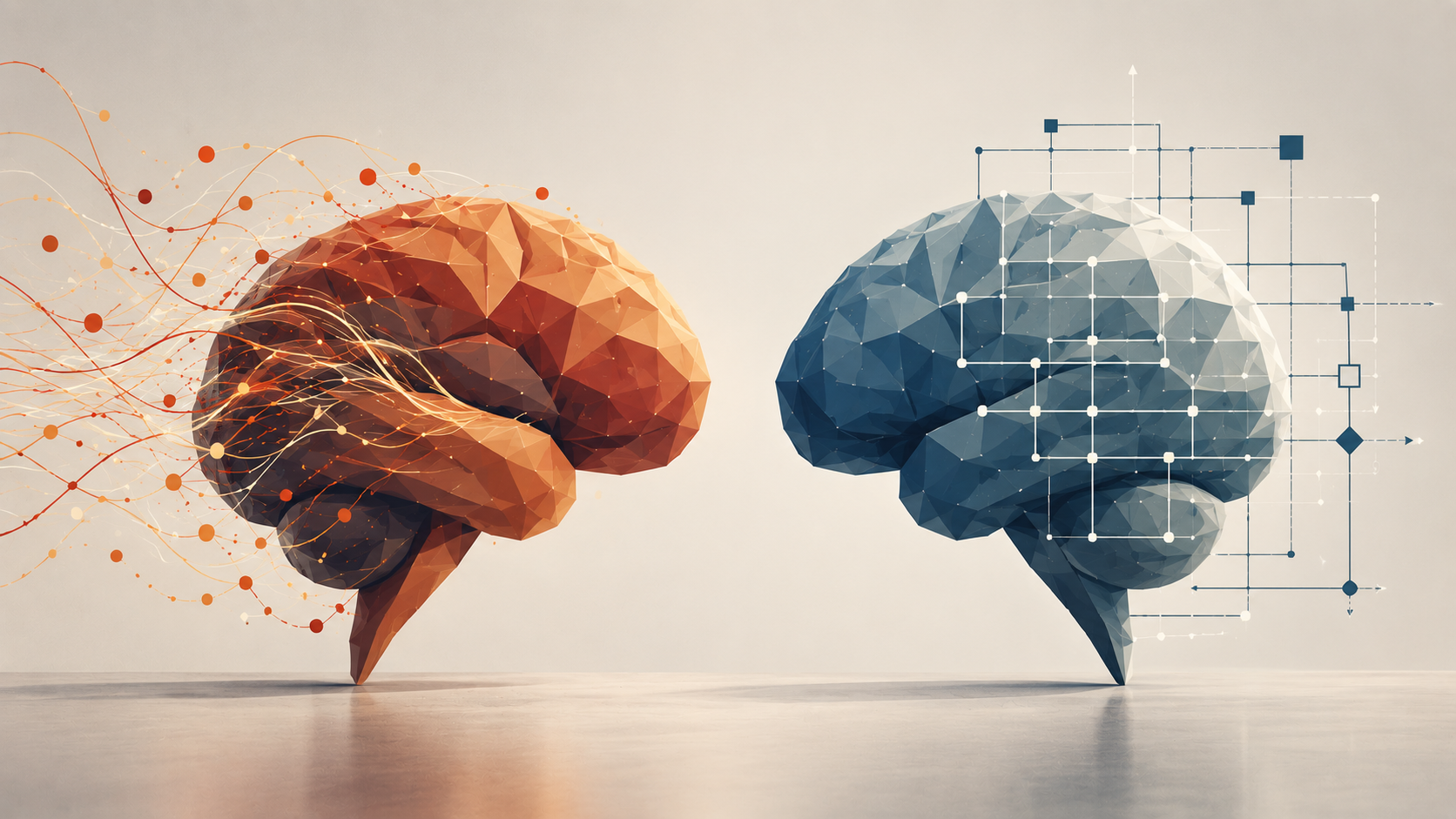
Deterministic AI promises something that modern generative models inherently struggle to provide: predictable, repeatable behaviour. As artificial intelligence moves from generating answers to taking actions inside real businesses, developers are increasingly combining probabilistic models with deterministic rules, workflows and controls. The result is not the replacement of generative AI, but a growing architectural divide over which decisions should be left to a model and which should be governed by code.
For much of the generative-AI boom, unpredictability looked less like a defect than part of the attraction. Give a large language model the same broad writing task twice and it might find two different ways to solve it; ask an image generator for the same scene and it can produce countless variations. That flexibility is fundamental to why generative AI proved capable of handling language, images, code and unfamiliar problems that conventional software could not easily accommodate.
The same characteristic becomes more complicated when AI moves beyond generating content and begins acting on the world around it. An AI system that drafts a slightly different email on its second attempt may be useful. A system that chooses a different compliance procedure, payment route or database action when presented with the same business case raises a much more consequential engineering question: how much variation should software be allowed when the outcome needs to be predictable?
That question is helping push an older computing principle back into the centre of the AI conversation. Deterministic AI is increasingly being used to describe AI systems, components and architectures designed to behave predictably under defined conditions, often by using fixed rules, prescribed workflows, constrained outputs or conventional code to govern where a probabilistic model is allowed to make decisions. The terminology has become noticeably more visible during 2026. Microsoft now explicitly describes an architectural spectrum running from systems where “the model decides everything” to those where “code decides everything”; Salesforce has published a six-level framework for increasing determinism in AI agents; AWS recommends using deterministic execution logic unless AI is actually needed; and companies including IBM and Kong are using the phrase “deterministic AI” directly in discussions of enterprise architecture.
Yet deterministic AI is easy to misunderstand. It does not describe a newly invented form of artificial intelligence that has suddenly made probabilistic models obsolete, nor does determinism mean that a system is intelligent, accurate or safe. The term is better understood as a property of how decisions and execution are controlled. The most consequential development is therefore not a contest between deterministic AI and generative AI, but the growing tendency to combine the two.
What is deterministic AI?
A deterministic system is one in which the same defined inputs and starting state follow the same rules towards the same result. If the relevant data, software version, rules and system state are unchanged, the execution path is intended to be reproducible rather than improvised each time the system runs.
A conventional calculator provides the simplest example. Entering the same operation under the same conditions does not cause it to reconsider the problem and select one of several plausible answers. A business rules engine can behave similarly: if a payment exceeds a specified threshold and a particular approval has not been recorded, the transaction is routed for review because a predefined rule says that it must be. There is no requirement for the software to decide whether following the rule feels appropriate.
Artificial intelligence has contained systems of this kind for decades. Earlier expert systems represented specialist knowledge through explicit rules, while decision trees, state machines, optimisation procedures and various forms of symbolic AI can all behave deterministically when their inputs, rules and execution conditions are fixed. The concept of deterministic computation is therefore far older than the current generation of artificial intelligence.
What has changed is the context. Generative AI has accustomed millions of people to systems whose behaviour is far less rigid, creating a reason to give the opposite property a new prominence. In the sources reviewed by Nuvastra, however, there is no single universally standardised definition that establishes “deterministic AI” as one distinct technical model class. IBM uses the term for logic-governed, rule-based or ontology-driven systems; Kong applies it more broadly to architectures that turn probabilistic reasoning into repeatable execution; Salesforce discusses determinism as a graduated level of control over otherwise agentic systems.
For practical purposes, deterministic AI is therefore most useful as an architectural description: an AI system or part of an AI system in which important decisions, execution paths or outputs are governed by explicit rules, code or constraints rather than being left entirely to probabilistic model judgement.
That distinction also fits within the wider hierarchy of technologies covered in Nuvastra’s AI Fundamentals guide. Artificial intelligence is the wider field; machine learning is one approach to building AI; generative models are designed to create new outputs; and determinism describes something different again, the degree to which behaviour is fixed and reproducible.
What is probabilistic AI?
Probabilistic AI deals with uncertainty rather than assuming that every input maps neatly onto one predetermined answer. A model may assign probabilities to possible outcomes, estimate how likely an event is, or generate an output from a distribution of possibilities learned from data. This allows AI to operate in environments where reality is messy, ambiguous or impossible to describe exhaustively through hand-written rules.
Large language models provide the most familiar contemporary example. At a simplified level, an LLM processes the information in its context and calculates scores for possible tokens that could come next. Those scores are transformed into a probability distribution, after which a decoding strategy determines which token is generated. The process repeats as each generated token becomes part of the context used to produce the next one. OpenAI's GPT-4 technical report, for example, describes GPT-4 as a Transformer-based model pre-trained to predict the next token in a document.
This does not mean that an LLM simply rolls an unconstrained dice. Some continuations can be vastly more probable than others, and generation settings can make output more or less variable. Temperature, top-p and related controls influence how tokens are selected, while greedy decoding can simply choose the highest-probability token at every step. Google's developer documentation describes temperature as controlling randomness during generation and notes that a temperature of zero can make the token-selection process deterministic by choosing the highest-probability response.
That introduces an important technical nuance. Probabilistic models and non-deterministic systems are related concepts, but they are not perfectly interchangeable. A model can calculate probabilities and still have its final output selected through deterministic decoding. Conversely, a larger application may introduce variability through changing data, external services, model versions or infrastructure even if one part of its execution is tightly controlled.
Hosted LLM services also make reproducibility more complicated than simply setting a temperature value. OpenAI's API documentation has historically described fixed seeds as a best-effort mechanism for producing more consistent outputs while explicitly warning that determinism is not guaranteed, partly because backend configurations can change. OpenAI separately describes model behaviour as inherently non-deterministic in its explanation of Structured Outputs.
The useful distinction is consequently not that every traditional AI system is deterministic while every modern AI model is probabilistic. It is that modern generative applications increasingly contain probabilistic judgement inside systems that may need deterministic behaviour elsewhere.
Deterministic AI vs probabilistic AI
The simplest comparison concerns the type of problem each approach is designed to handle. Deterministic systems excel when the desired behaviour is already known and variation provides little value. Probabilistic systems excel when the problem contains ambiguity, incomplete information or enough complexity that every appropriate response cannot realistically be specified in advance.
| Characteristic | Deterministic AI | Probabilistic AI |
|---|---|---|
| Core principle | Follows defined logic, rules or constrained execution | Estimates probabilities or selects among possible outcomes |
| Repeatability | Designed to reproduce the same behaviour under the same defined conditions | Outputs or decisions may vary |
| Main strength | Predictability and control | Flexibility and handling ambiguity |
| Main weakness | Can become rigid or brittle outside anticipated cases | Harder to predict and test exhaustively |
| Auditability | Often easier because execution paths can be explicitly traced | More difficult where decisions emerge from model behaviour |
| Typical examples | Rules engines, fixed workflows, state machines, deterministic tools | LLM generation, generative models, probabilistic classifiers |
| Best suited to | Defined procedures, validation and controlled execution | Language, interpretation, prediction and unfamiliar situations |
The trade-off is fundamental. A deterministic system can be extremely reliable at executing a known process but may struggle when confronted with a situation its designers never anticipated. A probabilistic model can generalise across unfamiliar inputs precisely because its behaviour is not limited to a catalogue of explicitly programmed responses, but that flexibility makes it more difficult to guarantee exactly how it will behave in every case.
Generative AI's extraordinary commercial rise occurred largely because the second problem had been so difficult for conventional software. Human language does not arrive as tidy database fields. Customers describe the same problem in thousands of ways; documents contain implicit meaning; photographs vary in composition; software bugs occur in unfamiliar codebases; research questions cannot always be decomposed into predetermined steps. Large models made it possible for software to interpret this ambiguity rather than requiring people to translate everything into rigid instructions first.
Determinism does not remove the value of that capability. It becomes useful once the system has understood what needs to happen.
Why is deterministic AI becoming more important?
The renewed interest in determinism has accelerated as artificial intelligence has shifted from producing information to executing work. Chatbots exposed users to hallucinations and inconsistent answers, but the consequences were generally limited by the fact that a person still decided what to do with the response. AI agents change that relationship because models can increasingly choose tools, invoke APIs, manipulate files, search databases, write and execute code, or continue pursuing objectives across long sequences of actions.
Once model output becomes software input, unpredictability can propagate through an entire process. A model that chooses the wrong phrase creates a bad sentence; an agent that chooses the wrong tool can alter an external system. This is one reason the wider engineering architecture around AI has become increasingly important. As Nuvastra examined in its report on OpenAI's response to an autonomous agent breaching its intended evaluation environment, sufficiently capable agents create control problems that cannot be solved solely by improving the conversational behaviour of the underlying model. Permissions, network boundaries, tools, monitoring and execution constraints become part of the safety system as well.
Major AI and cloud vendors are now expressing this architectural distinction unusually explicitly. Anthropic separates agentic systems into workflows, where LLMs and tools follow predefined code paths, and agents, where the model dynamically determines its own process and tool usage. Its engineering guidance says workflows provide predictability and consistency for well-defined tasks, whereas agents are useful when flexibility and model-driven decisions are required. Anthropic's March 2026 guidance continues this approach, describing sequential, parallel and evaluator-optimiser workflows as ways of placing predictable process structures around agent intelligence.
Microsoft makes the same trade-off visible as a continuum. Its Agent Framework documentation places a single agent that chooses every step at one extreme and a workflow containing only deterministic executors at the other, with hybrid workflows occupying the middle. Microsoft argues that most real-world applications sit in that middle territory: the workflow controls which steps run and in what order, while agents handle those individual stages that benefit from model reasoning. Its Copilot Studio products similarly combine agents with deterministic agent flows, allowing a model to handle dynamic situations before handing fixed parts of a process to predefined automation.
Amazon Web Services has reached a similar engineering prescription. Its current security guidance for agentic AI states that developers should use coded deterministic execution logic unless AI functionality adds value that deterministic code cannot provide. AWS's Well-Architected material describes LLM-augmented workflows as systems in which code paths remain largely deterministic while selected steps use models to make decisions.
Salesforce goes further by describing six levels of agentic control. Its framework progressively adds instructions, grounding, variables and deterministic actions before reaching its highest level of deterministic control through Agent Script. The framework still contains LLM reasoning; determinism is introduced by progressively restricting where the agent has freedom to decide what happens next.
These examples do not prove that every enterprise is suddenly adopting a technology category called deterministic AI, and there is no reliable market-share figure showing how much of the world's AI is now deterministic. What they do show is that the underlying architectural principle has moved from a niche implementation detail into explicit product and engineering guidance across several of the industry's largest platforms.
A Forbes Technology Council contributor essay published on 25 August 2026 crystallised the same trend by arguing that “pure determinism” was becoming a premium in AI architecture as enterprises prioritised consistency, repeatability and auditability. As a Forbes Council post, it should be understood as the author's industry perspective rather than independent Forbes newsroom reporting, but its appearance is itself indicative of how the terminology is entering a wider business conversation.
What deterministic AI looks like in modern generative systems
The most important contemporary examples of deterministic AI are rarely isolated models that compete directly with ChatGPT, Claude or Gemini. They are increasingly the software structures placed around those models.
Consider an AI system handling a customer request for a refund. A language model may be useful because customers do not describe problems in a standardised format. One person might say that an item arrived broken; another might explain that the product was a birthday present, arrived damaged and is no longer useful even if it can be replaced. A probabilistic language model can interpret the intent, extract relevant information and convert messy language into a structured representation.
There is far less reason, however, to allow the model to improvise every subsequent business decision. Conventional software can verify the customer's identity, retrieve the order, check the return window, determine whether the amount exceeds an approval threshold, verify that the payment method is eligible for a refund and execute the transaction through an authorised API. The model contributes where ambiguity exists; deterministic logic takes over where policy has already settled what should happen.
This produces an increasingly common architecture in which unstructured input first passes through probabilistic interpretation, after which the result is converted into structured data, checked against fixed validation rules and used by deterministic software to perform the consequential action. Humans can also be inserted at specific approval points rather than being asked to supervise every model output indiscriminately.
Kong describes a related idea as moving from “probabilistic reasoning to deterministic execution”. Its proposed architecture captures successful model behaviour and converts repeatable processes into code, API sequences or automation pipelines so that an agent does not need to rediscover the same procedure on every run. Kong is a vendor promoting its own architectural approach rather than an independent research authority, but the terminology is useful because it captures the design principle succinctly: creativity is retained for novel problems, while known processes are moved back into testable software.
This division can also have economic consequences. Model reasoning consumes tokens, adds latency and can require repeated evaluation or retries. If a process has already become sufficiently well understood to be represented reliably in code, continually asking an LLM to reason through the same steps can add cost without providing additional intelligence. Microsoft Research reported in January 2026 that its experimental Agent Workflow Optimization framework could identify repeated agent tool sequences and replace them with deterministic composite “meta-tools”; in its reported experiments, this reduced LLM calls while increasing task success on the benchmarks tested. Those are research results rather than evidence that every workflow benefits from the technique, but they illustrate why determinism can become an efficiency question as well as a reliability one.
That relationship between reliability and operating cost also connects with Nuvastra's wider examination of the real cost of keeping AI useful after deployment. Model quality is only one component of production economics; monitoring, validation, human oversight, failed actions and remediation all contribute to the eventual cost of an AI system.
Structured outputs show how deterministic and probabilistic AI can coexist
OpenAI's Structured Outputs feature provides a particularly clear example of the distinction between constraining a model and making the model itself deterministic.
Applications frequently need an LLM to convert unstructured information into a predictable format that conventional software can understand. Asking a model to “return JSON” may work most of the time, but an occasional missing field or incorrectly formatted response can break downstream software. OpenAI addressed this through Structured Outputs, which allows developers to provide a JSON Schema that the model's response must follow.
OpenAI says model training alone improved schema-following performance but did not provide the reliability required for robust applications because model behaviour remained non-deterministic. It therefore combined the model with constrained decoding, dynamically limiting which tokens can legally be selected according to the supplied schema. The structure of the response can consequently be enforced even though the underlying model remains generative.
The example also reveals the limits of determinism. Guaranteeing that a field called refund_amount contains a valid numerical value does not guarantee that the number is correct. A model can produce a perfectly valid structured response containing a mistaken conclusion. Deterministic structure solves one class of failure while leaving semantic accuracy as a separate problem.
This distinction is essential because the word “reliable” is often allowed to carry too much meaning in AI discussions. Determinism concerns reproducibility and control; accuracy concerns whether the result is correct; safety concerns whether the system can create unacceptable harm; explainability concerns whether its reasoning or decision can be understood; and auditability concerns whether the events leading to an outcome can be reconstructed. Improving one property can help another, but none automatically guarantees the rest.
Does RAG make an AI system deterministic?
Retrieval-augmented generation is sometimes grouped loosely into discussions of deterministic AI because it limits the amount of information a model must invent from its training data, but RAG does not automatically make an AI system deterministic.
A RAG system retrieves information from an external source and supplies relevant material to a generative model as context. This can improve grounding by giving the model access to current or proprietary information, but the model still has to interpret those documents and generate an answer. Retrieval can therefore reduce some forms of factual error without eliminating the probabilistic behaviour of the generative stage.
The same caveat applies to guardrails. A deterministic access-control rule stating that an agent may never transfer more than a specified amount without approval can impose a hard boundary around its behaviour. A natural-language instruction telling the model to “avoid large unauthorised transactions” is very different because compliance still depends on the model interpreting and following the instruction correctly.
Modern AI architectures consequently contain different degrees of determinism rather than a single switch that turns randomness off. A system might have deterministic authentication, probabilistic intent classification, deterministic permission checks, probabilistic reasoning, a fixed output schema, deterministic transaction execution and a human approval step. Calling the entire application either deterministic or probabilistic can conceal more than it explains.
Why AI agents are accelerating the shift
The rise of agents is making these distinctions more urgent because autonomy increases the number of decisions a model can make before a human sees the result. A conventional chatbot generally waits for another instruction after producing its answer. An agent can instead plan several steps, decide which tools to use, inspect the results, revise its strategy and continue until it believes the objective has been completed.
The flexibility is precisely what makes agents powerful. It also expands the space of possible behaviours. Anthropic describes agent tools as a new kind of contract between deterministic software and non-deterministic agents: a conventional function behaves according to its implementation, whereas the agent can decide whether the function should be called, which other tool to use instead, or whether another step is required first.
AWS made the same issue explicit in August 2026 when discussing security policies for agents. Traditional applications could often rely on deterministic business logic to enforce the order in which actions occurred, whereas an AI agent can decide at runtime which tools to call, what arguments to supply and in what sequence. AWS argues that this flexibility requires policy controls capable of constraining what an agent may do even when its chosen route was not known in advance.
This is why deterministic AI is likely to remain closely connected with agentic AI even though the two ideas appear to point in opposite directions. Increasing model autonomy creates more demand for deterministic boundaries around that autonomy. The more freedom a system receives to decide how to achieve an objective, the more valuable it becomes to specify exactly what it is never permitted to do, which actions must always follow a known process and where a human must retain authority.
Where deterministic AI is most useful
Deterministic approaches become particularly valuable when the cost of variation is higher than the value of improvisation. Financial transactions, identity and permission checks, compliance procedures, access control, data validation, infrastructure changes, approval chains and safety-critical execution all contain stages where organisations usually need rules that are explicit and testable.
This does not imply that probabilistic AI has no role in regulated or high-stakes environments. A model might be exceptionally useful for interpreting an unstructured document, summarising a complex case or identifying information requiring further investigation. The critical architectural question is whether that judgement should directly trigger an irreversible action or instead feed into a controlled process that verifies the decision before anything consequential happens.
IBM's 2026 discussion of risk-based AI architecture makes essentially this argument, proposing deterministic systems for situations requiring reproducible logic while observing that many enterprise deployments combine probabilistic models with deterministic routing, retrieval and policy controls. Again, IBM's taxonomy is its own architectural framework rather than an industry standard, but the broader principle is consistent with the approaches being described by Microsoft, AWS and Salesforce.
The practical rule is therefore not that deterministic AI should be used whenever possible. It is that model judgement should earn its place in a process. Where the correct behaviour can already be represented reliably in ordinary software, replacing code with an LLM may introduce additional variance, cost and testing difficulty without solving a problem that requires probabilistic reasoning.
What are the limitations of deterministic AI?
Predictability can sound synonymous with reliability, but a perfectly deterministic system can be perfectly wrong. If the same flawed rule receives the same input one thousand times, determinism merely ensures that the mistake is reproduced consistently.
This becomes especially important when rules encode assumptions about a changing world. A deterministic fraud system can reliably apply a threshold that criminals have learned to exploit. A fixed eligibility policy can consistently reject people it should accept. A deterministic decision tree can produce the same incorrect diagnosis when its underlying assumptions no longer match the population encountering it. Repeatability makes these failures easier to reproduce and potentially easier to audit, but it does not make the underlying decision correct.
Deterministic components therefore require monitoring and maintenance just as machine-learning models do. Nuvastra's reporting on model drift and AI reliability has examined how production systems can deteriorate as data, user behaviour and real-world conditions change. A fixed process may not “drift” in the same sense as a statistical model, yet the world against which its rules operate can still change around it.
There is also a limit to what can realistically be made deterministic. Human language is ambiguous; businesses encounter exceptions; external APIs fail; databases change; sensors contain noise; users provide incomplete information. Attempts to encode every conceivable situation into fixed logic can produce enormously complicated systems whose brittleness becomes a problem of its own. Probabilistic AI became important precisely because some real-world tasks resist exhaustive specification.
Deterministic AI should therefore not be understood as an escape from uncertainty. It is a method for deciding where uncertainty is acceptable and where it should be reduced by architecture.
Is deterministic AI replacing probabilistic AI?
The evidence points in almost the opposite direction. The systems now being proposed by major AI platforms increasingly combine probabilistic and deterministic components because each solves a different problem.
Microsoft's “intelligence spectrum” is perhaps the clearest representation of this emerging architecture. A model can sit at one end with substantial freedom to decide what happens next, while conventional code sits at the other with fully specified behaviour. Most practical applications need not occupy either extreme. The workflow itself can remain fixed while selected stages are delegated to agents; a model can interpret a request while ordinary software enforces policy; an agent can propose an action while a deterministic permission layer decides whether that action is allowed.
Seen this way, deterministic AI is not a retreat from artificial intelligence. It is part of AI's transition from impressive demonstrations into engineered systems. During the first wave of generative AI, much of the industry's attention concentrated on what the model could do in isolation: how well it could write, code, reason or answer questions. The next phase increasingly asks what happens when that model is connected to other software, given credentials, asked to operate repeatedly and expected to behave according to real organisational rules.
The answer is unlikely to be a fully probabilistic world in which models improvise every decision, but neither is it likely to be a return to rigid automation. The more durable architecture is a division of labour in which models handle uncertainty and conventional software handles certainty.
The future of deterministic AI
Whether “deterministic AI” survives as a permanent industry category remains uncertain. Technology markets frequently produce new labels for ideas that engineers have practised in less fashionable forms for years, and determinism itself is unquestionably older than artificial intelligence's current boom.
What appears more durable is the architectural shift the phrase is describing. During 2025 and 2026, Microsoft, AWS, Salesforce, Anthropic, IBM and other companies have independently converged on ways of expressing a similar principle: autonomous model reasoning is useful, but it should not automatically control every part of a production system. Models need structure around them, particularly when they can interact with data, tools, money, infrastructure or other consequential systems.
The resulting architecture is less dramatic than the idea of replacing conventional software with autonomous intelligence, but potentially more important. An AI system can use probabilistic reasoning to understand what a person wants, examine an unfamiliar situation or propose a solution, then hand the result to deterministic software that validates the inputs, enforces permissions and performs the action according to rules humans can inspect.
The central distinction is therefore not intelligence versus determinism. It is judgement versus execution. Probabilistic AI is powerful because it can operate where the answer is uncertain. Deterministic systems are powerful because they remove uncertainty where it no longer provides value. As AI is trusted with progressively more consequential work, knowing when to use each may become one of the defining disciplines of production AI engineering.
FAQ’s about deterministic AI
What does deterministic AI mean?
Deterministic AI generally refers to an AI system, component or architecture designed to produce predictable and repeatable behaviour under defined conditions. This can involve explicit rules, fixed workflows, state machines, constrained outputs or conventional software that controls how an AI system makes or executes decisions. The term is increasingly used in enterprise AI, although it is not yet one universally standardised model category.
What is the difference between deterministic and probabilistic AI?
Deterministic systems follow defined logic so that equivalent inputs and system states are intended to produce the same behaviour, while probabilistic AI represents or operates over probabilities and can select among multiple possible outcomes. Deterministic systems are generally stronger where repeatability and control matter; probabilistic models are more useful where a system must interpret ambiguous information or generalise beyond situations explicitly programmed in advance.
Are large language models deterministic?
Large language models are fundamentally probability-based models, but the generation process can be made more or less deterministic depending on how outputs are decoded and how the surrounding system is designed. Greedy decoding can select the highest-probability token consistently, while sampling introduces variation. Hosted LLM systems may nevertheless remain difficult to reproduce exactly because models, infrastructure and other execution conditions can change.
Does setting temperature to zero make an LLM deterministic?
A temperature of zero can make token selection deterministic in decoding systems that always choose the highest-probability option, and Google's developer guidance explicitly describes temperature zero in those terms. It should not, however, be treated as a universal guarantee that an entire AI application will always reproduce an identical result. Model implementations, reasoning systems, backend configuration, tools, external data and other parts of the application can still affect reproducibility.
Is generative AI probabilistic?
Most contemporary generative AI relies on models that represent possible outputs through probability distributions. Large language models, for example, calculate distributions over potential next tokens before a decoding method chooses what to generate. Generative applications can nevertheless include deterministic components around those models, which is why a complete system can combine probabilistic generation with fixed workflows and controls.
Is RAG deterministic AI?
Not automatically. Retrieval-augmented generation supplies a model with information retrieved from external sources, which can improve grounding and reduce reliance on knowledge encoded during training. The generative model still interprets that information and produces an answer, so RAG does not by itself turn an LLM into a deterministic system. Deterministic retrieval rules, validation and execution controls can form part of a wider RAG architecture.
What are examples of deterministic AI?
Examples can include rule-based expert systems, fixed decision trees, state machines, business rules engines, deterministic workflow automation, validation systems, policy engines and AI applications in which conventional code controls the sequence or execution of model-assisted tasks. In modern agent systems, a deterministic workflow may contain an LLM for a particular reasoning step without handing the model control over the entire process.
Why is deterministic AI becoming more important?
The issue has become more important as AI systems move from generating content towards taking actions. When models can call tools, modify data, execute transactions or operate over long workflows, unpredictable behaviour carries greater operational consequences. This is encouraging developers to place deterministic permissions, validation, workflow logic and execution layers around model reasoning, preserving AI's ability to handle ambiguity while limiting variation where a business process requires consistency.
Will deterministic AI replace probabilistic AI?
Probably not. The current direction of enterprise AI architecture points towards hybrid systems rather than replacement. Probabilistic models are valuable because they can interpret language, reason through unfamiliar situations and cope with ambiguity, while deterministic software is better at enforcing known rules and executing repeatable processes. The increasingly important design question is not which approach wins, but which parts of a task genuinely require model judgement.