
iPhone 18 and the AI Phone: Why Apple’s Next Launch Matters for the Future of Smartphones
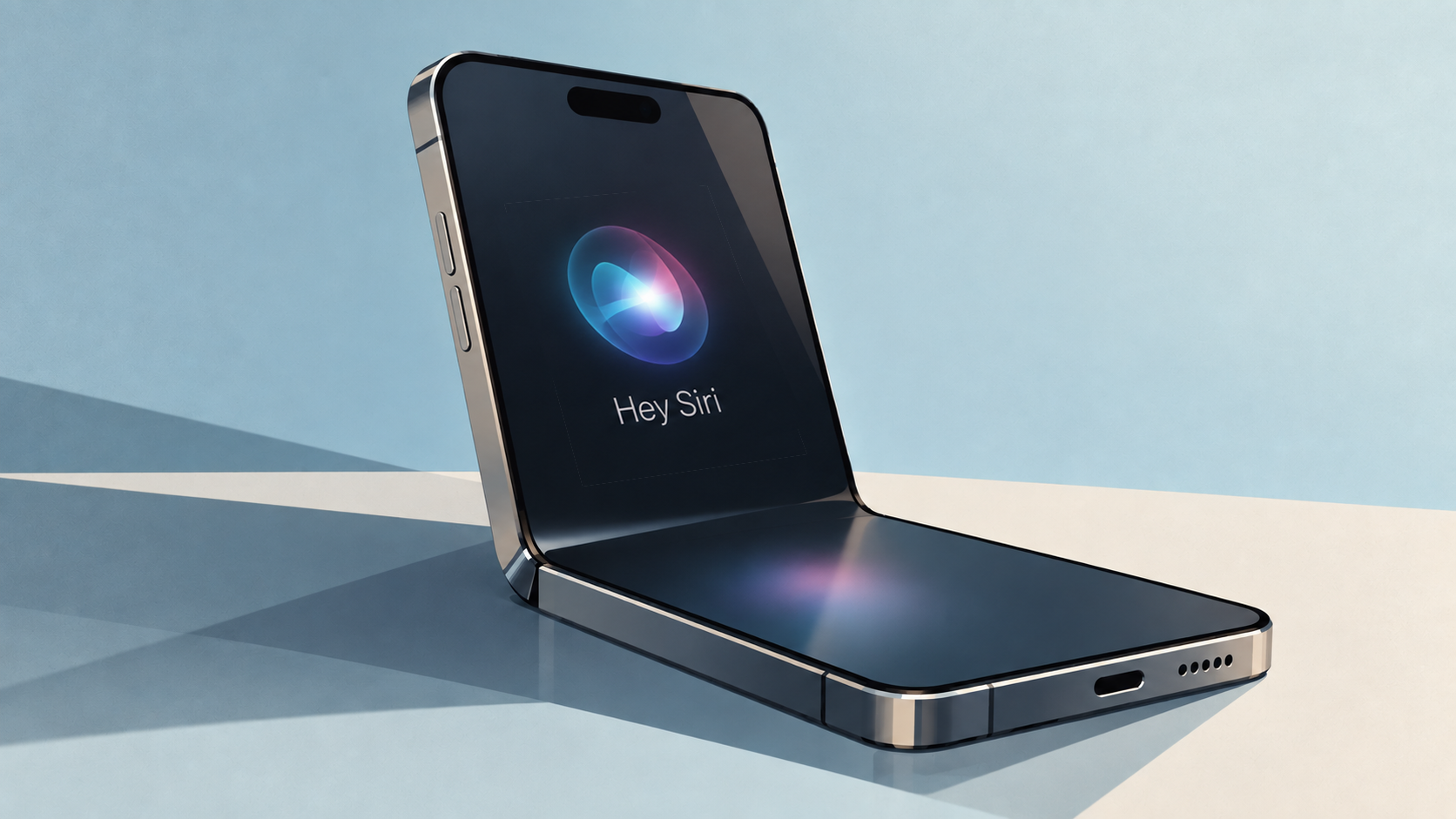
Apple’s iPhone 18 launch is expected to bring faster silicon, its first foldable phone and a major change to the iPhone release cycle, but the more important development may be happening beneath the hardware. With Siri AI, new Apple Foundation Models and increasingly powerful on-device processing, Apple is preparing for a smartphone market in which artificial intelligence becomes part of the operating system itself.
Apple will hold its next major product event on Wednesday 9 September 2026, with the company’s “Surprise and shine” presentation beginning at 10am Pacific Time. Apple has not officially named the products that will appear, but the iPhone 18 Pro and iPhone 18 Pro Max are widely expected to lead the event alongside Apple’s long-rumoured first foldable iPhone. The standard iPhone 18, meanwhile, is reportedly moving to spring 2027 as Apple breaks with its traditional habit of launching most of the new iPhone family together each September.
There are plenty of conventional reasons for the technology industry to pay attention. Apple is expected to introduce its first 2nm A-series processor, the A20 Pro, while the foldable device could represent the most substantial change to the physical shape of the iPhone in years. The event will also be the first major iPhone presentation under John Ternus, who replaced Tim Cook as Apple CEO on 1 September. Yet the more consequential story may have little to do with whether the phone folds or how much smaller Apple makes the Dynamic Island. The iPhone 18 generation arrives just three months after Apple unveiled its most ambitious AI architecture yet, including a rebuilt Siri, a new generation of Apple Foundation Models and deeper AI access across iOS.
Taken together with similar developments from Google and Samsung, the launch provides an unusually clear picture of where the next phase of the smartphone market is heading. The industry spent the first stage of the generative AI boom placing chatbots and AI-powered tools onto existing phones. It is now beginning to redesign the role of the phone itself around artificial intelligence.
What AI features are expected on the iPhone 18?
Apple has not confirmed any iPhone 18-specific AI features ahead of the 9 September event, so claims about exclusive capabilities need to be treated cautiously. What is already clear, however, is that the new phones are expected to arrive alongside iOS 27 and the next generation of Apple Intelligence, including the substantially rebuilt Siri AI that Apple revealed at WWDC in June.
Apple says Siri AI will be able to understand information displayed on a user’s screen, draw on personal context across messages, email, photographs and other applications, search the web for current information and perform actions across apps. Rather than functioning purely as a question-and-answer interface, the system is being designed to understand what a person is doing and use that context to help complete a task. That represents an important change from the first generation of smartphone AI features, which focused heavily on visible generative tools such as rewriting text, summarising recordings, generating images and removing objects from photographs.
Those features remain useful, but they largely behave as individual tools. The next stage of competition is likely to centre on AI that understands the wider state of the device and can act across it. Asking an assistant to find the hotel confirmation a partner sent last month, check whether it conflicts with an appointment and add the relevant travel details to a calendar requires far more than a language model capable of producing text. It requires access to personal context, applications, permissions, search, device state and a system capable of coordinating actions safely.
This is the problem Apple is now attempting to solve, and it is likely to become one of the defining challenges for every major smartphone platform.
The A20 Pro could make on-device AI much more important
Hardware is a critical part of that shift. The forthcoming premium iPhones are widely expected to use Apple’s new A20 Pro processor, which industry reporting suggests will be manufactured using TSMC’s 2nm process. The chip is expected to provide greater computing power for on-device AI while improving energy efficiency, with a new memory packaging architecture intended to shorten signal paths and improve thermal performance during intensive workloads. Apple has not yet confirmed those specifications.
The significance of the chip is not simply that another iPhone will be faster than the model it replaces. The more important question is how much intelligence the phone can run locally. Executing an AI model directly on a device can reduce latency because data does not have to travel to a remote server before an answer is generated. It can also allow features to function without a constant internet connection, reduce some dependence on expensive cloud infrastructure and, importantly, keep more sensitive personal information on the device itself.
This is why neural processing units, memory bandwidth and energy efficiency are becoming increasingly important smartphone specifications. On-device generative AI is already increasing baseline hardware requirements across the market, particularly because larger models require more memory and processing capacity. Those demands are relatively easy to absorb at the premium end of the market but become much more difficult to accommodate in cheaper devices.
The smartphone performance race is therefore changing. CPU and GPU speed still matter, but the ability to efficiently run AI models locally is becoming another fundamental measure of what separates one generation of hardware from the next.
Apple’s AI architecture is neither entirely on-device nor entirely in the cloud
The idea of the “AI phone” is sometimes presented as a simple choice between local and cloud processing, but Apple’s current architecture demonstrates why the reality is likely to be more complicated. Apple Intelligence attempts to handle suitable tasks directly on the device, while more computationally demanding requests can be routed to Private Cloud Compute, Apple’s system for running larger AI workloads remotely while applying privacy protections designed to prevent personal data from being stored or made available to Apple.
In 2026, Apple expanded that architecture further. Private Cloud Compute workloads can now operate beyond Apple’s own data centres, including infrastructure provided by Google, while remaining inside Apple’s security framework. Apple has also opened access to a server-based foundation model through its developer framework, allowing third-party applications to use more powerful AI capabilities without requiring every developer to build and maintain their own cloud-model infrastructure.
This hybrid approach is likely to become increasingly common because neither on-device nor cloud AI can solve every problem effectively on its own. Smaller models running locally can be fast, private and deeply connected to the device, but they cannot match the computational resources available to the largest cloud systems. Cloud models can handle more complex reasoning and larger workloads, but they introduce additional latency, connectivity requirements, infrastructure costs and privacy concerns.
The smartphone of the next few years will therefore need to decide which intelligence belongs where. That process is likely to become largely invisible to the user, with the operating system determining whether a request should be handled locally, sent to a private cloud model or passed to an external AI service. In that sense, the AI layer begins to look less like an app and more like part of the underlying computing infrastructure.
One surprising fact about Apple Intelligence: Google is already inside it
One of the most consequential developments in Apple’s 2026 AI strategy is also one of the easiest to overlook. Apple’s latest Foundation Models were developed in collaboration with Google using technology derived from its Gemini models. Apple still controls the wider system architecture, privacy framework, product experience and integration into its devices, but the relationship demonstrates how much less vertically isolated the AI ecosystem is becoming.
Apple describes its third-generation Foundation Models as a family spanning both on-device and server-based AI, including AFM 3 Core, its latest roughly three-billion-parameter on-device model, and a more capable multimodal model designed to work with multiple forms of information. The important point is that the AI experience Apple presents to users may be distinctly Apple even when some of the underlying model technology comes from elsewhere.
This is already becoming a wider industry pattern. Google’s Gemini technology now supports parts of Apple’s AI architecture, sits inside Samsung’s Galaxy AI ecosystem and powers services used by several other smartphone manufacturers. Apple, Samsung and Google are competing intensely to differentiate their AI phones while increasingly sharing parts of the technological foundations beneath them.
That changes where differentiation happens. Having the most capable foundation model will remain important, but smartphone manufacturers may increasingly distinguish themselves through how those models are orchestrated, what personal context they can access, how applications expose actions to them, how safely data is handled and how naturally AI fits into the operating system. The model itself may become only one component of the overall experience.
Google is already designing the Pixel around this idea
Google’s Pixel 11 generation provides another indication of how quickly this shift is developing. Google has positioned the latest Pixel devices around what it calls Gemini Intelligence, with its Tensor G6 processor running a new version of Gemini Nano and enabling more AI processing directly on the device.
The emphasis has increasingly shifted away from the idea of an assistant waiting for a question and towards proactive, personalised help. Google is attempting to make Gemini more aware of what a user is doing, which information is relevant and when it might be useful. That is significant because smartphones already possess an extraordinary concentration of personal context. They know where we are, who we communicate with, what photographs we take, which appointments we have, what we search for, how we travel and which applications we use.
A conventional chatbot only knows what a user explicitly tells it during a conversation. A deeply integrated smartphone assistant potentially has access to the wider circumstances surrounding that request before the user has explained them in detail. That can make mobile AI considerably more useful, but it also makes privacy, permissions and trust much more important.
The most capable smartphone assistant may eventually be the system with the deepest understanding of a person’s digital life. The competitive question is therefore no longer simply which company has the most intelligent model, but how much context users are willing to let their operating system understand and what safeguards are put around that access.
Samsung is taking a different approach with several AI agents on one phone
Samsung offers another indication that there may not be a single winning AI architecture. Its Galaxy S26 series combines Samsung’s own Bixby with Google Gemini and Perplexity, allowing several AI systems to coexist within the same device. Samsung says these systems can interpret context, provide proactive suggestions and carry out multi-step tasks in the background, with features designed to recognise useful information in conversations and connect it with relevant information elsewhere on the device.
Samsung has explicitly described this direction as a move towards agentic AI, where software does more than provide an answer and instead takes actions towards a broader goal. That presents a different model from the traditional idea that one virtual assistant should own the entire smartphone experience. Several specialised systems may exist together, each better suited to a particular task, while the operating system decides which service should be used.
The difficulty is making that complexity disappear from the user. Most people will not want to decide manually whether Bixby, Gemini, Perplexity or another model should handle every request. The device itself needs to manage that orchestration in the background.
Apple appears to be approaching the same problem from the opposite direction. Its user-facing experience remains centred on Siri and Apple Intelligence, while a more complicated mixture of local models, server infrastructure and external partnerships operates underneath. The branding differs substantially, but the technical destination may be surprisingly similar.
The real shift is from generative AI to agentic AI
For the last few years, much of the consumer conversation around artificial intelligence has been about generation. AI could produce text, create images, summarise documents, edit photographs or turn a prompt into a piece of content. These abilities were important because they demonstrated what foundation models could do, but they did not necessarily change the fundamental structure of the smartphone.
Agentic AI potentially does. An AI agent does not simply return an answer to a prompt. It interprets an objective, identifies the steps required, interacts with tools and attempts to complete the task on the user’s behalf. On a smartphone, that could mean understanding a message asking when you are free, checking several calendars, accounting for travel time, suggesting suitable options and drafting a reply without requiring the user to manually move between applications.
It could also mean finding a flight confirmation, recognising a delay, calculating whether a restaurant booking is still achievable and suggesting a different reservation. The common thread is that the user expresses the desired outcome while the AI works out how to achieve it.
This begins to challenge one of the fundamental organising principles of the smartphone. For more than 15 years, the app has been the basic unit of mobile computing. A user decides what they want to do, identifies the relevant app, opens it and manually performs a series of steps. Agentic AI changes that relationship because the user can increasingly describe what they want to happen rather than deciding which interface needs to be used.
Apps are unlikely to disappear, but their role could change considerably. They may increasingly function as services and capabilities available to an intelligent operating layer rather than destinations that users need to visit directly.
Why the iPhone 18 hardware still matters to AI
If the next phase of smartphone competition is largely about software, it would be reasonable to ask why a new generation of hardware matters at all. The answer is that sophisticated local AI has demanding physical requirements. Models need memory, neural-processing capability, storage bandwidth, battery power and thermal headroom, and those requirements increase further when a device needs to run AI continuously or interpret several types of information at once.
Apple’s anticipated move to 2nm silicon with the A20 Pro is therefore potentially more significant for AI than a conventional annual speed increase. Greater efficiency could allow more capable models to operate locally without creating unacceptable battery or heat penalties, while faster communication between memory and processing components could make complex AI workloads more practical on a handheld device.
This also helps explain why artificial intelligence could widen the gap between premium and budget smartphones. AI capability is becoming increasingly normal in high-end devices, but the additional memory and processing requirements make equivalent functionality much harder to deliver on cheaper hardware. The result may be a smartphone market in which almost every device advertises AI while the quality, speed, privacy and level of local processing vary considerably according to price.
The AI phone could therefore become mainstream very quickly without becoming equal.
AI still has an upgrade problem
There is one major problem for the industry: consumers are not yet buying new phones simply because they contain generative AI. Counterpoint says AI capability has become increasingly standard in premium smartphones, but it has not yet provided a consistently compelling reason for people to upgrade. That matters because smartphone replacement cycles have lengthened considerably. Modern flagship devices are already extremely capable, cameras tend to improve incrementally rather than dramatically, and operating systems now receive updates for years, which makes it harder to persuade someone with a perfectly functional two or three-year-old phone to spend around £1,000 on a replacement.
AI is supposed to provide that reason, but so far many of the most visible features have struggled to feel essential because they reproduce services already available through ChatGPT, Gemini and other standalone apps. Generating text more quickly, summarising information or editing an image can certainly be useful, but these functions do not necessarily change what owning a new smartphone enables. Personal and agentic AI offers manufacturers a more convincing argument because deeper integration with the device, its applications and the user’s context is much harder to recreate through a standalone service.
If an older phone cannot efficiently run the relevant models, securely access the same contextual systems or perform the same level of local processing, AI could begin to create a much clearer distinction between hardware generations. That is where the iPhone 18 could become genuinely important. Its significance may not come from simply offering “more AI”, but from whether Apple can demonstrate capabilities that existing iPhones cannot perform as quickly, privately or effectively.
The foldable iPhone could create a different kind of AI interface
Apple’s expected first foldable iPhone adds another possibility to the story. Reports suggest the company is preparing a foldable model after many years of development, with a price that could exceed $2,000. Neither the device nor its final name has been officially confirmed by Apple, but a larger screen capable of switching between conventional phone and tablet-like formats could provide a very different environment for AI.
Most discussion around foldable phones naturally centres on screen size, hinges and durability, but a larger adaptable display could also provide more space for an intelligent system to work with information contextually. An AI assistant could display information alongside the content it is analysing, coordinate several applications on-screen at once or potentially generate interfaces around the task a user is trying to complete.
There is no evidence yet that Apple intends to position its first foldable primarily as an AI device, so that connection should not be overstated. The combination is nevertheless interesting because artificial intelligence reduces the requirement for every computing experience to begin with a predefined interface. If an AI system understands what the user is trying to achieve, it can potentially assemble the information, actions and controls needed for that particular moment.
A changing physical screen combined with a more dynamic software interface would represent a much deeper rethink of the smartphone than simply adding a hinge to an existing design.
Privacy could become one of the defining differences between AI phones
The deeper AI becomes integrated into smartphones, the more sensitive the information involved becomes. A chatbot that receives an isolated prompt has relatively limited context, but a personal assistant capable of searching email, reading messages, understanding photographs, accessing calendars, recognising location and taking actions across applications occupies an entirely different privacy category.
Apple has made privacy central to its AI architecture. Its on-device models are intended to handle as much processing locally as practical, while Private Cloud Compute is designed so that data used for remote requests is not stored or made accessible to Apple in the conventional sense. The company has also published technical material intended to allow outside security researchers to inspect the software running on its cloud infrastructure.
Whether consumers understand or trust those distinctions is another question, but privacy architecture is likely to become an increasingly important point of competitive differentiation as assistants gain broader permissions. AI companies have historically benefited from having access to more data, while smartphone platforms already possess extraordinary quantities of personal information.
The next challenge is demonstrating that useful personalisation does not require uncontrolled access to everything stored on a device. The strongest mobile AI may therefore not simply be the system that knows the most in general, but the one that can safely understand the most about one particular user.
Geography is already fragmenting the idea of the AI phone
There is another complication hidden beneath the marketing of AI smartphones: the same physical device may not offer the same intelligence everywhere. Apple has said that its new Siri AI capabilities will initially launch in limited languages and markets before expanding more widely, while regulatory disputes and local requirements are already affecting which Apple Intelligence features can be offered in different regions.
This introduces a new kind of fragmentation into the global smartphone market. For years, buying the same model of iPhone in different countries generally meant buying essentially the same computing experience, aside from relatively limited regional differences. AI makes that assumption much less reliable.
A phone can contain identical processors, memory and cameras while offering meaningfully different capabilities according to local regulation, model availability, language support and rules governing personal data. Software policy is therefore beginning to influence the practical capabilities of a smartphone almost as much as hardware design.
That could become particularly important as agentic AI becomes more powerful. If an assistant can perform actions across financial services, communications, healthcare, travel and commerce, regulators are likely to take a much closer interest in what systems are allowed to do and what forms of user consent are required.
The AI smartphone may consequently become a globally standard hardware product with increasingly regional intelligence.
The smartphone could become the most important consumer AI device
The generative AI industry has spent considerable time imagining what might eventually replace the smartphone. AI pins, dedicated assistants, smart glasses and screenless devices have all attempted to make the case that artificial intelligence requires a new type of consumer hardware. The smartphone, however, has one enormous advantage over all of them: billions of people already carry one every day.
It already contains a screen, microphones, cameras, location services, identity, payments, communications, applications and an established permissions system. More importantly, it contains an extraordinary amount of personal context. Messages, photographs, appointments, contacts, travel information, notes and app activity all exist within the same computing environment.
That makes the smartphone particularly well suited to becoming the primary interface for personal AI, especially as processors become capable of running increasingly sophisticated models locally. Rather than artificial intelligence replacing the smartphone, it may make the smartphone more central.
The more useful an assistant becomes when it can understand photographs, messages, apps, location and personal preferences, the more valuable the device containing all of that context becomes. This helps explain why Apple, Google and Samsung are investing so heavily in operating-system-level integration rather than treating AI as another downloadable service.
The most important consumer AI device of the next few years may therefore turn out to be one that already exists in almost everyone’s pocket.
What the iPhone 18 launch could tell us about the next era of mobile AI
The most revealing part of Apple’s 9 September event may ultimately be how little the company talks about artificial intelligence as an isolated category. If Siri AI and Apple Intelligence appear primarily through actions, communication, photography, personal assistance and application control, Apple will be following a wider industry movement in which AI becomes less visible as a product while becoming much more important as infrastructure.
Samsung is already describing a future where AI operates proactively in the background, Google is designing the Pixel around increasingly personalised Gemini Intelligence, and Apple has rebuilt Siri around foundation models, personal context, app actions and hybrid local-cloud processing. Despite very different ecosystems and branding, all three are moving towards a similar idea: the phone should increasingly understand what its owner is trying to accomplish rather than waiting for them to manually operate every piece of software.
The numbers suggest that AI-capable smartphones will soon move from premium differentiator to mainstream expectation. Counterpoint expects generative-AI-capable devices to represent 45 per cent of global smartphone shipments in 2026 and more than half in 2027. What remains far less certain is whether consumers will continue to think of those capabilities as “AI” at all.
That may ultimately be the measure of success. The first generation of generative AI products succeeded by being conspicuous. People opened ChatGPT because they explicitly wanted to use artificial intelligence. The next generation of smartphone intelligence may succeed when users stop thinking about whether a request is being processed by a local model, a server model, Gemini, Siri or another system altogether. They will simply ask their phone to do something and expect it to understand what happens next.
The iPhone 18 will not complete that transition on its own. Many of its most interesting specifications remain unconfirmed, the new generation of Siri is still at an early stage and the wider smartphone industry has yet to prove that agentic systems can operate reliably enough for people to hand them meaningful control over their digital lives. Even so, the direction is becoming increasingly clear.
Mobile AI is moving beyond the chatbot phase and towards a world built around personal context, on-device inference, model orchestration, privacy, application control and agents capable of acting rather than simply answering. When Apple unveils its next iPhones on 9 September, the most important feature may therefore be one that is impossible to capture in a product photograph. The smartphone is beginning to change from a collection of applications into an intelligent computing layer capable of coordinating them.
If that transition succeeds, the next era of mobile computing will not be defined by which smartphones have AI. It will be defined by what happens when virtually all of them do.